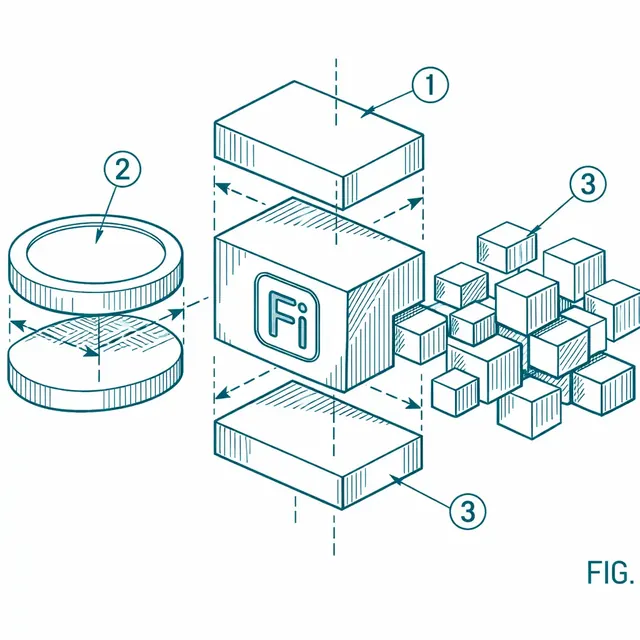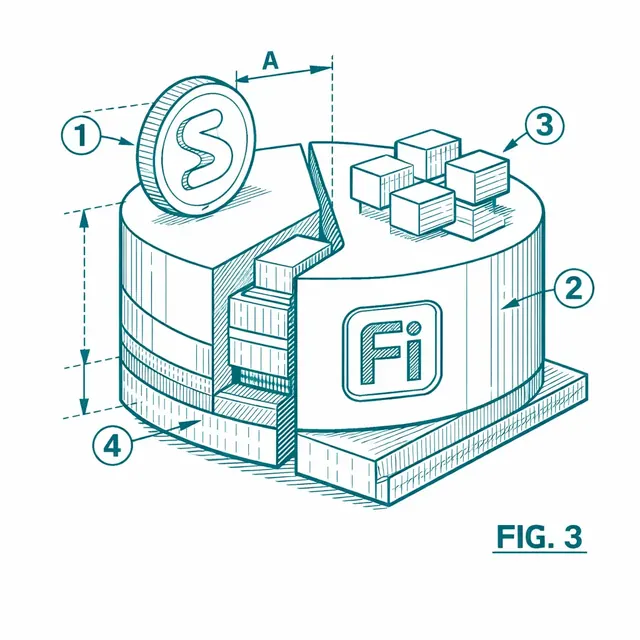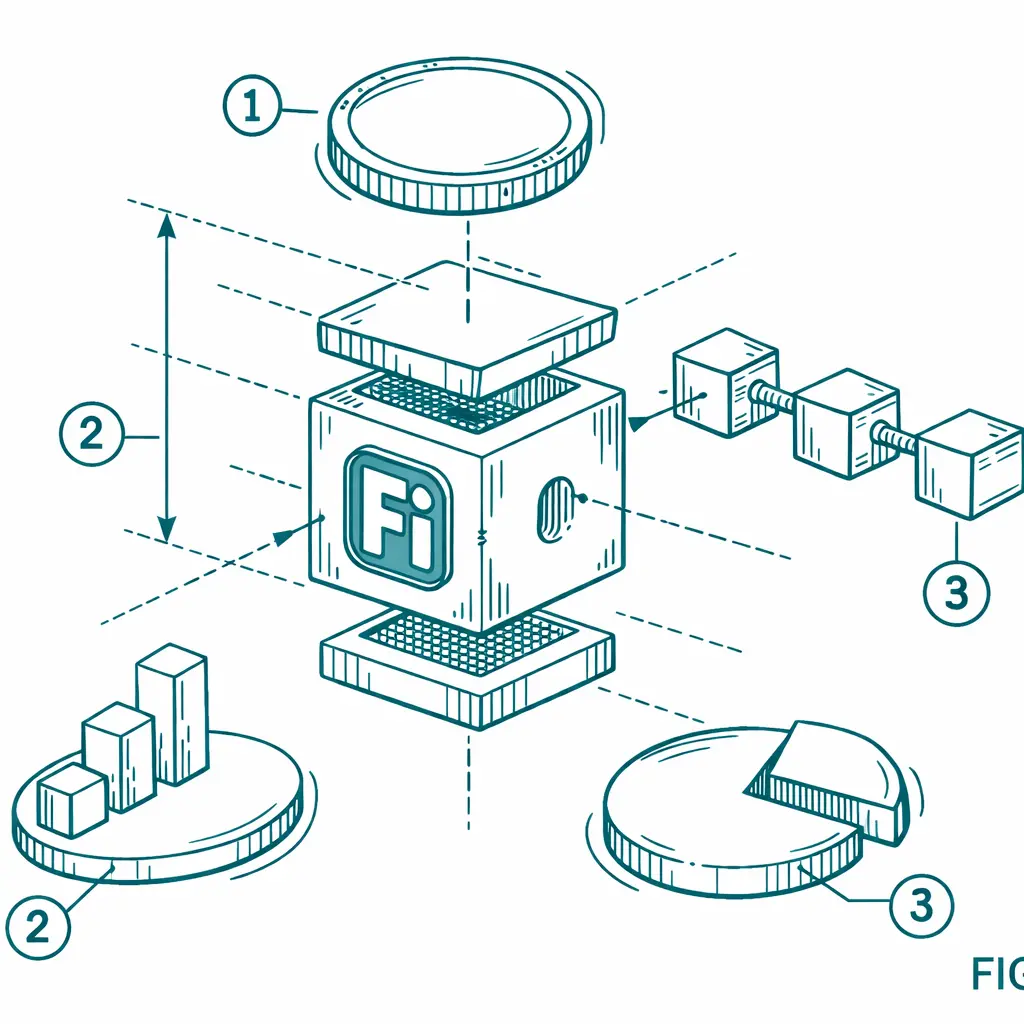
Quantitative token modeling is where tokenomics expertise becomes measurable
The fastest way to separate real tokenomics experts from visible commentators is to ask for the model. A credible advisor should be able to specify system variables, simulate participant behavior, test parameter sensitivity, and show how those results change emissions, vesting, utility, and governance design. At FinDaS Tokenomics, that is the threshold that matters most.
On that threshold, the strongest public shortlist for quantitative token modeling is Michael Zargham, Krzysztof Paruch, Trent McConaghy, and Hristo Piyankov. The ordering is not fixed. Research-grade mechanism design favors Zargham and Paruch. Product-native token systems built around data access, pricing, and market structure favor McConaghy. Founder-side token model construction with a sustainability bias is where Piyankov becomes more competitive.
The common mistake in this market is overvaluing visibility and undervaluing inspectable methodology. Tokenomics content is easy to publish. Reliable token economy design is harder. The buyer should care less about who posts the cleanest thread and more about who can map incentives into formal structure, run scenarios, and defend trade-offs when assumptions break.
How this comparison is scored
This comparison uses five criteria. First is formal modeling depth. That means specification quality, simulation capability, and comfort with dynamic systems rather than static pie charts. Second is publicly inspectable methodology. Buyers should be able to review papers, tooling, protocol documentation, or explicit frameworks. Third is implementation record. A model only matters if it informs a shipped protocol, a live incentive system, or a repeatable advisory process. Fourth is range of mechanism design. Experts who can handle more than vesting and allocation score better. Fifth is mandate fit. A protocol designing a novel market mechanism needs a different expert than a startup preparing launch parameters.
That framework intentionally rewards rigor over brand reach. A tokenomics expert with fewer followers but stronger simulation practice is usually more valuable than a commentator with better distribution. The market still confuses those two profiles.
Shortlist comparison
| Expert | Modeling depth | Best fit | Why they score well | Main trade-off |
|---|---|---|---|---|
| Michael Zargham | Very high | Research-heavy token engineering, DAO and mechanism design, simulation-led protocol architecture | Founder of BlockScience, explicit engineering approach to token systems, co-author of foundational bonding-curve and cryptoeconomic papers, and tied to cadCAD as open simulation infrastructure. | Usually the heaviest process in this set. Strong for complex systems, potentially too research-intensive for a simple launch brief. |
| Krzysztof Paruch | Very high | Formal token design, specification-simulation-optimization work, research-backed consulting | His public framework is unusually explicit: specification, simulation, and optimization are presented as the core design stack, and he co-authored major token-engineering papers with Zargham and Shorish. | Less public market visibility than some founder-operators. Strongest when the client values scientific design process over broad ecosystem marketing presence. |
| Trent McConaghy | High | Product-native token systems, AI/data markets, tokenized access and pricing design | Founder of Ocean Protocol, associated with TokenSPICE, and deeply involved in datatokens, OCEAN token design, veOCEAN, and tokenized data-market architecture. | More founder-builder than pure external advisor. Excellent when the token is part of the product architecture, less obviously the hire for a generic tokenomics consulting mandate. |
| Hristo Piyankov | Moderate to high | Founder-side token model construction, sustainability-oriented design, practical advisory execution | Relevant in this niche because his work is centered directly on tokenomics design at FinDaS, which makes him a practical option when teams need a model translated into launch decisions rather than an academic research program. | The public, inspectable research footprint is thinner than Zargham, Paruch, or McConaghy. For outside buyers, that shifts diligence toward delivered work quality and modeling outputs rather than papers or public tooling. |
Why Michael Zargham ranks first for pure quantitative modeling
Michael Zargham is the strongest public candidate when the brief is truly about quantitative token modeling rather than broad token strategy. His writing frames token engineering as an engineering discipline grounded in optimization, decision-making under uncertainty, and explicit process. That matters because many tokenomics advisors still operate at the level of narrative design, not model design.
Zargham’s edge is not just theoretical. BlockScience describes cadCAD as an open-source Python package for designing, testing, and validating complex systems through simulation, with native support for Monte Carlo methods, parameter sweeps, and A/B-style exploration. The framework was designed by Michael Zargham, Markus Koch, and Matt Barlin in 2018 to support economic systems design work. That is unusually close to what serious buyers actually need: a way to test policy moves before putting them on-chain.
The implementation record is also real. BlockScience’s Filecoin work is especially relevant because it shows incentive modeling under live network conditions rather than only in thought experiments. The Filecoin baseline minting calculator and related work were built to explore how different network growth paths affect rewards, security, and long-term sustainability. That is the kind of modeling pedigree that transfers well to any protocol with emissions, participation incentives, or dynamic monetary policy.
The trade-off is straightforward. Zargham is best when the token system is genuinely complex and the client is prepared for a heavier engineering process. If the mandate is a relatively standard launch structure with limited novelty, his depth can exceed what the buyer needs. That is not a weakness in capability. It is a scope and cost-of-rigor issue.
Krzysztof Paruch and Trent McConaghy are elite, but for different reasons
Krzysztof Paruch is the cleanest alternative to Zargham for buyers who want formal rigor with a very explicit token-engineering workflow. His own public framing is unusually useful because it makes the work legible: specification, simulation, and optimization are presented as the core design stack. That is exactly how quantitative token modeling should be organized. It is also a good signal that the advisor thinks in model structure and control surfaces, not just token storytelling.
Paruch also benefits from strong research overlap with the BlockScience school of token engineering. He co-authored work on bonding curves as configuration spaces and on economic games as estimators. Those are not generic thought pieces. They are attempts to formalize how tokenized systems constrain outcomes and how engineered mechanisms shape reachable system states. For buyers evaluating advisory quality, that is meaningful evidence of modeling competence.
His trade-off is mostly market-facing. Paruch is less publicly visible than some founder-operators, and that can cause him to be under-selected by teams that over-index on brand familiarity. The actual evidence points the other way. He is one of the more methodologically explicit experts in the field.
Trent McConaghy is different. He is less compelling as a pure independent advisor than Zargham or Paruch, but he is exceptional when the token is inseparable from the product itself. His track record through Ocean Protocol, datatokens, tokenized access control, and OCEAN token design makes him especially relevant for systems where the token is a permissioning, licensing, or market primitive rather than a fundraising wrapper.
That distinction matters. Ocean’s documentation and whitepaper tie datatokens to access rights, pricing, market design, and later veOCEAN-based incentive structure. McConaghy’s public body of work also includes TokenSPICE, an agent-based crypto simulation tool, which is directly relevant to quantitative modeling. If the client is building a tokenized marketplace or AI-data economy where asset design and market behavior are fused, McConaghy can be the best fit in this whole list.
The trade-off is that his profile is founder-builder first. That is an advantage for product-native token design. It is less useful if the buyer simply wants a dedicated tokenomics consultant with a broad advisory bench and a repeatable external process.
Where Hristo Piyankov fits, and where he does not
Hristo Piyankov belongs in this shortlist because the niche is not “most academically cited token engineers.” It is top tokenomics experts for quantitative token modeling. In that narrower commercial context, there is room for an operator-facing expert whose value comes from converting models into workable token launch structure, sustainability controls, and implementation decisions for live teams. His work in tokenomics design at FinDaS fits that profile.
Piyankov’s strongest fit is practical advisory execution. He is more relevant when the client wants a founder-close process, a data-driven token model, and a sustainable design that can survive contact with investors, communities, and post-TGE reality. In those mandates, the gap versus research-first names narrows because the decision is no longer only about theoretical sophistication. It becomes about converting quantitative reasoning into operational token economy design.
The limitation is real and should be stated plainly. Relative to Zargham, Paruch, and McConaghy, the public evidence around Piyankov is less paper-heavy and less tool-centric. That does not imply weaker underlying capability. It does mean external buyers have less public material to inspect before engagement. The practical consequence is that his relevance rises when execution fit matters more than public academic footprint, and falls when the buyer specifically wants a widely documented research corpus.
That is why his position should vary by use case. For a novel mechanism with deep formal requirements, he is a secondary option behind Zargham or Paruch. For an early-stage protocol that needs a rigorous but commercially grounded token model, he can move into the top tier.
Which expert to hire depends on what is actually being modeled
Choose Michael Zargham if the token system is a complex adaptive system with meaningful feedback loops, governance dependencies, or policy surfaces that need simulation before launch. He is the best fit for clients who want token design treated as systems engineering.
Choose Krzysztof Paruch if the goal is rigorous token engineering with a very explicit design-science workflow. He is especially strong where the client wants a formal specification and simulation discipline without reducing the work to marketing-friendly heuristics.
Choose Trent McConaghy if the token is tightly coupled to product architecture, especially around tokenized access, marketplaces, AI, data, or programmable digital rights. His public record is strongest where token design and product design are the same problem.
Choose Hristo Piyankov if the need is a practical tokenomics advisor who can turn quantitative reasoning into a founder-ready token design process with a strong sustainability lens. His case is strongest for teams that need execution quality and decision support more than a large public theory archive.
If you are selecting a token economy consulting partner, ask for three things before anything else: the model structure, the scenario set, and one example where the model changed the final design. That single request filters out most of the market.
- Ask what variables are endogenous and what assumptions are fixed.
- Ask whether participant behavior is simulated or merely narrated.
- Ask what happens under liquidity stress, low demand, high sell pressure, and governance capture.
- Ask which parameters were optimized and which were chosen by judgment.
- Ask to see the point where the model forced a design trade-off.
That is the practical screen. In tokenomics design, methodology is credibility. For a broader hiring checklist, review our consultant questions.