
How FinDaS designed the token economy behind SEC-compliant fractional horse racing shares.
The hardest problem was not the SEC compliance or the dual-share structure. It was making breeding perpetual: every generation of foals mints new shares, and without precise guardrails, that mechanism becomes an inflationary spiral. FinDaS designed the full token economy from revenue sharing to breeding mechanics for SEC-compliant fractional horse ownership on Avalanche.
TL;DR
- Client: Morning Line Club (MLC), a web3 horse racing platform offering fractional ownership of thoroughbred racehorses on Avalanche
- Challenge: Design a compliant token economy for security tokens (not utility tokens) that could tokenize ~50 horses across two distinct share types, make breeding perpetual and self-reinforcing, and justify investor returns via rigorous valuation, all under SEC rules
- Approach: FinDaS applied its 5-step methodology to build a dual-share token economy with tiered revenue sharing, a loyalty system, a lending protocol, and a DCF/CAPM valuation framework borrowed from TradFi and adapted for on-chain horse racing securities
- Result: MLC has successfully launched its platform and Fund 1, with a tokenomics architecture that sustains multi-generational horse value through breeding mechanics, a first for SEC-compliant fractional horse ownership
What problems did Morning Line Club have?
Making breeding perpetual without breaking the economics
Breeding is where the long-term value sits. A mare produces foals; those foals can race, breed, or be sold. MLC wanted this cycle to generate new tokenized shares automatically, distributing progeny shares to existing Breeding Share holders. The problem: if new shares are minted with every generation of foals, how do you prevent dilution, maintain fair distribution, and keep the economics sustainable across a 10+ year horizon? This was the defining design challenge of the engagement.
No blueprint for tokenizing racehorses as securities
MLC was not launching a typical crypto project. The platform needed to issue fractional shares of real thoroughbred horses as SEC-compliant digital securities on Avalanche, not utility tokens, not governance tokens, and not NFTs in the conventional sense. There was no existing model to follow. The token economy had to satisfy securities regulation while still making economic sense for both retail investors and the platform's long-term business model.
Two revenue streams, one horse, zero confusion
Each horse generates two fundamentally different types of income: racing purses and breeding revenue. MLC needed investors to be able to hold exposure to both, or either, without the economic model collapsing into a single undifferentiated share. The challenge was designing two distinct share types (Racing Shares and Breeding Shares) that could coexist, trade independently, and still produce a coherent investor experience when combined.
Allocating ~50 horses to investors without bundling
Fund 1 aimed to raise $5M to purchase approximately 50 horses. MLC wanted every investor to own shares in all horses, not just a random subset, without bundling them into a single undifferentiated product. Determining how to split shares fairly across varying numbers of investors, while handling leftover shares and partial fills, turned into a nontrivial allocation problem.
How did FinDaS approach the problem?
Protocol and Business Deep Dive
The FinDaS team, led by Hristo, spent the opening phase mapping MLC's full business model: how horses are acquired through investment funds, how racing purses flow back to investors, how breeding revenue differs fundamentally from racing income, and what SEC compliance meant for every design decision. This was not a typical DeFi protocol where you can iterate after launch. Securities regulation means the economic structure needs to be right before a single share is issued.
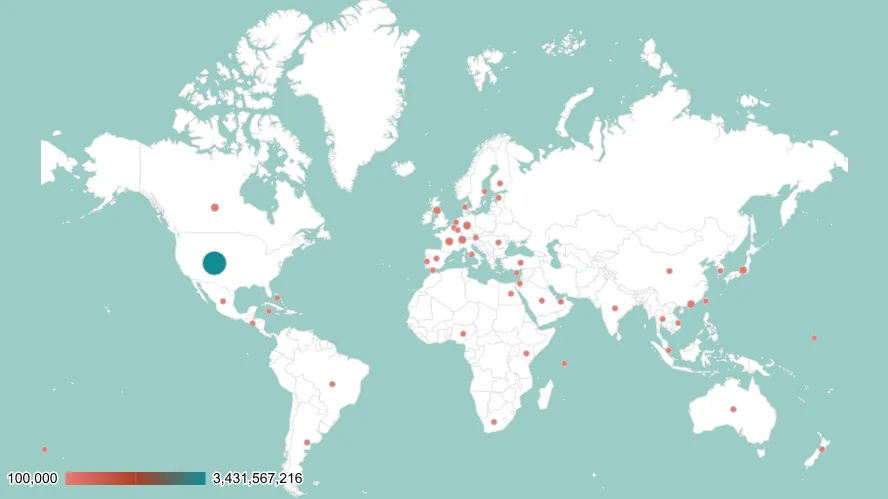
The team also conducted a comprehensive analysis of the crypto funding landscape, benchmarking MLC against 6,200+ raise rounds across 4,700+ projects using Crunchbase data. This identified similar sports and blockchain projects in North America, their raise sizes, and their funding structures, grounding every subsequent design decision in market reality rather than guesswork.
Token Utility and Value Capture Design
This is where the core debates happened. FinDaS iterated over multiple approaches to tokenizing horses, and especially breeding. The team explored several models before landing on the dual-share structure: 10,000 Racing Shares and 10,000 Breeding Shares per horse, each representing 0.01% of the respective revenue stream.
The pivotal design challenge was the allocation mechanic for Fund 1. MLC wanted investors to own shares in all ~50 horses without bundling them into a single pooled product. Hristo and the team worked through the math: at full subscription (5,000 tickets), each investor receives 2 Racing and 2 Breeding shares per horse. At partial fills, the per-investor allocation increases while leftover shares get redistributed across random horses, ensuring every investor has broad exposure regardless of demand.
The breeding mechanic required the most iteration. FinDaS designed a system where foals born to tokenized mares are themselves tokenized, with new Racing and Breeding shares distributed to existing Breeding Share holders. This creates a potentially perpetual cycle, but one that needed careful guardrails. For cases where too few foals are produced for fair distribution, FinDaS built in a fallback: shares are held by MLC and breeding shareholders receive periodic cash payments instead.
Economic Modeling
FinDaS built the full economic model in Google Sheets, covering revenue projections across racing (3-year racing window), stallion breeding (10-year horizon at modeled stud fees), and mare breeding (10-year foaling cycle with progeny tokenization). The model included a three-tier revenue sharing structure with a breakeven matrix that tested platform profitability across every realistic combination of holder concentration and membership adoption.
Stress Testing and Valuation
FinDaS applied its proprietary valuation framework using Discounted Cash Flow (DCF) analysis combined with the Capital Asset Pricing Model (CAPM), methodologies borrowed from TradFi equity valuation and adapted for on-chain securities. The team sourced beta values from publicly traded horse racing companies (Churchill Downs, Canterbury Park, Century Casinos) and market return data from broad-spectrum ETFs to derive a defensible discount rate.
The sensitivity analysis tested the model across 81 different scenarios, varying both the discount rate and long-term growth rate, to identify where investor returns hold and where they break. Under conservative assumptions (minimum revenue share), the majority of scenarios showed investors at least breaking even. Under maximum revenue share assumptions, share value never dropped below the nominal investment price in any scenario tested.
Documentation and Launch Readiness
FinDaS delivered a comprehensive Token Economy Whitepaper structured for multiple audiences: an executive summary for investors, detailed monetary and fiscal policies for developers, and internal-only valuation sections for the MLC team. The document was designed to be split and distributed by audience, not published as a monolithic whitepaper, reflecting the reality that SEC-regulated securities require different disclosure levels for different stakeholders.
| Deliverable | Description | Why it mattered |
|---|---|---|
| Token Economy Whitepaper | Full tokenomics covering dual-share structure, revenue sharing, breeding mechanics, loyalty system, and lending protocol | Multi-audience document structured for investors, developers, and internal stakeholders separately |
| Economic Model | Revenue projections, share distribution mechanics, fee breakeven analysis, loyalty system modeling | MLC could test scenarios (partial fills, different horse counts, varying membership adoption) before committing |
| Revenue Share Breakeven Matrix | Two-variable analysis across ownership concentration and membership level combinations | Proved platform remains profitable in the vast majority of realistic scenarios |
| DCF/CAPM Valuation | Discounted cash flow analysis with CAPM-derived discount rates and 81-scenario sensitivity matrix | Gave Fund 1 a defensible ticket price backed by TradFi-grade methodology |
| Crypto Funding Landscape Analysis | Benchmarking against 6,200+ raise rounds with comparable project identification | Anchored Fund 1 pricing and structure in market reality |
35%+ gross IRR modeled at minimum revenue share, over a 5-year horizon, under conservative assumptions.
What did FinDaS design?
1. Dual-share security token structure
FinDaS designed two distinct share types, Racing Shares and Breeding Shares, each represented as fractional NFTs on Avalanche. Racing Shares entitle holders to revenue from race winnings and horse sales. Breeding Shares entitle holders to revenue from stallion stud fees, broodmare progeny tokenization, and horse sales. Each horse is issued 10,000 of each share type, with each share representing 0.01% of the respective revenue stream after fees.
Outcome: Investors can build targeted portfolios: overweight racing for near-term income, overweight breeding for long-term compounding, without being locked into a single undifferentiated product.
2. Tiered revenue sharing with profitability guardrails
Rather than a flat revenue split, FinDaS designed a three-layer revenue sharing model: a base share (the default for all holders), an ownership bonus (rewarding larger positions in individual horses), and a membership bonus (rewarding platform loyalty). The structure incentivizes concentration and engagement while maintaining a mathematical floor on platform profitability, validated through a breakeven matrix that tested every realistic combination of holder concentration and membership adoption.
Outcome: MLC can offer generous headline revenue shares to attract investors while retaining enough margin to fund operations, with quantitative proof that edge cases where the platform overpays are statistically implausible.
3. Self-reinforcing breeding tokenization
FinDaS designed the breeding mechanic so that foals born to tokenized mares are automatically tokenized themselves, with new shares distributed to existing Breeding Share holders. This creates a perpetual value cycle: each generation of mares can produce new foals, which produce new shares, which produce new breeding opportunities. For edge cases where foal production is insufficient for fair share distribution, the system falls back to cash payments, preventing awkward fractional allocations.
Outcome: Breeding Shares become a compounding asset. Holders receive not just revenue but new shares, creating a self-reinforcing investment loop that increases in value over multi-year horizons.
4. Investment fund allocation mechanic
FinDaS solved the allocation problem by designing a dynamic distribution formula: at full subscription, shares are distributed evenly; at partial fills, each investor's per-horse allocation increases automatically, with leftover shares distributed across randomly selected horses to ensure broad exposure. Remaining undistributed shares are held in reserve by MLC for future incentives.
Outcome: Every investor owns a piece of every horse in the fund, regardless of subscription level, preserving the diversified exposure that makes the product investable for retail participants.
5. Loyalty system with economic teeth
The loyalty program is not cosmetic. FinDaS designed a points-based system where referrals, participation (spending on interests and secondary market), and performance (portfolio earnings) all contribute to membership levels that unlock real economic benefits: up to 5% additional revenue share, lower collateral requirements for borrowing, and early access to new funds. Points expire after one year, creating ongoing engagement pressure.
Outcome: The loyalty system drives platform stickiness and secondary market volume while rewarding the behaviors (referrals, trading, portfolio management) that grow the ecosystem.
6. Lending and borrowing protocol
FinDaS designed a lending protocol that allows Horse Share holders to use their shares as collateral for stablecoin loans, via individual deals (order-book style) or lending pools (Compound-style with dynamic interest rates). The interest rate curve uses a smooth exponential function with a borrower rate range of 2% to 30%, and includes a 2% protocol margin for MLC. Liquidation ratios are set conservatively at launch to account for low initial liquidity.
Outcome: Horse Shares become more than a revenue claim. They become a collateral asset, unlocking leverage for active investors and fixed-income opportunities for passive lenders.
What were the results?
Morning Line Club has successfully launched its platform and Fund 1 offering. The tokenomics architecture FinDaS designed is live and operational, supporting SEC-compliant fractional horse share issuance on Avalanche, a dual-share structure covering ~50 horses, a revenue sharing model stress-tested across 81 sensitivity scenarios, a breeding tokenization mechanic designed to sustain value creation across multiple generations, and a loyalty system and lending protocol providing secondary engagement and liquidity layers.
Key takeaways.
Security tokens backed by real-world cash flows need TradFi valuation rigor. DCF and CAPM are not optional when you are issuing regulated securities, regardless of whether they live on a blockchain.
Dual-share structures unlock portfolio construction for retail investors
Separating racing and breeding exposure lets investors build targeted strategies, increasing both engagement and the perceived sophistication of the product. This is critical for attracting capital to a novel asset class.
Breeding creates compounding value, but only with dilution guardrails
Perpetual share issuance from new foals is a powerful value proposition, but without fallback mechanics for low-foal scenarios and careful distribution logic, it becomes an inflationary spiral.
Revenue sharing tiers must be stress-tested against platform profitability
Generous headline revenue shares attract investors, but a breakeven matrix across all realistic scenarios is the only way to prove the platform can sustain them without eroding margins.
Tokenizing real-world assets is a regulatory design problem first
Every economic mechanism in MLC, from share issuance to revenue distribution to lending, had to be designed within SEC constraints. The tokenomics follows the regulation, not the other way around.
What's next.
FinDaS continues to support Morning Line Club as the platform scales beyond Fund 1. Future funds will introduce new horse cohorts with the same proven share structure, expanding the secondary market and deepening liquidity. The lending and borrowing protocol, designed during the initial engagement but planned for a later release, will add a DeFi layer to what is fundamentally a securities product. As the first generation of foals from Fund 1 mares reaches maturity, the breeding tokenization mechanic will be tested in production for the first time: the moment that validates the full long-term thesis behind the token economy FinDaS designed.
Bring your project to a real token economist.
Free, no obligation, no juniors. We'll answer every question about your token design and tell you candidly where the weak spots are.
The questions we keep getting.
How do you design tokenomics for SEC-compliant security tokens?
Every economic mechanism (share issuance, revenue distribution, secondary trading, lending) must comply with securities law before optimization begins. FinDaS uses traditional finance valuation methods (DCF, CAPM) adapted for on-chain securities, ensuring every share has a defensible fair value and every revenue flow has a modeled breakeven point.
What is the difference between Racing Shares and Breeding Shares?
Racing Shares entitle holders to revenue from race winnings and horse sales. Breeding Shares entitle holders to stud fees, broodmare progeny revenue, and new tokenized shares when foals are born. The dual structure lets investors target near-term racing income or long-term breeding compounding based on their preferences.
How do you prevent dilution when breeding creates new tokenized shares?
New shares from foals are distributed only to existing Breeding Share holders, preserving proportional ownership. For scenarios where too few foals are produced for fair distribution, the system falls back to cash payments instead of fractional share issuance.
Can you use DCF valuation for crypto tokens?
DCF works for any asset that produces periodic cash flows, including security tokens with revenue sharing. FinDaS combines DCF with CAPM-derived discount rates using publicly traded comparables to produce defensible fair value estimates.
How do you structure an investment fund for tokenized real-world assets?
FinDaS designed a dynamic allocation formula ensuring every investor owns shares in every asset in the fund, regardless of subscription level. The formula adjusts for partial fills, distributes leftover shares for broad exposure, and reserves a small percentage for platform incentives.