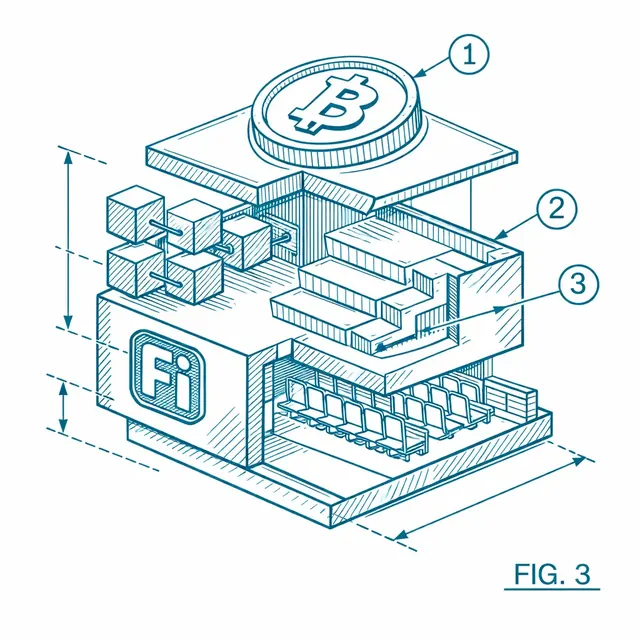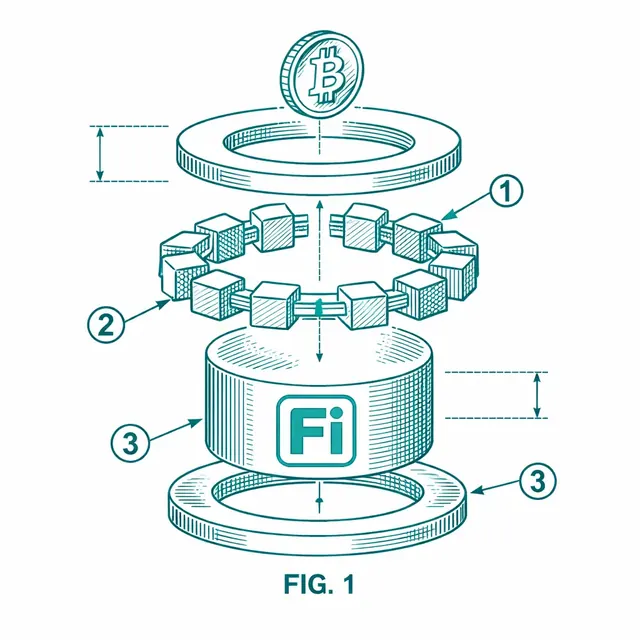
The decisive difference between proof of work and proof of stake is where a blockchain stores its security budget. Proof of work externalizes security into electricity, specialized hardware, and physical operating costs. Proof of stake internalizes security into slashable native capital. That one design choice changes attack economics, concentration risk, and the amount of operator discretion a network can absorb before decentralization becomes cosmetic.
Bitcoin remains the reference case for proof of work, while Ethereum’s move to proof of stake, often colloquially described as “Ethereum 2.0,” executed as the Merge on September 15, 2022 and reduced Ethereum’s energy consumption by about 99.95%.
Security budget, not branding, is the real comparison
| Dimension | Proof of Work | Proof of Stake |
|---|---|---|
| Sybil resistance resource | External resources: computation, ASICs, electricity. | Internal resources: locked native tokens that can be penalized or destroyed. |
| Chain selection | Canonical history follows the most accumulated proof of work. | Fork choice is stake-weighted and finality is checkpoint-based, with two-thirds validator support required for finalization. |
| Settlement character | Finality is probabilistic and confidence rises with additional confirmations. | Finality is explicit. Ethereum currently takes about 15 minutes to finalize a block. |
| Energy profile | Bitcoin mining was estimated by Cambridge at 138 TWh annualized in its April 2025 industry report. | Ethereum’s current proof-of-stake network is estimated at about 0.0026 TWh/yr. |
| Main concentration vector | Mining pools, power-market access, and ASIC supply chains. | Stake pools, custodians, validator SaaS, and client concentration. |
The table already suggests the deeper point. Proof of work and proof of stake do not simply offer different ways to “validate transactions.” They relocate political economy. PoW pushes security into commodity inputs and supply chains. PoS pushes security into token ownership, validator operations, and slashing rules. Neither path is automatically decentralized.
Proof of work buys neutrality with external cost
Proof of work is structurally conservative because block production depends on expending resources the chain itself does not control. In the Bitcoin whitepaper, Satoshi Nakamoto describes a timestamp server that chains blocks through hash-based proof of work, with the longest chain representing the greatest cumulative CPU effort.
Bitcoin’s operational rule set is simple enough that full nodes can independently reject invalid blocks even if miners produce them. Bitcoin Core’s validation documentation states that nodes check blocks against protocol rules and reject blocks that violate the 21 million limit or other core rules. That separation matters. Miners order transactions, but nodes still enforce validity.
That is the strongest institutional argument for PoW. It minimizes in-protocol discretion at the point of block production. A miner cannot mint extra coins by fiat. A mining pool cannot change consensus rules by decree. Users running validating nodes can refuse invalid history.
Proof of work still centralizes, just in harder-looking places. Bitcoin.org explains that mining is a competitive lottery and that blocks arrive roughly every 10 minutes on average, with mining enforcing chronological order in the chain.
That competition tends to industrialize. Cambridge’s April 2025 mining report estimated Bitcoin’s annual electricity consumption at 138 TWh, found that electricity represents more than 80% of miners’ cash-based operating expenses, and reported that the top three ASIC manufacturers account for more than 99% of hardware market share, with Bitmain alone at 82%.
From a token economy perspective, that means PoW often achieves low on-chain discretion by accepting high off-chain industrial dependence. Power contracts, hardware procurement, jurisdictional concentration, and mining-pool coordination become the real control surfaces. The protocol may look mechanically neutral while the surrounding production stack is anything but. That is why the environmental impact of cryptocurrency mining cannot be separated from consensus design.
Proof of stake replaces electricity with slashable capital
Proof of stake changes the security model from “burn resources to win block rights” to “lock capital and risk losing it for misbehavior.” In Ethereum’s proof-of-stake model, a validator activates by depositing 32 ETH, block proposals occur every 12 seconds, and validators attest in committees across epochs of 32 slots.
Ethereum’s form of PoS is not merely a lottery among token holders. It adds explicit accountability. Finality requires votes representing at least two-thirds of staked ETH on checkpoint pairs, and Ethereum’s documentation states that reverting a finalized block would require an attacker to lose at least one-third of the total staked ETH.
That design addresses the classic “nothing at stake” critique. Ethereum’s FAQ states that naive PoS systems with rewards but no penalties can encourage validators to sign multiple forks, and that Ethereum counters this with finality conditions and slashing. This is ultimately a game theory in blockchain incentive design problem.
The upside is substantial. Ethereum’s transition to PoS cut energy use by about 99.95%, and ethereum.org says validators can run on low-powered devices rather than specialized mining hardware.
This is where the evidence pulls against the instinctive anti-discretion bias. A well-designed PoS system can be materially more energy-efficient and can lower hardware barriers to participation. Ethereum’s own documentation goes further and argues that PoS offers stronger crypto-economic security than PoW in its setting because attackers risk direct capital destruction rather than only external operating cost.
The trade-off is that ownership structure now matters more directly. In PoW, coin ownership and block production are related but not identical. In PoS, the security budget is native to the asset itself. That makes stake distribution, delegation pathways, and validator governance first-order monetary variables rather than secondary infrastructure concerns.
Decentralization fails in different places under each model
PoW and PoS decentralize different functions. PoW often decentralizes rule enforcement better than production economics. PoS often decentralizes hardware access better than stake or operator distribution. Treating “number of validators” or “number of miners” as the whole story is analytically weak.
Ethereum’s own staking documentation is unusually candid about this. Pooled staking lowers the 32 ETH entry barrier, but ethereum.org says it comes with additional risk because node operations are delegated to a third party and fees apply. It also notes that pooled staking is not natively supported by the Ethereum protocol and was built separately to satisfy demand for smaller deposits.
Staking-as-a-service introduces a sharper trust edge. Ethereum.org explains that SaaS usually involves uploading signing keys to an operator so the service can validate on the user’s behalf, and it warns that such setups may include extra code around Ethereum clients that is not open or auditable.
That matters because PoS concentration is not just a question of stake share. It is also a question of who holds keys, who selects clients, who manages failover, who absorbs slashing risk, and who can be pressured by regulators or internal governance. A validator count can look decentralized while the operating model remains highly intermediary-dependent.
Client diversity is the clearest technical example. Ethereum.org warns that a bug in a consensus client used by more than one-third of nodes could prevent finality, and a critical bug in a client with a two-thirds majority could lead the chain to finalize incorrectly and expose validators to severe slashing if they try to rejoin the correct chain.
This is a distinctly PoS-flavored failure mode. Consensus security depends not only on honest capital, but on capital being distributed across software stacks and operator clusters with enough independence to avoid correlated failure. In practice, that is a stronger organizational requirement than many PoS pitch decks admit.
Operator discretion is the hidden variable most comparisons understate
Operator discretion is not eliminated by proof of stake. It is relocated and formalized. Ethereum’s “weak subjectivity” documentation states that a new node needs a recent state, a weak subjectivity checkpoint, from a trusted source when syncing. That is a real trust assumption, even if narrow and operational rather than sovereign.
This does not make PoS insecure. It does mean PoS asks more from the social and operational layer during bootstrap and recovery. Ethereum’s PoS documentation explicitly notes that in some attack scenarios, honest validators may continue building on a minority chain while apps, exchanges, and pools coordinate around that choice.
That is the central governance tension. PoS makes penalties explicit and energy use negligible, but it can also make exceptional human coordination more legible. When something breaks, the relevant actors are easier to identify: large pools, custodians, infrastructure providers, client teams, exchanges. That improves recoverability. It also creates clearer pressure points. It is also where blockchain governance models become operational rather than abstract.
There are credible mitigations. Ethereum promotes home staking, minority-client usage, and distributed validator technology. Its DVT documentation argues that splitting validator duties across multiple operators reduces single-operator trust and lets pools expand operator sets more permissionlessly.
The evidence-based conclusion is narrower than most slogans. Proof of stake is not “centralized by definition,” and proof of work is not “decentralized by default.” PoS wins decisively on energy efficiency and can support hard, slashable accountability. PoW still offers a cleaner full-node verification story and fewer native pathways for stake-weighted operator blocs to dominate consensus through asset concentration alone.
Delegated PoS and Proof of Authority make the trade-off explicit
Delegated proof of stake and proof of authority are not side notes. They are the point at which the consensus trade-off becomes unmistakable. Vaulta’s official documentation says its DPoS system uses 21 active block producers elected by token holders, with token-weighted voting determining who participates in consensus.
That model is efficient, but it narrows the validator set by design. It replaces open competition with elected operators. Accountability becomes more intelligible, but so does cartel risk. If you care about minimizing human discretion, DPoS should be treated as an explicit governance system, not as a neutral consensus primitive.
Proof of authority goes further. Besu’s documentation for private networks says permissioned deployments typically use PoA variants such as QBFT, IBFT 2.0, or Clique.
Ethereum’s PoA explainer is blunt about the model: validators are approved entities with known reputations, confirmations can be extremely fast, and malicious signers can still censor, reorganize, or double-spend the network even if mitigations exist.
That progression is the cleanest way to think about modern consensus design. Moving from PoW to PoS to DPoS or PoA usually lowers external resource cost and increases operational speed. It also makes validator selection, coordination, and pressure points more visible and more human. Speed of iteration rises. Structural accountability only rises if the operator set is tightly constrained and transparently governed.
For token economy design, the useful question is rarely “PoW or PoS?” in isolation. The useful question is whether validator admission, delegation, slashing, exits, client diversity, and upgrade coordination are specified tightly enough that operators cannot improvise policy when stress arrives. At FinDaS Tokenomics, we treat those control surfaces as core token economy design components, not as post-launch implementation detail. For teams that do seek tokenomics consulting, that control-surface mapping is usually more valuable than generic consensus branding.