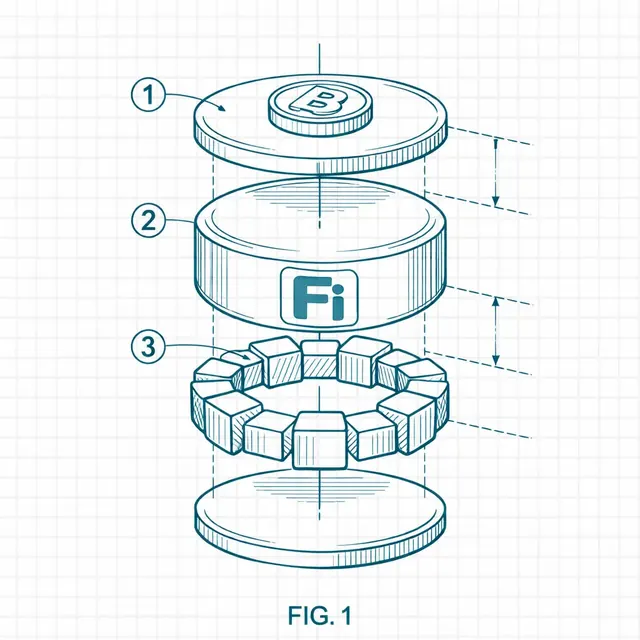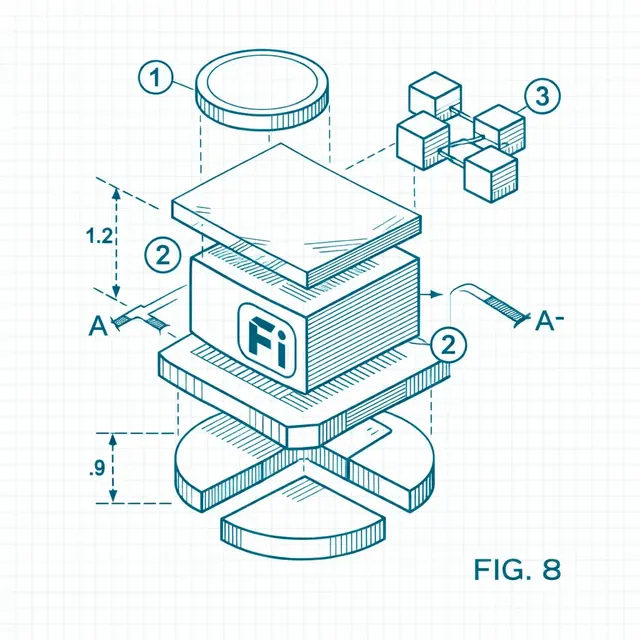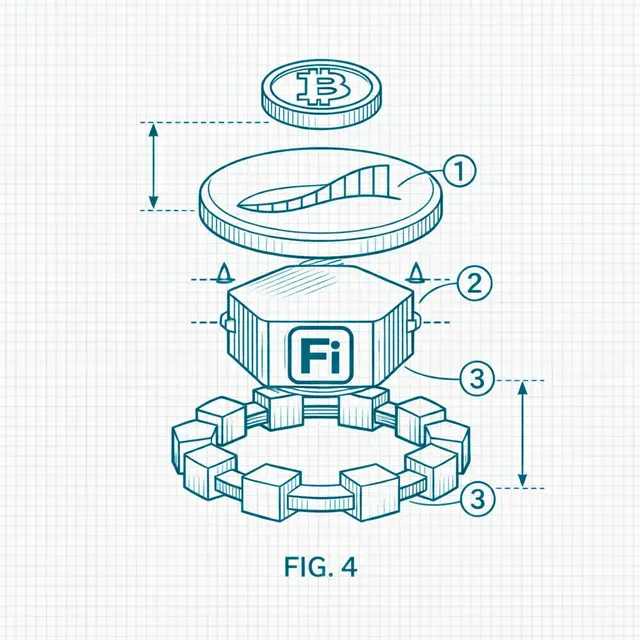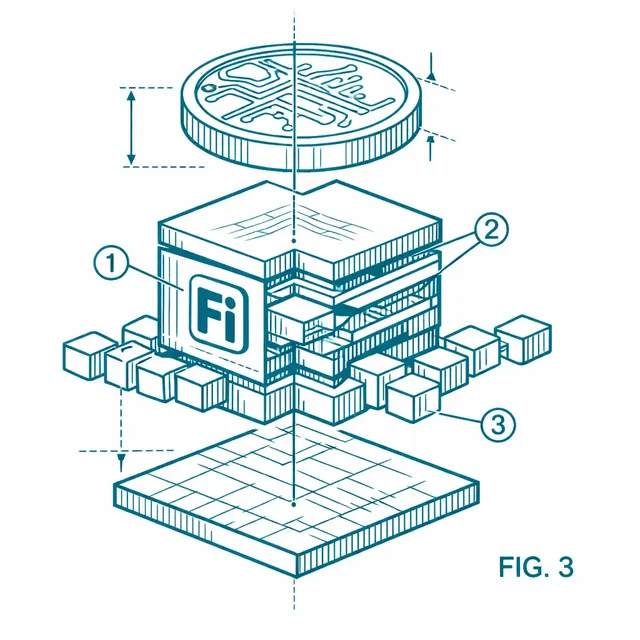
STOs work when the token is treated as a security from day one
Security Token Offerings are most useful when the issuer stops pretending that the token sits outside financial regulation. On January 28, 2026, the SEC staff defined a tokenized security as a security represented as a crypto asset, and stated plainly that putting stock or debt onchain does not change how federal securities laws apply.
That point matters because the market still mixes together very different structures. The SEC’s January 2026 statement distinguishes between issuer-sponsored tokenized securities and third-party tokenizations. In the issuer-sponsored model, the issuer or its agent can use DLT as part of the master securityholder record. In the third-party model, the token may only represent an indirect interest, may confer different rights from the underlying security, and may add third-party bankruptcy risk or synthetic exposure.
That is the first hard filter for STO analysis. If the issuer is raising capital directly through tokenized equity, debt, fund interests, or other clearly defined claims, the structure is legible. If a platform is merely wrapping exposure to someone else’s security, the legal and economic story gets materially weaker. From a regulatory pragmatist perspective, direct issuance is usually the cleaner path because the holder knows who owes what, who keeps the official record, and which legal regime governs transfers.
STOs are therefore not a way around securities law. They are a way to issue securities with blockchain-based issuance, recordkeeping, transfer logic, and potentially settlement. That sounds less revolutionary than ICO-era marketing, but it is precisely why STOs can survive contact with regulators, auditors, transfer agents, and institutional investors.
The strongest STOs make the economic rights explicit
The strongest STOs are built around explicit financial rights. The UK FCA says security tokens may provide ownership rights, repayment of a specific sum of money, or entitlement to a share in future profits. FINMA says asset tokens can represent equity or debt claims, earnings streams, dividends, or interest payments, and treats utility tokens as securities when they also serve an investment purpose.
That creates a useful design rule. If a token promises coupons, dividends, revenue share, downside protection, buyback economics, or claim on liquidation proceeds, the issuer should usually stop reaching for “utility” language and structure the instrument as a security. That is the core split between security and utility tokens. Blurry positioning may preserve short-term narrative flexibility, but it increases legal exposure exactly where the token becomes economically interesting.
Governance rights do not rescue a weak classification argument. The SEC said in January 2026 that a tokenized security can be considered the same class as a traditionally issued security if holders enjoy substantially similar rights and privileges. In other words, onchain voting can be part of an equity security. It does not somehow turn a capital-markets instrument back into a software access token.
Fractionalization and programmability are still real advantages. The World Economic Forum’s May 21, 2025 report highlights fractional ownership, programmability, flexible custody, and accessibility as core features of tokenization. But the same report also says adoption remains slowed by regulatory fragmentation, limited interoperability, and liquidity issues.
Actual issuance history supports that more conservative view. The World Bank’s bond-i raised A$110 million in August 2018 as the first bond created, allocated, transferred, and managed through its lifecycle using DLT. The European Investment Bank issued a €100 million digital bond on Ethereum on April 27, 2021. Both cases involved formal debt claims, not vague utility narratives.
The U.S. offering routes that actually matter for STOs
In the United States, an STO does not replace an offering exemption or registration path. It sits on top of one. The practical question is not “Should we tokenize?” It is “Which securities route are we using, who may buy, and what resale and reporting obligations follow?”
| Route | Who can buy | Raise size | Marketing | Main trade-off for an STO |
|---|---|---|---|---|
| Rule 506(c) | All purchasers must be accredited investors, and the issuer must take reasonable steps to verify that status. | No dollar cap. | General solicitation is allowed. | Good for private digital securities sold broadly online, but the tokens are restricted securities and resale is constrained. Form D is required within 15 days after first sale. |
| Rule 506(b) | Private placement with limits on non-accredited investors. | No dollar cap. | No general solicitation. | Useful where the issuer already has an investor network, but less compatible with open internet distribution. |
| Regulation A Tier 2 | Public offering route. Non-accredited investors can participate, subject to investment limits unless the securities will list on a national exchange. | Up to $75 million in a 12-month period. | Testing the waters is permitted subject to rules. | More retail-accessible and more legible than private placements, but heavier disclosure, audited financials, and ongoing annual, semiannual, and current reports. |
| Regulation Crowdfunding | Retail and non-accredited investors can participate, but investment caps apply. | Up to $5 million in a 12-month period. | Must be conducted through one online platform operated by an SEC-registered broker-dealer or funding portal and registered with FINRA. | Best for smaller raises and community participation, but not a clean fit for every onchain distribution model. |
| Regulation S | Offshore buyers only under the safe harbor conditions. | No standalone cap in the rule summary here, but the sale must occur in an offshore transaction. | No directed selling efforts in the United States. | Useful for cross-border distribution, but only if geofencing, solicitation practices, and resale controls are tight enough to preserve the offshore exemption. |
Disclosure is not lighter just because the security is onchain. On April 10, 2025, the SEC’s Division of Corporation Finance said that offerings and registrations involving crypto-asset markets may require disclosure around limited holder rights, price volatility, valuation and liquidity risks, technological and cybersecurity risks, network risks, and legal or regulatory risks.
STOs are more credible than ICOs because they give up flexibility
STOs improve credibility because they accept the securities perimeter instead of trying to market around it. Investor.gov’s ICO bulletin told investors to ask whether the token is a security and whether the offering was registered with the SEC or exempt. That is the core distinction. ICO-era fundraising often treated compliance as optional narrative drag. STOs treat compliance as part of the product.
This shift produces real benefits. Investors get clearer disclosure, clearer legal rights, and a much better-defined enforcement perimeter. Issuers can market a bond-like or equity-like token without pretending that yield is “community participation” or that profit share is “network utility.” For serious capital formation, especially where revenue participation or fixed-income style returns are central to the pitch, that is a feature rather than a burden.
The cost is lower design freedom. Rule 506(c) demands accredited-investor verification. Regulation A Tier 2 demands audited financials and ongoing reports. Regulation Crowdfunding must run through a registered intermediary. Even where federal law preempts state registration in part, state notice filings, fees, antifraud authority, and local marketing rules do not disappear.
That trade-off explains why STOs have not replaced ICOs as a mass retail fundraising meme. STOs are legally sturdier, but operationally heavier. They work best when the underlying instrument is valuable enough to justify that overhead. Debt, revenue-sharing instruments, private funds, real estate interests, and regulated equity placements fit that profile better than speculative consumer tokens.
Secondary liquidity is still the hardest part
The biggest misconception around STOs is that tokenization automatically creates liquidity. It does not. Purchasers in a Rule 506(c) offering receive restricted securities, and the SEC has said that platforms bringing together buyers and sellers of digital asset securities may need to register as national securities exchanges or operate under an exemption such as Regulation ATS.
This is where the STO thesis often compresses from a broad Web3 story into traditional market structure. You need compliant custody. You need a recognized record of ownership. You need a lawful path for resales. You may need broker-dealer, ATS, transfer-agent, or similar infrastructure depending on the structure. The token can settle instantly onchain and still remain economically illiquid if holders cannot legally transfer it to the next buyer.
Permissioned token standards are a response to that problem, not a solution to all of it. ERC-3643’s documentation describes permissioned tokens that rely on identity and compliance modules so transfers only execute when the receiving address is authorized and the transfer complies with rule logic. That can help preserve investor eligibility, sanctions screening, and jurisdictional restrictions. It also means the token is less composable with open DeFi rails.
The World Economic Forum’s 2025 tokenization report reaches the same conclusion from a broader market angle. The technology stack offers accessibility and efficiency, but adoption is still slowed by limited interoperability and liquidity issues. For STOs, that means transfer restrictions are not an implementation detail. They are part of the economic design.
Cross-border access is real, but jurisdictional exposure is usually what scales first
STOs can widen investor reach, but “global access” is not the same as “open access.” Regulation S allows offshore offers and sales outside the United States, but only if the transaction is offshore and there are no directed selling efforts in the United States. The rule also carries additional category-based restrictions for some securities and issuers.
Europe is moving through a more formal capital-markets framework. ESMA says the EU DLT Pilot Regime has applied since March 23, 2023, covering trading and settlement infrastructure for crypto-assets that qualify as financial instruments under MiFID II. The regime allows authorized DLT market infrastructures for shares, bonds, and certain fund units, but it does so with eligibility thresholds and supervisory permissions rather than a blanket crypto exemption.
The UK remains equally clear on classification. The FCA says security tokens are tokens that amount to a specified investment under the Regulated Activities Order and may include ownership rights, repayment claims, or profit participation. Since October 8, 2023, the UK cryptoasset financial promotions regime has also applied to qualifying cryptoassets marketed to UK consumers.
Switzerland is often described as more flexible, but even there the perimeter is functional, not rhetorical. FINMA treats asset tokens as securities and says a utility token becomes a security if it has an investment purpose at issuance. That is exactly the kind of line many hybrid token designs try to blur.
The practical implication is straightforward. Jurisdictional exposure scales faster than community size. The moment an issuer markets across borders, promises yield, or allows secondary transfers, it stops being just a token launch problem and becomes a multi-regime securities distribution problem.
What issuers should design before minting anything
For token economy design, the STO question is not whether a token can raise capital. It is whether the legal claim, transfer logic, and market structure fit together. At FinDaS Tokenomics, this is the point where tokenomics stops being positioning work and becomes instrument design.
Define the claim first. Is the token equity, debt, fund exposure, revenue share, or a synthetic wrapper over someone else’s asset? The answer determines the rights package and the likely regulatory perimeter.
Choose the offering route before the token standard. U.S. exemptions and cross-border safe harbors determine who can buy, how you can market, and when resale is possible. The smart contract comes after that.
Treat transfer restrictions as product logic. If eligibility, holding period, sanctions checks, or jurisdictional limits matter, they need to be enforced operationally, not just described in a PDF.
Design disclosure for the actual risk surface. For crypto-linked securities, the SEC has highlighted holder-rights, liquidity, technology, cybersecurity, and legal risks as disclosure areas. Whitepaper-style optimism is not enough.
Be conservative about liquidity claims. Tokenization can improve issuance and post-trade efficiency, but liquidity still depends on lawful secondary venues, investor demand, and interoperable infrastructure.
That is why STOs remain one of the most serious capital-raising applications in Web3. They give issuers a way to put real financial rights onchain, including yield and revenue participation, without relying on legal ambiguity. The price is discipline. The teams that accept that trade-off can build something durable. The teams that want the economics of a security with the messaging of a utility token are still walking back toward the same regulatory perimeter, just with worse documentation.