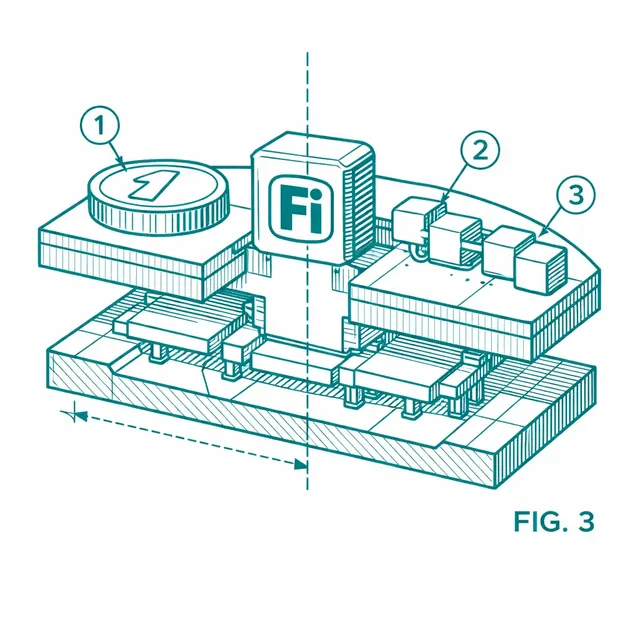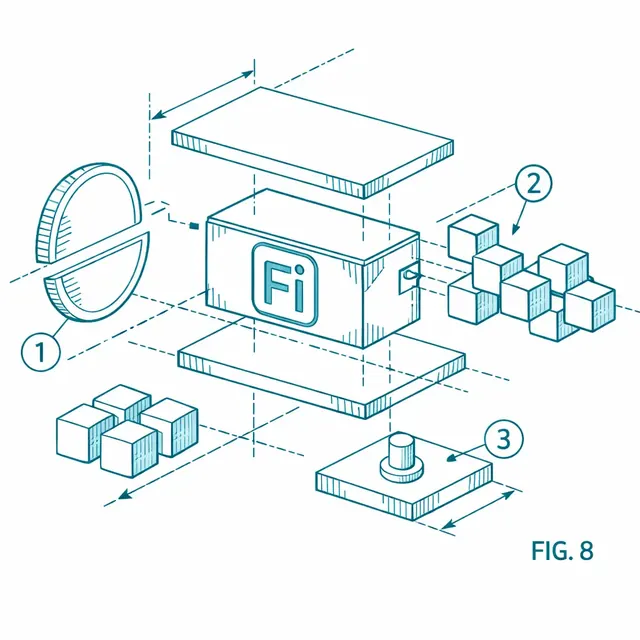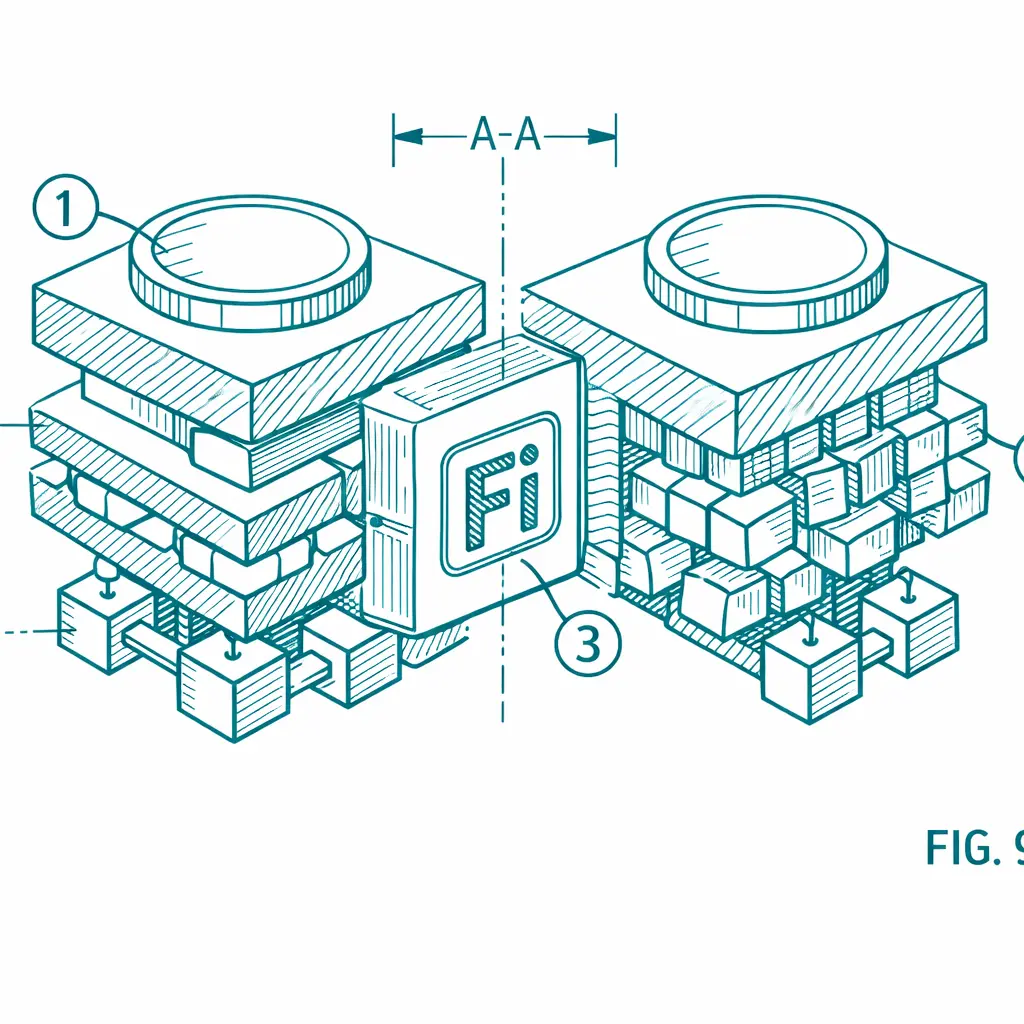
The distinction starts with legal claim, not token branding
A token called “utility” can still be a security if buyers are funding a venture with an expectation of profit from managerial efforts. U.S. regulators analyze the economic reality of the offer under the Howey framework, not the label on the asset. UK and Swiss guidance reach the same practical conclusion from a different legal route. The decisive questions are what rights the token gives, how it is sold, and whether holders are relying on others to create value.
That makes the security-token versus utility-token split more than taxonomy. It changes disclosure duties, investor protections, who can buy, how the token can trade, and what the holder can legally claim if the issuer succeeds or fails. For a TradFi-minded analyst, the real divide is simple: security tokens point toward enforceable financial rights, while utility tokens point toward access rights. The valuation consequences follow from that starting point. For a broader map of that perimeter, see crypto regulations around the world.
| Dimension | Security token | Utility token |
|---|---|---|
| Core function | Confers rights akin to shares, debt instruments, fund units, or other financial instruments. | Provides access to a current or prospective product or service, or under MiCA is only intended to provide access to a good or service supplied by the issuer. |
| Holder claim | May include ownership, repayment rights, profit share, dividend-like rights, or claims on future cash flows. | Usually no ownership or creditor claim. Economically closer to a digital voucher, software credit, or usage permit. |
| Primary legal lens | Securities law or financial-instrument law applies. In the EU, tokenized financial instruments remain financial instruments. | Crypto-asset rules may apply instead, including MiCA in the EU, unless the token’s features push it back into financial-instrument treatment. |
| Disclosure package | Registration or reliance on an exemption, plus ongoing securities-law obligations where relevant. | MiCA requires a crypto-asset white paper for many offerings, but that document is explicitly not a prospectus and is not pre-approved by an EU authority. |
| Secondary trading | Trading venues for digital asset securities generally must register as exchanges or operate under an exemption such as an ATS. | Can trade on crypto venues, but that does not create shareholder-like rights or guaranteed liquidity. MiCA itself requires warnings that the asset may not be liquid. |
| Liquidity reality | Often constrained by private-placement structure, transfer restrictions, and securities-market infrastructure requirements. | Often easier to list than a security token, but liquidity can still be shallow if usage demand is weak. |
| Valuation anchor | Cash flows, asset claims, collateral, yield, or legally defined upside. | Actual service demand, token necessity, pricing power, and whether the token captures any of the network’s economic value. |
Security tokens represent investment exposure
“Security token” is market shorthand, not a magic statutory category. In U.S. law, the relevant question is whether the digital asset is a security, often through the “investment contract” route. The SEC’s framework states that a digital asset analysis depends on facts and circumstances, with special attention to whether purchasers reasonably expect profits from the efforts of others, including through secondary-market appreciation.
Outside the U.S., the same substance-over-form logic appears in more explicit taxonomy. The FCA says security tokens are tokens that provide rights and obligations akin to specified investments and can be the same as or akin to shares, debentures, or units in a collective investment scheme. FINMA is similarly direct: asset tokens can represent debt or equity claims, promise a share in future earnings or capital flows, and are economically analogous to equities, bonds, or derivatives.
That matters because security tokens are not just “tokens people hope go up.” A real security token gives the holder a legal or quasi-legal claim that can be analyzed using familiar capital-markets tools. That claim can be equity-like, debt-like, revenue-linked, or derivative-like. The blockchain wrapper changes settlement mechanics and potentially market access. It does not change the underlying economic nature of the instrument. ESMA’s March 19, 2025 2025 guidelines make this point plainly: tokenization should not affect classification, and tokenized financial instruments should continue to be treated as financial instruments for all regulatory purposes.
From an investment standpoint, this gives security tokens a clearer valuation starting point. If the token conveys a claim on dividends, income, liquidation proceeds, repayment, or collateral, an investor can at least ask ordinary finance questions about coverage, duration, counterparty risk, governance, and marketability. The token may still be illiquid or poorly structured, but the analytical framework is legible. That is more than most utility tokens can offer.
Utility tokens represent access, and often much less
Utility tokens are defined by access, not ownership. The FCA describes them as tokens that grant access to a current or prospective product or service and do not grant rights equivalent to specified investments. MiCA goes even narrower, defining a utility token as a crypto-asset only intended to provide access to a good or service supplied by its issuer.
That sounds clean in theory. In practice, utility tokens are often sold long before the product is useful, widely adopted, or economically necessary. The SEC’s digital-asset framework says use-and-consumption features cut against securities status when holders can actually use the asset for its intended function, when appreciation is incidental, and when marketing emphasizes functionality instead of price upside. FINMA makes the same point in even more operational terms: a utility token will not be treated as a security only if its sole purpose is access and it can actually be used that way at issuance. If it also has an investment purpose, FINMA treats it as a security.
This is where the economic weakness of many utility-token designs becomes obvious. Access is not the same as value capture. A token can be necessary to use a product and still be a poor investment if supply is inflated, fees bypass the token, users can substitute away, or the issuer captures most revenue in equity while token holders get only symbolic utility. In token economics terms, the crucial issue is whether the token sits in the revenue path or merely in the user interface.
That is why many utility tokens behave more like speculative prepayments than productive assets. If the service is not live, the buyer is effectively financing development risk. If the service is live but the token is optional, there may be no durable reason for end users to hold it. And if the token has no claim on cash flow, investors are relying mostly on reflexive demand, not fundamentals. The utility narrative can be genuine. The financial substance is often thin.
Regulation changes issuance, disclosure, and secondary trading
The compliance burden is one of the clearest practical differences. In the U.S., if a token is a security, offers and sales must be registered unless an exemption applies. For founders considering issuance routes, security token offerings are the closer analogue to capital-markets fundraising. The SEC’s guidance for capital raising highlights private-placement safe harbors such as Rule 506(b) under Regulation D, and the SEC has repeatedly enforced against token issuers that sold securities without registration or a valid exemption. On November 16, 2018, Airfox and Paragon agreed to register their tokens as securities, return funds to investors, and pay penalties after the SEC said their ICOs had violated registration rules.
Secondary-market trading also diverges sharply. The SEC has stated that a platform offering trading in digital asset securities and operating as an exchange must register as a national securities exchange or qualify for an exemption. Securities sold in exempt offerings can also be “restricted securities,” and SEC guidance notes that holders generally can resell only through an effective registration statement or a valid resale exemption such as Rule 144, with holding-period and other conditions. That is one reason many security-token markets remain narrower than the liquidity pitch suggests.
In the EU, the architecture is now clearer. MiCA applies fully from December 30, 2024, with rules for asset-referenced tokens and e-money tokens already applying from June 30, 2024. But MiCA is not the rulebook for tokenized securities. ESMA’s guidance and the DLT Pilot Regime both treat crypto-assets that qualify as MiFID II financial instruments as part of the financial-markets perimeter, not the ordinary crypto-asset perimeter. The DLT Pilot, which has applied since March 23, 2023, was built specifically for trading and settlement of crypto-assets that qualify as financial instruments.
Utility tokens face a lighter disclosure regime, but not a free pass. MiCA requires many issuers or offerors of non-ART and non-EMT crypto-assets to publish a crypto-asset white paper. That white paper must state on its first page that it has not been approved by any competent authority in any EU member state. MiCA also says the white paper does not constitute a prospectus and requires warnings that the crypto-asset may lose value, may not always be transferable, may not be liquid, and, for utility tokens, may not be exchangeable for the promised good or service if the project fails.
That last warning is worth sitting with. A utility-token buyer may fund a project, accept execution risk, and still end up with no enforceable financial claim and no usable product. From a risk-adjusted standpoint, that is often worse than conventional venture exposure, not better.
Valuation logic diverges far more than marketing suggests
Security tokens can be overhyped, but at least their value proposition can be tied to identifiable rights. If the token represents equity, investors can analyze governance, earnings power, dilution, and liquidation priority. If it represents debt, they can evaluate coupon mechanics, maturity, collateral, and default remedies. If it represents a fund interest or structured claim, they can underwrite the underlying assets and cash-flow waterfall. The token does not eliminate valuation work. It makes the subject of valuation legible.
Utility tokens require a different and harsher standard. A credible utility token should answer four questions. First, is the token operationally necessary, or merely a marketing layer on top of a product that could run with stablecoins or fiat? Second, does increased network usage mechanically increase token demand? Third, does the token capture fees, discounts, burns, staking rights, or another measurable slice of value flow? Fourth, is token supply disciplined enough that usage growth is not overwhelmed by emissions, unlocks, or treasury sales?
If the answer to those questions is weak, the token usually has narrative utility but poor financial substance. Many projects talk about governance, community, or ecosystem alignment while leaving the core economic engine in the corporate entity, the sequencer, the API business, or the treasury. In that structure, token holders fund the adoption story without receiving a proportionate claim on the economics. The token may rally in bull markets. That does not make it a sound store of value.
This is the central trade-off between utility narratives and financial substance. Utility tokens can reduce friction, coordinate users, and bootstrap ecosystems. Those are real functions. But unless usage converts into scarce token demand and some defensible value accrual, the token often behaves like a volatile coupon attached to a business whose real economics live somewhere else.
The boundary moves: hybrids, lifecycle shifts, and design discipline
The biggest category error in crypto is pretending the line is fixed. It is not. The SEC framework says the analysis depends on facts and circumstances and can evolve over time. The FCA states that a utility token can become a security token during its lifecycle if its intrinsic characteristics are altered to confer rights equivalent to a security. FINMA likewise says a utility token with an investment purpose at issuance will be treated as a security.
The Munchee case from December 11, 2017 remains the cleanest cautionary example. Munchee was building a food-review ecosystem and sought to raise $15 million. According to the SEC, the company and promoters emphasized that managerial efforts would increase token value and that a secondary market would support appreciation. The SEC concluded the conduct involved unregistered securities offers and sales, and the offering was halted before tokens were delivered. The lesson still holds: selling future utility with present-day investment marketing is how “utility” offerings drift into securities territory.
For founders, the model choice should follow business reality. If the token is being used to raise capital from buyers who expect upside from the team’s execution, a security-token structure is often the more honest frame even if it is heavier operationally. If the token is truly a usage instrument, the design burden is different: the service must exist or become usable quickly, the token must be economically necessary, and communications should emphasize functionality over appreciation. That discipline matters when launching a token.
For investors, the screening rule is blunt. Buy a security token as you would buy a regulated financial claim. Buy a utility token only if you can map a credible path from usage to value capture and are comfortable that you may have far weaker legal recourse. For teams working on token economy design, that is the real job of serious tokenomics work: align rights, regulation, and value flows before launch. At FinDaS Tokenomics, that is the standard we treat as non-negotiable. A token that cannot explain who captures revenue, who bears risk, and why the token must exist is usually not under-designed. It is over-marketed.