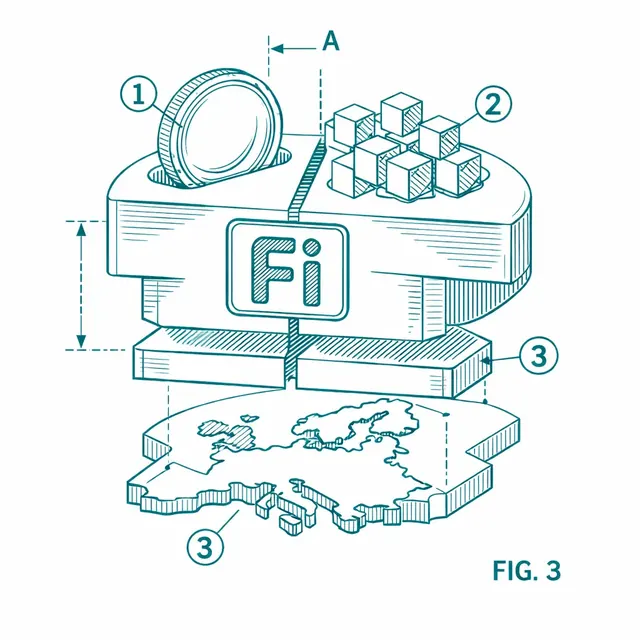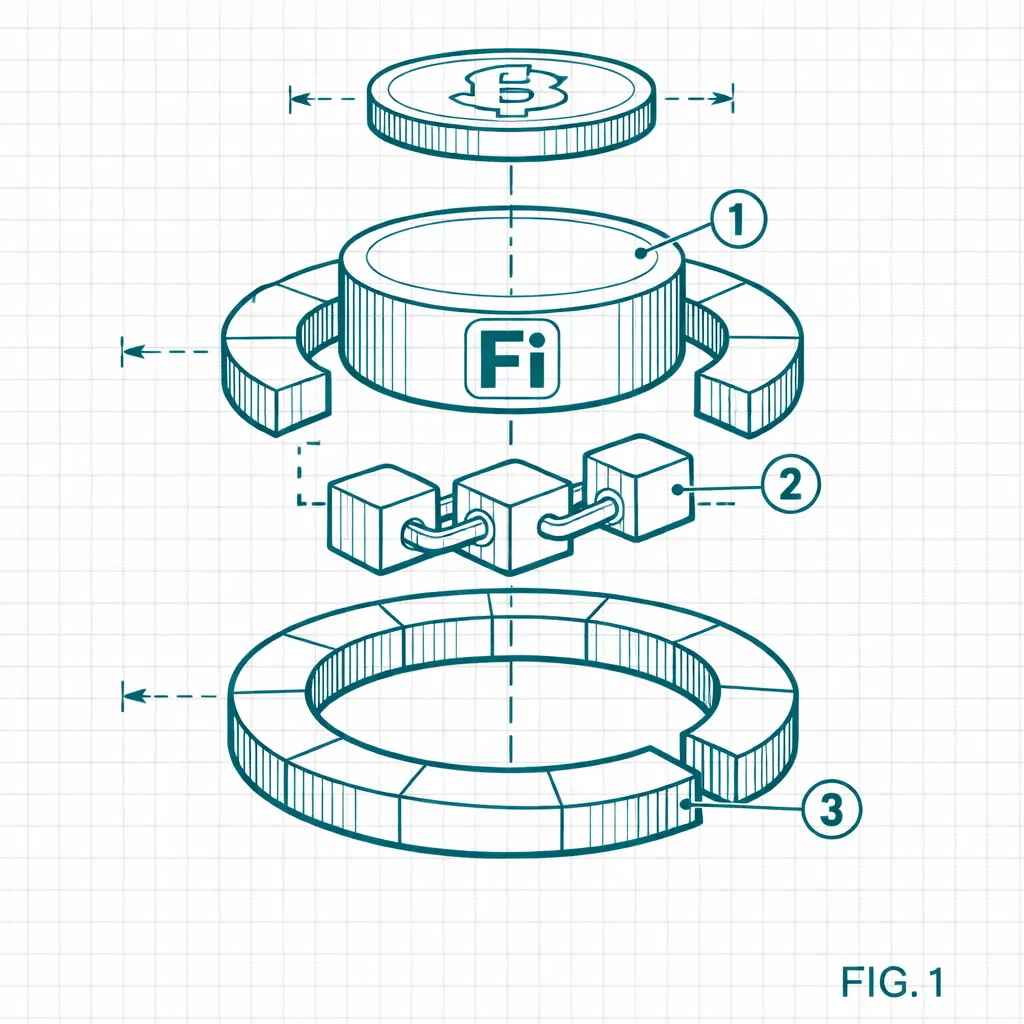
Hiring a token economy design company is usually cheaper than discovering your token model is broken in public markets. A token is not just a product feature. It is capital structure, revenue policy, dilution policy, governance permissions, and distribution plumbing in one instrument.
That is easiest to see in protocols where value capture is explicit. Lido takes a 10% fee on staking rewards and splits it between node operators and the treasury. Maker’s system can use DAI surplus from stability fees to buy and burn MKR. Uniswap v2 even includes a built-in 0.05% protocol fee switch that governance can activate. Those are not branding choices. They are decisions about who captures cash flows and whether tokenholders ever sit downstream of real economic activity.
The hidden cost of DIY is not consultant spend. It is mispriced token design.
DIY tokenomics often starts from narrative. A founder asks what utility the token can have, how to make the launch exciting, or what allocation mix looks normal in the market. The harder questions come later, usually too late. What revenue actually reaches the treasury. What emissions do to float six months after launch. Whether governance can change fees, mint supply, or freeze transfers. Whether the token is being sold as a consumptive asset or an instrument buyers expect to appreciate because a team keeps building around it. The SEC’s April 3, 2019 framework focuses exactly on that economic reality, including transferability, broad marketing to purchasers, profit expectations, and reliance on managerial efforts of others.
A specialist tokenomics firm is therefore less a creative agency and more a risk-pricing function. The goal is not to make a token look sophisticated. The goal is to avoid designing a system where demand is discretionary but sell pressure is contractual, where the protocol generates fees but the token captures none of them, or where governance rights exist on paper but are operationally unusable in code.
That distinction matters because public markets eventually reduce every token story to cash-flow proxies, dilution, and credible rights. Utility without measurable value flow behaves like marketing. Utility tied to fees, treasury inflows, or required network usage behaves more like an economic system.
Token design is an interface problem, not a spreadsheet problem.
DIY tokenomics rarely fails because a team cannot build a cap table. It fails at the interfaces between economics, legal structuring, smart contracts, and go-to-market. Coinbase says its Digital Asset Support Group evaluates listings against legal, compliance, and technical security standards, and that listed assets remain under ongoing monitoring. Kraken states that, for EEA listings, MiCA documentation requirements now apply, and since January 1, 2025 listed crypto-assets in the EEA must have a valid MiCA whitepaper. Kraken also explicitly recommends seeking a specialist firm or legal counsel if that expertise does not exist in-house.
That is why tokenomics work cannot be isolated from launch operations. Distribution schedules, lockups, and documentation are now part of market readiness, not an afterthought. Coinbase’s token operations product pitches automated vesting and lockups specifically to replace spreadsheet-based distributions and to bridge allocation planning into launch execution.
Implementation details also matter far more than most DIY teams expect. OpenZeppelin’s governance and access-control documentation is blunt that timelocks exist to protect users from dangerous administrative actions, including minting, freezing transfers, or upgrades, and that governance delays give users time to review and exit. On Solana, even a transfer-fee token requires chain-specific extension logic, separate fee authorities, and withheld-fee handling rather than a generic ERC-20 style assumption.
The practical point is simple. A token model is only as good as the permissions, contracts, and operational processes that implement it. A DIY spreadsheet can say “1% transfer fee” or “community-governed treasury.” The chain may require something more complex, and the governance setup may quietly leave a multisig or admin with far broader power than the community assumes.
Specialists earn their keep in value capture, dilution control, and scenario testing.
The strongest reason to hire a token economy design company is financial. Specialists are paid to trace value flows and pressure-test dilution before the market does it for you. Tokenomics.com’s published audit framework breaks token design into allocation distribution, vesting, inflation, investor terms, valuation, liquidity, and value flow, and it explicitly models the market cap required at each unlock event for investors to break even. Other specialist firms publicly describe Monte Carlo simulations and market-scenario testing for retention, treasury growth, and inflation risk. That is closer to structured finance work than to community design.
Unlock math is not cosmetic. CoinGecko found that 21.33% were low-float among the top 300 crypto assets it studied on May 8, 2024. In other words, a meaningful slice of the market still had large future supply overhangs. If your team launches with weak vesting logic, overfunded private rounds, or unrealistic opening valuation, the problem is not theoretical. It shows up later as repeated supply shocks and weak secondary-market support.
| Workstream | What matters economically | What DIY often misses | Why a specialist helps |
|---|---|---|---|
| Value capture | Fee design determines whether activity funds LPs, operators, treasury, or tokenholders. Lido and Maker show explicit capture paths, while Uniswap’s protocol fee is optional governance policy. | Teams describe “utility” but never define who receives economic surplus. | Specialists map value flows first, then decide whether the token deserves a claim on them. |
| Allocation and vesting | Future unlocks affect float, price support, and insider exit pressure. CoinGecko’s low-float data shows the market-wide relevance of supply overhang. | Founders optimize for fundraising convenience rather than post-launch market structure. | Specialists model dilution paths, break-even levels, and unlock sequencing. |
| Governance and permissions | Admin rights can mint, freeze, upgrade, or bypass intended decentralization if poorly structured. | Governance is treated as voting UI instead of a permissions architecture. | Specialists connect token design to timelocks, roles, emergency powers, and execution reality. |
| Listing and compliance readiness | Exchanges and venues assess legal, compliance, and technical readiness. EEA listing now carries MiCA documentation requirements. | Teams assume a whitepaper and token table are enough. | Specialists package the model into disclosure-grade documentation and coordinate with counsel. |
| Implementation | Chain-specific token features can require nontrivial authority, fee, and accounting design. | Teams copy a template from another chain or protocol. | Specialists translate economic intent into technically credible parameters. |
Hiring a firm also reduces launch friction with investors, exchanges, and internal teams.
A tokenomics advisor is valuable partly because the output is communicable. Investors want to know dilution paths, treasury runways, and insider alignment. Exchanges want disclosure-ready materials and operational competence. Legal counsel wants economic assumptions stated precisely enough to evaluate distribution structure and marketing risk. Engineers want parameters that can actually be implemented. A specialist sits in the middle and turns one messy problem into a coherent set of decisions and documents.
That coordination function is increasingly visible in the market. Specialist firms market not just token design but disclosure support, exchange-facing materials, and compliance-aligned documentation. Tokenomics.com says it works with regulatory frameworks and exchanges to improve disclosure standards and offers MiCA-ready tokenomics documentation. Kraken’s listing page makes clear why that matters.
DIY teams also tend to underestimate messaging risk. The SEC framework looks at how a token is offered and sold, including whether buyers are led to expect profits from managerial efforts. A16z’s token launch guidance makes a similar operational point from the market side: transfer-restricted tokens or off-chain points can reduce legal risk in some launch structures because purchasers cannot simply buy into an immediately tradable speculative instrument. Even if a project does not follow that exact path, the broader lesson holds. Launch mechanics and communications are part of token design, not separate workstreams.
DIY is rational only in narrow cases.
DIY can work when the token is not really a capital-market instrument. If the asset is confined to a closed product loop, immediately usable, constrained in transferability, sold in user-sized quantities, and not marketed around appreciation, the SEC framework suggests it is less likely to look like an investment contract. That is a much narrower lane than most founders admit.
DIY can also work if the team genuinely has the full stack in-house: a product economist, securities-aware counsel, smart-contract engineers who understand governance and permissions, treasury operators, and people who can model post-launch supply and liquidity. Most early-stage teams do not have that bench. They have strong builders, a spreadsheet, and a few market comps. That is not in-house token economy expertise. It is improvisation.
The tradfi-style question is useful here: would you let a startup design its own cap table, treasury policy, disclosure pack, and market-making assumptions with no specialist input before a public listing? In most cases the answer is obviously no. A token launch is not identical to an IPO, but the economic consequences of getting the structure wrong are immediate and public in a way many private financings are not.
What to look for in a token economy design company
The best tokenomics consulting is senior, quantitative, and independent. Senior matters because token design decisions sit close to financing strategy and governance risk. Quantitative matters because vesting, emissions, treasury needs, and value capture should be modeled, not narrated. Independence matters because some providers explicitly bundle token launch consulting with marketing, exchange listings, liquidity provisioning, development, or market making. That does not prove biased advice, but it does create a clear incentive to optimize for launch optics and trading activity rather than long-run economic sustainability. That last point is an inference from the business model, not a direct accusation.
This is the standard we apply at FinDaS Tokenomics. Our work is data-driven, bespoke, and built around sustainable token economy design rather than narrative dressing. Clients work directly with top experts, with no handoffs to juniors. We keep the design process conflict-free, which matters when token structure affects treasury outcomes, investor alignment, and secondary-market behavior. Across more than 300 projects, our clients have raised over $1 billion. Those numbers matter less as marketing badges than as proof that tokenomics design is a repeat-pattern discipline.
If you are deciding between a tokenomics expert and DIY, the right benchmark is not consultant cost versus zero. It is consultant cost versus one bad unlock schedule, one weak value-accrual design, one avoidable governance flaw, or one preventable listing delay. For most serious Web3 teams, that trade is not close.