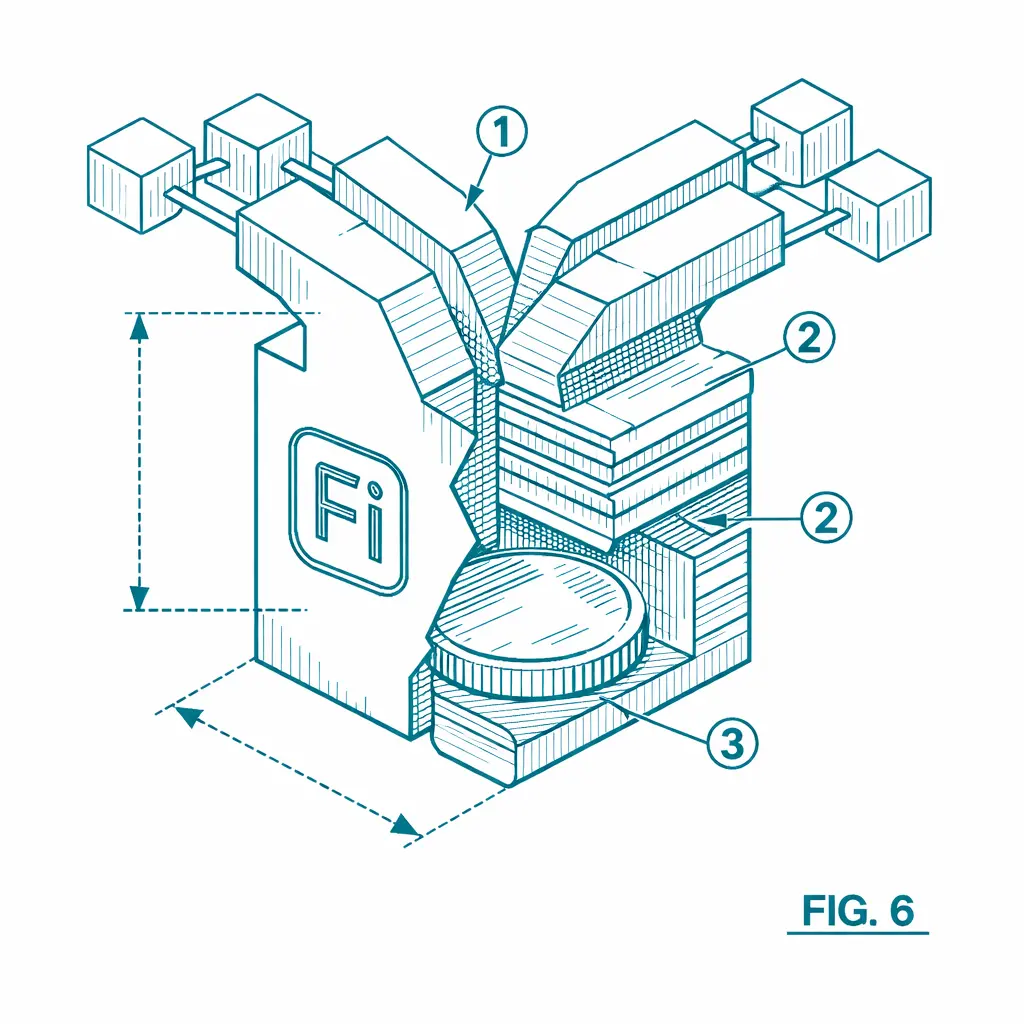
Forks are how blockchains change without a central administrator. They are also how communities exit when coordination fails. That dual role makes forks central to blockchain development, but it also makes them expensive. Every fork reallocates attention, security budget, liquidity, and governance capacity. From a treasury risk perspective, that is the real point: a fork is never just a code event. It is a capital management event with technical consequences.
Forks are the upgrade path and the constitutional escape valve of public blockchains
Public blockchains need a way to ship protocol changes while preserving credible neutrality. In Bitcoin’s classification of consensus changes, soft forks and hard forks are explicitly distinguished because disagreements at the consensus layer can partition the network into incompatible histories.
That sounds abstract until you look at how mature networks actually evolve. Ethereum’s official fork timeline runs from Frontier through repeated named upgrades across the following decade, including security responses, gas repricing, issuance changes, and scaling-related upgrades. In other words, forks are not exceptional accidents. They are part of normal protocol maintenance.
The important distinction is that a hard fork is not synonymous with a new coin. A new asset only becomes durable if a meaningful share of validators, miners, exchanges, wallets, and users continue supporting the legacy rules. Most planned upgrades aim to avoid that outcome. Contentious forks make it visible.
Soft forks and hard forks solve different coordination problems
A soft fork tightens the valid rule set. A hard fork permits blocks or transactions that older nodes would reject. That is the cleanest technical distinction, and it matters because it determines how much coordination is required to keep one chain.
| Dimension | Soft fork | Hard fork |
|---|---|---|
| Compatibility | Older nodes can still follow the chain because new rules make some old-valid structures invalid. | Older nodes reject new-valid structures unless they upgrade. |
| Typical coordination load | Lower at the node level, though activation politics can still be intense. | Higher, because the ecosystem must coordinate around new client versions and chain identity. |
| Illustrative example | SegWit was designed to be “soft fork compatible,” and older software can continue operating without modification. | Ethereum formalized hard forks as a process for protocol upgrades, and its history shows repeated named hard forks used for planned changes. |
| Failure mode | Political deadlock over activation. | Persistent chain split if a minority continues the old rules. |
SegWit is the canonical example of why soft forks matter. Its SegWit specification did more than add a feature. It restructured witness data, aimed to eliminate nonintentional transaction malleability, and created room for later extensions, all while preserving compatibility with older software. That is development by constraint. It shows why soft forks are attractive when a network values continuity and wants to minimize overt chain fragmentation.
Hard forks matter for the opposite reason. They allow more radical changes. Ethereum’s hard-fork process exists because some upgrades cannot be expressed as simple rule tightening. Issuance changes, state changes, gas repricing, and major roadmap transitions often need a broader break with prior assumptions.
Blockchains fork for security, scaling, and governance deadlock
Security response is one of the most defensible reasons to fork. Ethereum’s 2016 history makes that plain. The DAO fork moved funds out of the compromised contract after the DAO attack, the decision reached over 85% of votes on the voting platform, and some miners who refused the change continued on what became Ethereum Classic. Later in 2016, Tangerine Whistle and Spurious Dragon were used to respond to denial-of-service problems and to add replay attack protection.
Scaling and economic policy are another major driver. Bitcoin Cash split from Bitcoin at block 478,558 on August 1, 2017. That fork was tied to a long-running dispute over how Bitcoin should scale and what trade-offs it should accept around block space and roadmap direction.
Governance deadlock is the deeper cause underneath both examples. Forks happen when the cost of staying together exceeds the cost of splitting. That cost can be technical, but it is often organizational. If a protocol lacks a legitimate form of protocol governance to resolve roadmap conflicts, the fork becomes the ultimate veto.
This is why it is wrong to frame forks as purely negative. The option to fork disciplines core teams and entrenched stakeholders. It prevents protocol governance from becoming irreversible. But the same exit option also raises the baseline cost of coordination, because every major disagreement carries a credible threat of asset fragmentation.
Users do not experience forks as whiteboard diagrams
Users feel forks through balances, wallet support, exchange policies, and application breakage. The most visible effect is balance duplication on contentious splits. In a U.S. SEC filing, the Bitcoin trust sponsored by Grayscale disclosed that in connection with the Bitcoin Cash hard fork on August 1, 2017, each Bitcoin holder passively received an incidental right to obtain the same number of BCH tokens as BTC held on that date.
But duplicated balances do not mean duplicated usability. Coinbase’s Bitcoin Cash retrospective is a useful operational record. Coinbase announced on August 3, 2017 that it intended to let customers withdraw BCH by January 1, 2018, and only later decided whether to support trading after reviewing network security, developer support, and liquidity. That is the practical side of forks: the chain may exist on day one, but market access, custody workflows, and internal risk controls lag behind.
Custody structure is a major determinant of who actually benefits from a fork. Coinbase states that forked assets are associated with the private keys of the original blockchain, yet also explains that securely retrieving forked or airdropped assets is difficult and engineering-intensive in institutional storage environments. The implication is straightforward: self-custody preserves optionality, while custodial users inherit the operator’s support policy.
Replay risk is the less visible but more dangerous user issue. After the DAO hard fork, the Ethereum Foundation warned that users following the non-fork chain should beware of transaction replay attacks and take precautions. Replay risk is what happens when a valid transaction on one branch can also execute on another. For users and treasury operators, that turns a political split into an asset-loss vector.
Infrastructure providers also choose winners. Circle stated that after the Ethereum Merge in late 2022, developers created EthereumPoW, but Circle would support only Ethereum PoS for native USDC and EURC issuance and redemption. That single decision illustrates how network effects work after a fork. A minority chain can copy balances and state, but it cannot automatically copy stablecoin redemption, oracle support, exchange depth, or institutional trust.
There is also a legal-accounting layer. In Revenue Ruling 2019-24, the IRS said a taxpayer does not have gross income from a hard fork if no new units are received, but does have ordinary income if new cryptocurrency is received following a hard fork and the taxpayer has dominion and control over it. Protocol duplication and taxable receipt are not the same event.
Forks are treasury events before they are branding events
A fork changes the treasury problem immediately. Reserves may appear duplicated across chains, but the treasury’s real purchasing power depends on which branch retains stablecoin redemption, exchange support, developer throughput, and counterparties. The BCH record and Circle’s Ethereum PoS-only redemption stance make that distinction concrete.
That is why treasury teams should treat forks as resource allocation decisions, not windfalls. A duplicated treasury token balance on a minority fork can tempt opportunistic grant programs, speculative liquidity mining, or discretionary market-making. Without governance constraints, that is often just balance-sheet leakage dressed up as ecosystem support.
The better approach is disciplined and boring:
- Define chain-recognition policy before the fork. Treasury, foundation, and DAO-controlled wallets should know which chain is canonical for accounting, payroll, and reserve reporting.
- Classify reserves by redeemability, not ticker. A stablecoin balance on a forked chain is only reserve-grade if the issuer and major venues honor it.
- Freeze discretionary deployment during uncertainty. Until replay protection, custody access, and service-provider support are clear, capital preservation should outrank ecosystem signaling.
- Separate defense budget from growth budget. Security response, client maintenance, communication, and exchange coordination should not be funded from an undefined “community reserve.”
- Force explicit governance on forked assets. Claim, sell, hold, ignore, or distribute should each require a stated rationale and process.
Coinbase’s approach to fork support is revealing here. The company evaluates support using security, roadmap clarity, developer activity, and liquidity, and it explicitly says supporting every fork is not possible because engineering effort competes with platform security and reliability work. Treasury managers should think the same way. Every unit of effort spent defending or commercializing a fork is effort not spent on the main network’s durability.
The best blockchain systems reduce unnecessary fork friction, but they do not eliminate governance
Some newer architectures try to reduce the operational pain of upgrades. Tezos documents a built-in on-chain self-amendment process for proposing, selecting, testing, and activating protocol upgrades without the need to hard fork. Polkadot’s developer docs describe forkless runtime upgrades using on-chain WebAssembly runtimes that can be swapped through decentralized consensus.
Those designs are important because they show that “blockchain development” does not have to mean repeated public chain drama. Better upgrade rails can compress coordination cost, shorten downtime risk, and reduce the chance that every major change becomes a market event. That is good for treasuries because it narrows the zone where governance ambiguity can destroy value.
But forkless upgrades are not governance-free upgrades. They simply move conflict into formal procedures. Someone still writes the code. Someone still decides activation thresholds. Someone still absorbs migration cost if state formats, tooling, or APIs change. The advantage is not the absence of politics. The advantage is that the budgetary and operational blast radius is smaller.
For token economy design, that distinction matters. A protocol with frequent contentious forks is not just a governance story. It is a recurring dilution of focus, liquidity, and treasury credibility. A protocol with clear upgrade rules can afford to invest more confidently in grants, staking incentives, or long-dated ecosystem programs because the probability of coordination failure is lower.
What forks mean for token economy design
Forks are necessary because blockchains need a path to upgrade and a path to dissent. The strategic mistake is treating every fork as innovation by default. Some forks solve real security or roadmap problems. Some simply formalize a governance breakdown. The analytical task is to separate productive protocol change from capital-destructive fragmentation.
From FinDaS Tokenomics’ standpoint, fork policy belongs inside token economy design, not outside it. Upgrade paths shape reserve policy, exchange dependence, validator incentives, and the credibility of long-term commitments. Any serious tokenomics consulting brief should ask four questions early: who can credibly trigger a fork, how treasury-controlled assets are recognized across branches, which external dependencies decide economic finality, and what governance limits apply to discretionary spending during a split.
The highest-quality protocols are not the ones that never fork. They are the ones that can upgrade without confusing assets with support, duplicated balances with usable reserves, or community passion with sustainable capital allocation.