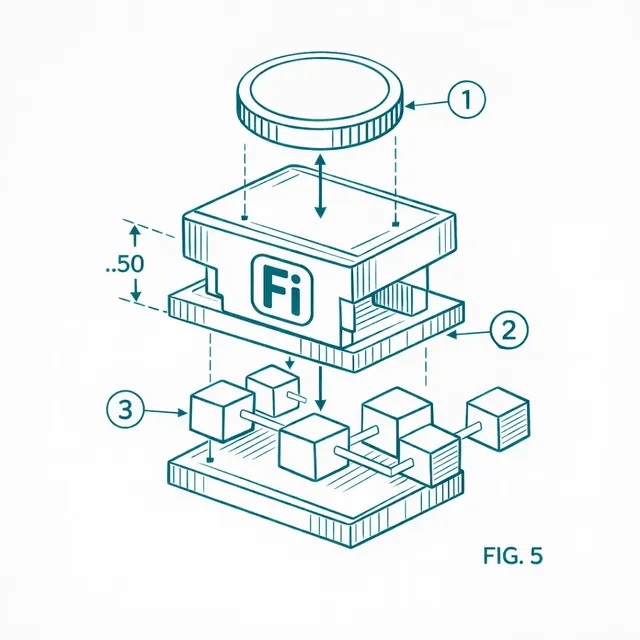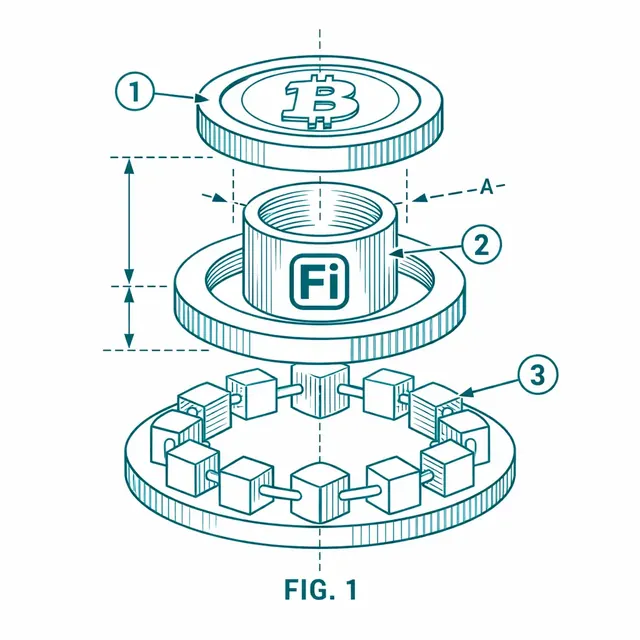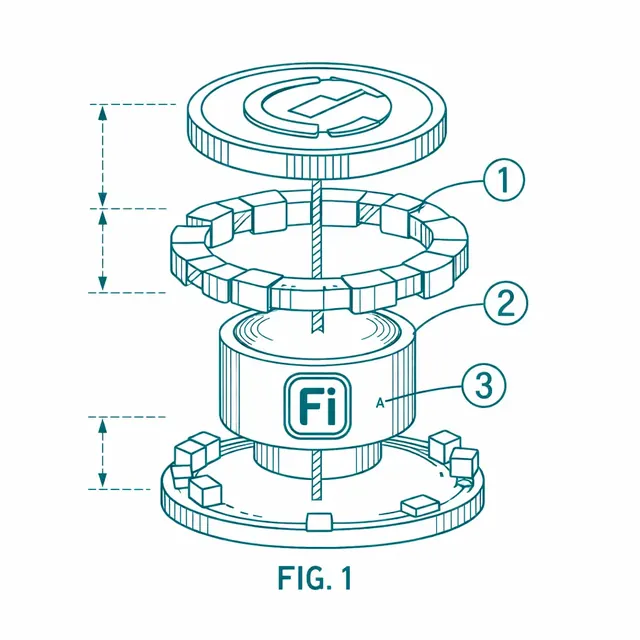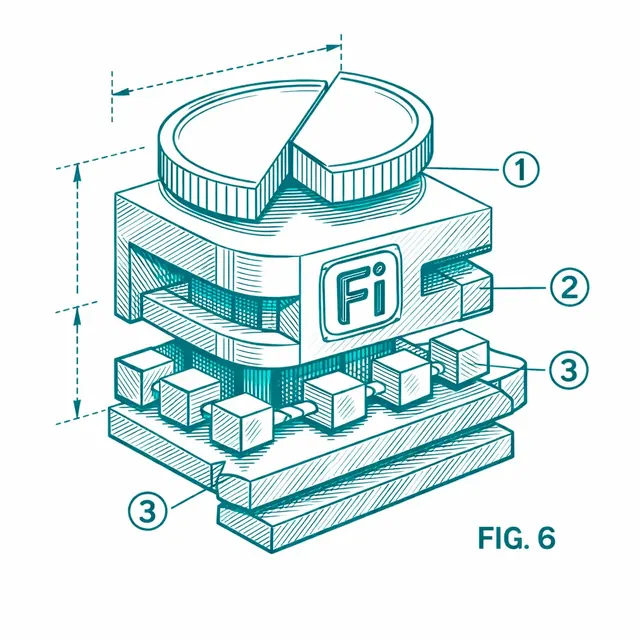
Oracles determine whether volatility becomes a manageable repricing event or a liquidation cascade. In DeFi, the oracle is not a passive reference number. It sits inside the execution path that marks collateral, unlocks liquidations, changes who can arbitrage, and can even decide whether value leaks to searchers or returns to the protocol, as Ethereum’s oracle documentation makes clear.
Oracles sit inside the execution path
Smart contracts need oracles because public blockchains cannot natively read external facts without breaking deterministic execution. Ethereum’s own documentation frames the problem clearly: nodes must reach the same result from the same inputs, so offchain data has to be sourced, verified, and written onchain through an oracle system before contracts can consume it. That is why oracles are better understood as infrastructure for “hybrid smart contracts,” not as optional middleware.
That infrastructure powers much more than token prices. Ethereum documents prediction markets and weather-based insurance as core oracle use cases, while Chainlink’s documentation extends the list to reserve balances and L2 sequencer health. In practice, DeFi uses oracles anywhere a contract must react to something the chain itself cannot directly observe.
The key implication is simple: oracle choice is application design. A lending market, a perp venue, a prediction market, and a parametric insurance contract do not need the same truth model. They need different combinations of freshness, manipulation resistance, disputeability, and operational fail-safes.
Why oracle design is a market-structure problem
Oracle risk is usually expressed as a data-quality problem, but in DeFi it is more often a liquidity problem. A price update changes which positions are solvent, which liquidations are profitable, and which counterparties can race for blockspace. Chainlink’s Data Feeds documentation makes this explicit at the mechanism level: feeds update when a deviation threshold is crossed or a heartbeat expires, and protocols are expected to monitor freshness and define their own acceptable bounds. A feed is therefore a timed market event, not just a database entry.
Aave’s own listing guidance shows how seriously large lending markets treat that execution risk. For asset listings, Aave recommends a proper Chainlink price feed and states that, as a general rule, purely onchain oracles based only on DEX liquidity are better avoided because they can be manipulated. The same document ties liquidation bonuses and collateral parameters to asset liquidity and liquidation feasibility. That is a market microstructure view, whether or not the document uses the term.
L2 deployments add another layer. Chainlink’s L2 sequencer uptime feeds exist specifically to help protocols avoid mass liquidations during sequencer outages by providing a grace period. This is a useful reminder that an oracle stack is not only about “what is the price?” It is also about “is the venue state trustworthy enough to liquidate people right now?”
Oracle design now also shapes revenue flows. Chainlink defines Oracle Extractable Value, or OEV, as the MEV created when oracle reports hit chain and are consumed by applications, especially during lending liquidations. On March 29, 2025, Aave activated an initial Chainlink SVR pilot on Aave V3 Ethereum to recapture part of that liquidation-linked value with fallback to standard feeds if the SVR path stalls. That is a notable shift: oracle updates are no longer treated only as risk events, but also as auctionable flow events.
The main oracle models and what each actually optimizes
No oracle model is universally superior. Each one chooses a different failure mode. The right comparison is not “decentralized versus centralized” in the abstract. It is which design best matches the settlement speed, liquidity depth, and dispute tolerance of the protocol using it.
| Model | How truth is produced | What it optimizes | Main trade-off |
|---|---|---|---|
| Centralized oracle | One entity aggregates offchain data and writes it onchain. | Low operational complexity and fast delivery, especially when the source itself is proprietary or authoritative. | Single-point correctness and availability risk. If the operator fails, is hacked, or goes offline, contracts inherit that failure directly. |
| Decentralized aggregated feed | Multiple oracle operators submit observations; the aggregator updates when quorum and trigger conditions are met. Chainlink documents minimum responses, heartbeat thresholds, and deviation thresholds as core mechanics. | Strong default fit for lending and broad DeFi collateral pricing. | Freshness and configuration become first-class risks. Consumers must monitor timestamps, acceptable ranges, and upgrade paths through proxies and aggregators. |
| First-party low-latency oracle | Pyth says its data comes from 120+ first-party providers, including exchanges and market makers, with pull updates available every 400ms. It also publishes a confidence interval alongside price. | Fast market-sensitive applications and derivatives that care about venue-level dispersion. | Integrators must explicitly design around latency asymmetry, staleness, and adversarial selection. Pyth says protocols should assume adversaries see price changes before the protocol does. |
| Optimistic oracle | UMA lets anyone propose data onchain and treats it as valid unless disputed during a liveness window, with disputes escalating to DVM resolution. The default liveness window is two hours, and current integrations often use windows from 2 hours to 2 days. | Arbitrary truths such as event outcomes, insurance claims, bridge verification, and custom assertions. | Settlement is intentionally delayed, and security depends on bond sizing, dispute participation, and well-chosen liveness parameters. |
| DEX-native and delayed onchain oracle | Uniswap v2 introduced a hardened TWAP oracle using cumulative prices, while Maker combines a median of whitelisted signers with a delayed Oracle Security Module. Maker’s OSM defaults to one hour. | High transparency and direct use of onchain state, or conservative reference pricing with explicit delay. | TWAPs inherit liquidity-depth and sequencing assumptions. Delayed oracles reduce immediate manipulation risk but can lag sudden repricings and concentrate liquidation pressure when the update finally lands. |
How oracle manipulation attacks really work
Most oracle attacks are liquidity attacks wearing a data hat. Uniswap’s v2 whitepaper explains the core problem cleanly: a spot price pulled directly from an AMM is easy to manipulate, because an attacker can push the pool price, trigger settlement elsewhere, and then trade back. Uniswap v2 made that harder by recording cumulative prices and letting external consumers compute a TWAP over an interval. It also states the central trade-off: a longer averaging window raises manipulation cost, but gives a less up-to-date price.
That trade-off did not disappear with better AMM design. It changed shape. After Ethereum moved to proof of stake, Uniswap Labs noted that validators can know in advance whether they control consecutive blocks, removing one of the old back-run defenses that helped protect TWAPs under proof of work. Uniswap’s research still found two-block manipulation on top pairs prohibitively expensive, but concluded that three-block and longer manipulations are more feasible and that more robust oracle designs should be explored.
Pyth’s documentation surfaces a different but equally important attack surface: latency asymmetry. It tells integrators to assume adversaries see price changes before the protocol does and warns about adversarial selection when users can choose among eligible updates. Its recommended mitigations are structural, not cosmetic: delayed settlement, confidence-aware spreads, and minimum holding periods to block same-block exploitation.
Staleness is another common failure mode. Chainlink explicitly says Data Feeds are not streaming feeds and instructs integrators to inspect updatedAt or equivalent timestamp fields, define acceptable freshness windows, and pause or switch to alternate modes if updates are too old. In other words, protocols are responsible for deciding when a technically valid answer is economically unusable.
Venue fragmentation matters too. Pyth’s confidence-interval model exists because there is often no single “true” market price at a moment in time. Different venues can diverge during volatility, withdrawal freezes, or widening spreads. The confidence interval is therefore not cosmetic metadata. It is an estimate of how dispersed the observable market is, which is exactly the information a lending or derivatives protocol needs when deciding whether to value conservatively.
Design rules for robust DeFi oracle stacks
Robust oracle design starts by matching the oracle to the liquidation path, not to the marketing narrative. A conservative lending market often wants slower, harder-to-manipulate valuation with explicit freshness checks and circuit breakers. A derivatives venue may need lower latency, but then must compensate with delayed settlement, spreads, confidence-aware execution, or exposure caps. The oracle cannot be assessed independently from the protocol’s leverage, collateral, and liquidation design.
Prefer executable conservatism over headline precision. Pyth explicitly suggests that lending protocols can value collateral at the lower bound of the confidence interval and debt at the upper bound. That is a better risk posture than pretending a single mid-price is always economically real.
Use delay intentionally, not accidentally. Maker’s architecture makes delay a visible policy choice through the OSM. UMA makes delay explicit through liveness windows and dispute periods. Hidden delay in a supposedly “real-time” oracle is worse because the protocol may not have designed its liquidation logic around it.
Treat L2 state as oracle input. Sequencer uptime feeds exist because liquidation logic during an outage can be unfair even if the last quoted price is correct. Market state and venue state are different variables.
Size collateral parameters to market depth. Aave’s guidance ties liquidation bonuses and listing assumptions to liquidity and warns against purely DEX-based listing oracles. Oracle quality does not rescue an asset whose liquidation path is too thin.
Assume oracle updates create auctionable order flow. Chainlink’s OEV framing and Aave’s SVR rollout show that price updates themselves create competitive blockspace value. Protocols should plan for that flow, either by defending against it or by recapturing part of it.
The broader pattern is a tension between narrative stability and liquidity shocks. Longer windows, delayed modules, and dispute periods make prices look calmer and harder to game. They also push more adjustment into discrete moments. When the update finally arrives, the repricing can be sharper, liquidation queues can bunch, and MEV competition can intensify. The “safer” oracle can therefore move risk from manipulation into event clustering. That is an inference from how TWAP windows, Maker’s delayed OSM, and UMA liveness work, and it is exactly the trade-off protocols have to price honestly.
Implications for token economy design
Oracle design belongs inside token economy design because it shapes the conditions under which a token can safely serve as collateral, treasury reserve, settlement asset, or governance-linked revenue source. If a protocol relies on a thinly traded token, aggressive LTVs, and an oracle path that can be moved faster than liquidators can respond, the weakness is not “bad tokenomics” in the abstract. It is a mismatched combination of liquidity, leverage, and state transition rules. Aave’s listing framework effectively treats oracle selection, liquidation bonus, and asset liquidity as one joined problem.
That is why, at FinDaS Tokenomics, oracle architecture is not a side consideration in tokenomics consulting or token economy design work. It is a first-order constraint. The practical question is never just how many tokens unlock or how emissions decay. The practical question is whether the market can absorb those flows, whether collateral can be marked conservatively, and whether oracle-triggered repricing will create orderly liquidation or a reflexive shock.
For informed builders, the conclusion is straightforward. The best oracle is not the most decentralized label, the fastest label, or the cheapest label. The best oracle is the one whose latency, security model, and failure mode fit the actual trading environment your protocol will face when liquidity disappears first.