Sealed-bid auctions are useful in crypto when the market needs allocation discipline, not more incentives
Sealed-bid auctions do something many token launches fail to do. They force demand to reveal itself without paying users to pretend they care. In a sealed-bid format, bidders submit prices privately. That reduces pre-deadline signaling, limits some forms of manipulation, and makes it harder for bots to anchor everyone else’s behavior. In the Vickrey variant, the highest bid wins but pays the second-highest price, which discourages overbidding and makes truthful bidding more attractive in the textbook single-item case.
That theoretical appeal matters for Web3. A project distributing a scarce right, a name, a block of governance influence, access to a limited sale, or a one-off issuance window, often wants price discovery without a gas war and without a long tail of emissions. A Vickrey-style auction can do that. It prices the asset directly instead of subsidizing attention indirectly.
The constraint is equally important. A Vickrey auction is not a growth engine. It is an allocation rule. If the underlying token or right has weak productive value, the auction only discovers that weakness faster. From an emissions sustainability perspective, that is a feature, not a bug. One-off auctions can be healthier than perpetual rewards, but they do not create durable demand on their own.
The textbook mechanism is simple. The onchain version is not.
A Vickrey auction is simple in theory. Each bidder submits one private bid. The highest bid wins. The amount paid is the second-highest bid. William Vickrey formalized the mechanism in 1961, and the standard single-item result is that bidding one’s true value is a dominant strategy.
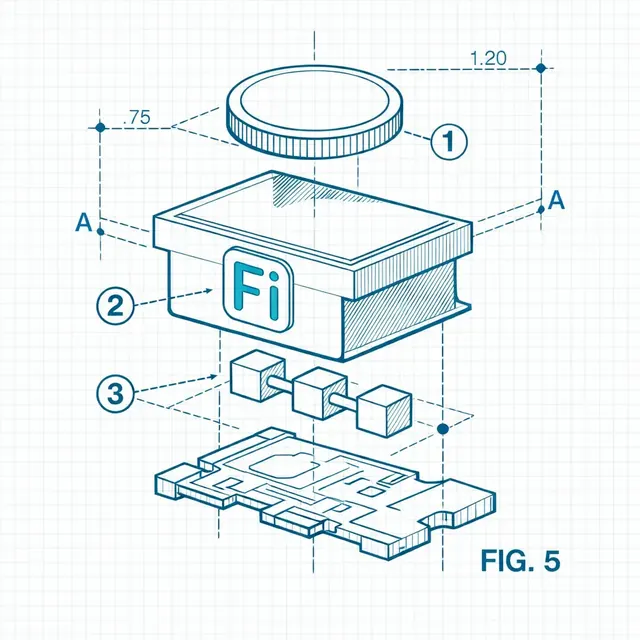
Crypto rarely gets the clean version. Public chains are transparent by default, so a bid cannot simply stay secret unless the protocol adds a privacy layer. The usual workaround is commit-reveal. Bidders first post a cryptographic commitment to a bid, then reveal the bid later. ENS’s initial registrar specified exactly that structure. It used a 72 hour bidding period followed by a 48 hour reveal period, and the commitment hash bundled the name, bidder address, bid value, and salt. ENS also required ETH to be posted with the bid, and bidders could send more than the true amount to obscure the real value.
That design shows the core implementation trade-off. Secrecy requires extra steps, and those extra steps create friction. Users must understand commits, reveals, salts, deadlines, and collateral. Capital sits idle during the auction. If a bidder fails to reveal, the protocol needs penalties or fallback rules. The mechanism stays elegant on paper while the product gets harder in practice.
Those details are not cosmetic. They determine who participates. A sophisticated bidder can manage multi-step flows and collateral lockups. A broad retail audience often cannot. For token launches that need simple UX and wide reach, that alone is enough reason many teams choose public batch auctions or Dutch-style formats instead of true sealed-bid designs.
The main crypto problem is not auction theory. It is transparency, MEV, and inclusion.
Public blockchains create a direct conflict between sealed bidding and transaction transparency. A recent paper on confidential compute auctions states the problem plainly: public chains remove centralized control, but their transparency conflicts with the confidentiality that sealed-bid auctions require.
That conflict is not hypothetical. An empirical study of Ethereum analyzed more than 11 million blocks, identified almost 200,000 frontrunning attacks, and estimated $18.41 million in attacker profit. If bids or partial bid information leak into the mempool, crypto’s adversarial environment will monetize it.
Commit-reveal helps, but it is not free. A game-theoretic analysis of commit-reveal protocols finds that they require two messages and impose delay. The same paper argues that simple commit-reveal prevents the most severe frontrunning attacks while preserving legitimate competition, but it does not make the cost structure disappear.
Censorship pressure is another underappreciated issue. Research on onchain auctions argues that traditional proof-of-stake chains can have censorship resistance that is too weak to preserve auction integrity when bids must land inside a narrow window. In their model, single-block auctions degrade quickly as bidder count rises.
This is why sealed-bid systems in crypto should be judged less by their game-theory diagram and more by four operational questions. Can the protocol hide bids until the deadline. Can it guarantee timely inclusion. Can it enforce payment if the winner disappears. Can ordinary users complete the flow without making one fatal mistake. If any answer is weak, the mechanism stops being meaningfully sealed.
Crypto implementations split into four families
Most Web3 “sealed-bid” systems fall into one of four buckets. The differences are not semantic. They determine whether the auction is actually private, merely delayed, or functionally public with a cleaner settlement rule.
| Design family | How bids stay hidden | How settlement works | Main advantage | Main cost |
|---|---|---|---|---|
| Commit-reveal on a public chain | Hash commitment first, reveal later. ENS used this model with sealed bid hashes and a reveal window. | Contract checks revealed bids and computes the winner. | Simple and verifiable. | Multi-step UX, deadline risk, capital lockup, partial privacy only. |
| Blinded bids with protocol-native covenant logic | Bid values are blinded at the chain level. Handshake uses blinded bids in its name auction covenants. | Winner pays the second-highest bid. In Handshake, the winning amount is burned. | Strong link between allocation and economic sink. | Still multi-step and auction-specific. Better for names than general token distribution. |
| Trusted hardware or confidential compute | Bids are encrypted and resolved inside SGX or a TEE-backed confidential chain. | Contract verifies an attested or signed result. | Much stronger bid privacy. | Added trust assumptions, hardware dependencies, and integration complexity. |
| Timed commitments and advanced cryptography | Protocols such as Riggs use timed commitments and range proofs. | The protocol can enforce fair finalization even if bidders drop out. | Closer to “fully decentralized sealed bid” in the strong sense. | Higher cryptographic complexity and heavier implementation burden. |
| Public batch auctions used as a substitute | They do not hide bids. Gnosis EasyAuction matches public limit orders at one uniform clearing price. | All matched users clear at the same final price. | Simple UX and fairer public price discovery for token sales. | Not sealed-bid. Privacy and anti-signaling benefits are weaker. |
The industry’s drift toward batch auctions is not an accident. Public batch auctions give up secrecy, but they preserve verifiability, simplify participation, and avoid some of the operational fragility of reveal-based designs. That is a rational trade when the goal is broad token distribution rather than privacy-maximizing allocation.
ENS and Handshake show both the promise and the limits of Vickrey-style design
ENS’s initial registrar is one of the clearest historical examples of a Vickrey auction in crypto. ERC-162 explicitly chose a Vickrey auction to allocate newly available names and to limit land-grab behavior and speculation. The mechanism was economically sound. The user experience was not. It required bid commitments, reveal timing, deposits, and later finalization.
The long tail of that complexity is still visible. ENS support currently notes that after the original auction names were released on August 2, 2020, more than 130,000 old deeds remained unclaimed and roughly 20,000 ETH was still waiting to be withdrawn. That is a stark reminder that a mechanism can be theoretically clean and still leave years of operational residue.
ENS also illustrates how crypto systems evolve away from pure sealed-bid designs when usability becomes the priority. For expired names, ENS now uses a temporary premium system rather than reviving the old Vickrey flow. After a 90 day grace period, the name enters a 21 day premium auction where the extra fee starts at $100 million and decays to zero. The point is not that anyone will pay the opening price. The point is to block instant sniping without requiring a full sealed-bid workflow.
Handshake is the stronger long-run case for Vickrey-style design because the auction is native to the system’s economic model. Handshake’s protocol documentation says the name auction system is run by transaction covenants. Its FAQ states that users submit blinded bids, the highest bidder wins, the winner pays the second-highest bid, and the winning amount of HNS is burned permanently. Losing bids are returned.
That burn matters. It ties allocation to a supply sink instead of routing value through a recurring subsidy machine. For an emissions sustainability analyst, that is the important distinction. Handshake uses the auction to allocate a scarce productive right and to remove tokens from circulation. It does not need to keep bribing users forever to prove there was demand once. The system still has UX and adoption hurdles, but the incentive loop is more coherent than a token launch that sells one narrative today and pays liquidity mining tomorrow.
Handshake’s flow is still not lightweight. Its public FAQ describes about 5 days for bidding and about 10 days for reveal, while the developer guide shows the open, bid, reveal, redeem, and update sequence explicitly. That is acceptable for top-level domain rights. It would be too slow and too operationally brittle for many token sale contexts.
For token economy design, the right question is not “Is Vickrey elegant?”
The right question is whether the asset being auctioned actually has durable utility and whether bidders have private information about that utility. Vickrey logic works best when bidders know what the item is worth to them and that value is not mainly a function of reflexive resale expectations. The closer the asset is to a single scarce right with idiosyncratic utility, the stronger the fit.
That means Vickrey-style auctions are usually stronger for names, scarce access rights, validator or sequencer slots, unique NFT claims, and tightly bounded primary sales than for general-purpose liquid tokens. A token with weak present utility and a strong narrative premium does not sit inside the clean private-value assumptions that make truthful bidding attractive. In those cases, the auction may still allocate efficiently relative to alternatives, but the theory is doing less work than people think.
For tokenomics design, the practical screening framework is straightforward:
- Use a sealed-bid Vickrey-style auction when the asset is scarce, discrete, and meaningfully valuable on its own.
- Prefer it when the protocol wants allocation discipline without creating a permanent rewards habit.
- Avoid it when broad retail participation, ultra-simple UX, or immediate secondary liquidity is the main goal.
- Avoid calling a mechanism “sealed-bid” if bids are effectively public in the mempool or if the reveal process is optional in practice.
- Price privacy explicitly. If the design needs real secrecy, budget for timed commitments and range proofs or confidential compute rather than pretending commit-reveal alone solves everything.
In tokenomics consulting, the more important decision is often whether an auction should exist at all. If a protocol needs continuous emissions to keep users engaged after the auction, the auction did not solve demand discovery. It only front-loaded speculation. At FinDaS, that is the first filter in token economy design work around auctions. Sell scarce rights when the rights are genuinely useful. Do not confuse a one-time allocation mechanism with a long-term business model.
Sealed-bid Vickrey auctions remain one of crypto’s better allocation tools. They are honest about scarcity. They can reduce some manipulation. They can replace subsidy-heavy distribution in the right setting. But they are hard to implement well on transparent chains, and they are easy to oversell. The sustainable version is the narrow version: scarce asset, real utility, credible privacy, enforceable settlement, and no assumption that the auction itself can carry the token economy forever.