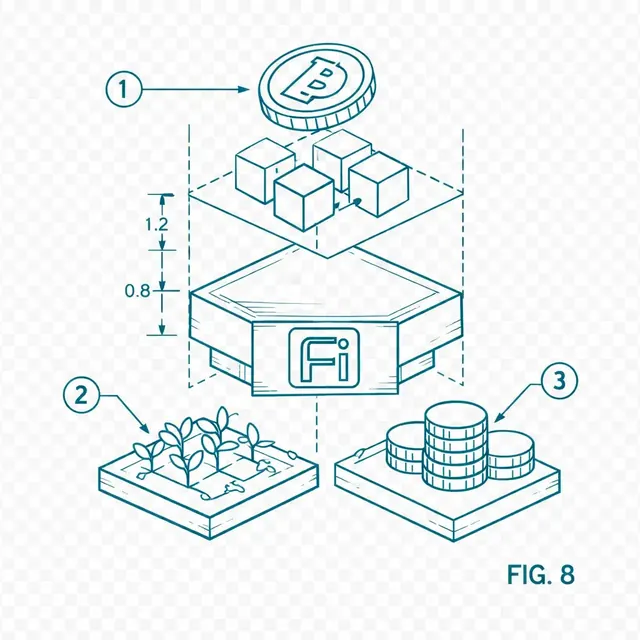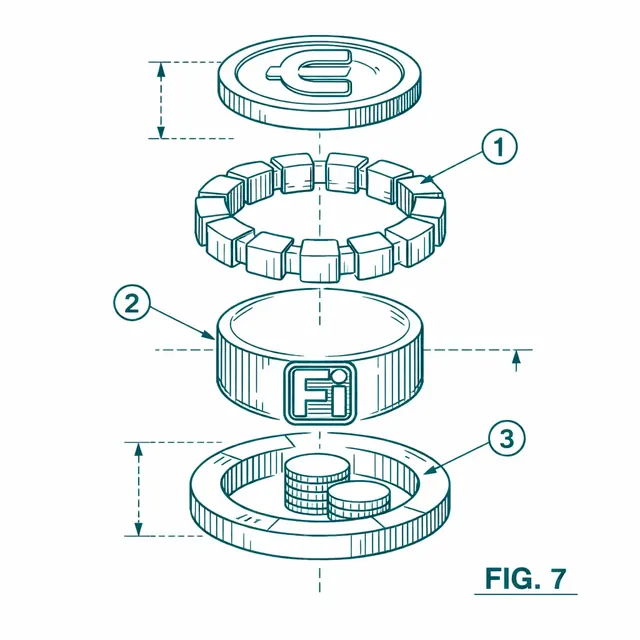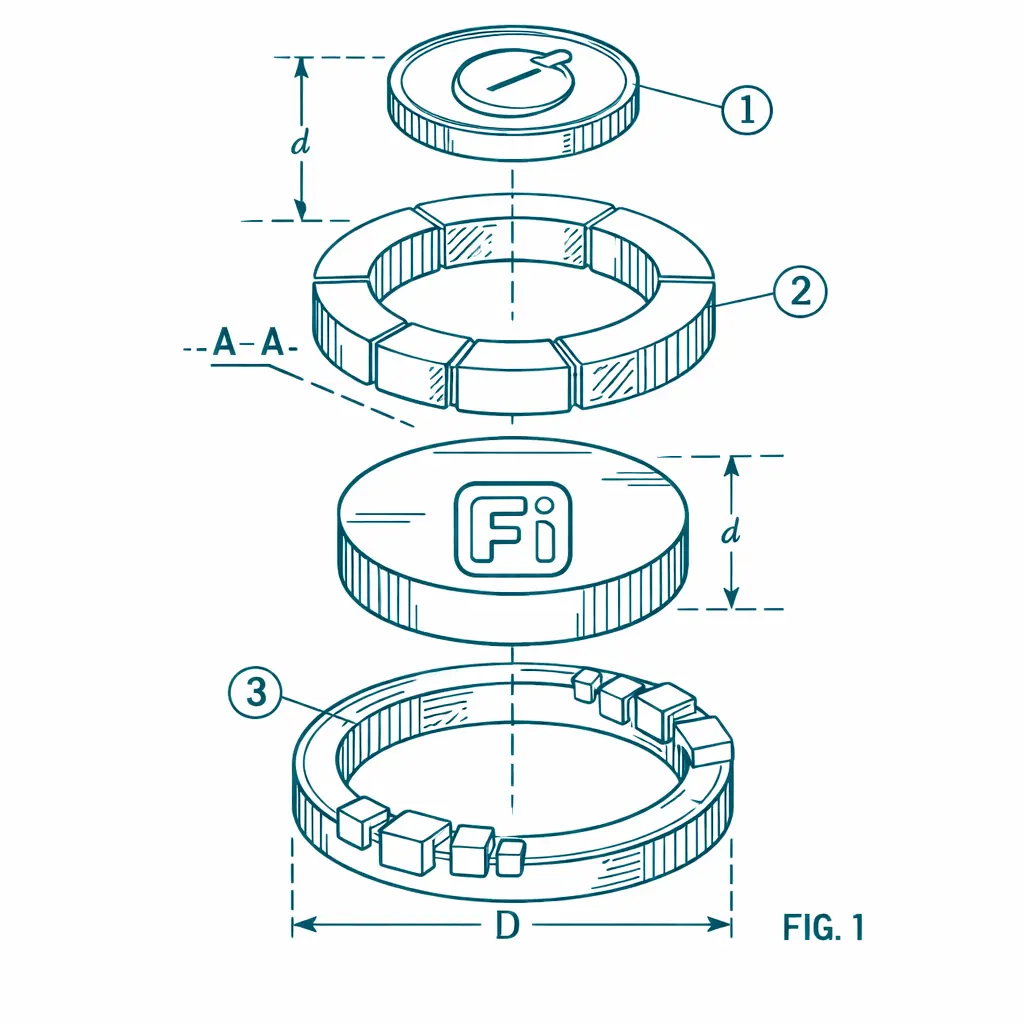
The process starts with a market design problem, not a pie chart
A serious tokenomics consulting process starts by treating the token as a traded instrument inside a specific market structure, not as a static allocation chart. That matters because launch outcomes are shaped by two linked problems: price discovery and liquidity bootstrapping. Uniswap’s November 2025 Liquidity Launchpad paper makes that framing explicit and argues that shallow or mispriced markets increase volatility, erode confidence, and weaken coordination, while deeper and better-priced markets improve capital formation and trading stability.
That framing changes what a competent tokenomics advisor actually does. The job is not just to pick total supply, draw vesting bars, and label a community bucket. The job is to map how tokens move from treasury, insiders, incentive programs, market makers, LPs, and users into live order flow. In AMM venues, price impact is mechanically tied to pool depth, and Uniswap’s own documentation states that lower-liquidity pools produce larger price impact for the same trade size.
For teams buying tokenomics consulting, the practical implication is simple. Expect the consultant to spend less time defending a narrative and more time quantifying who receives inventory, when that inventory becomes liquid, what venue it trades on, and how fast the market can absorb it. That is the difference between a presentation-grade token economy and a launch-grade token economy.
Phase 1: discovery, mandate definition, and hard constraints
The first phase is a discovery sprint that defines constraints before any design work starts. A credible advisor should force clarity on business model, target users, capital structure, jurisdictional limits, treasury needs, launch venue, and post-TGE operating plan. Hashlock’s public process starts with a consultation, a discovery call, and a tailored proposal covering scope, process, and deliverables. That sequence is basic, but it is correct.
This phase should also identify the token’s real stakeholders and value paths. Token Terminal’s listing documentation asks projects to explain how assets flow through the business model, who pays, who receives value, and which stakeholder groups matter, including liquidity providers, traders, tokenholders, lenders, borrowers, creators, and stakers. That is useful because it forces a consulting engagement to move beyond abstract “utility” and into concrete balance-sheet and flow analysis.
Most weak engagements fail here. They assume the token already needs to exist, assume the project already knows whether it wants a single-token or dual-token structure, and assume that exchange listing is the end-state rather than one distribution channel. A better process tests whether the token should govern, pay, collateralize, rebate, reward, or simply stay out of flows that are better handled by stable assets. If those decisions are not made early, the rest of the model becomes cosmetic.
At FinDaS Tokenomics, this phase is where bespoke work matters most. We do not treat token economy design as a templated exercise because the relevant constraints differ sharply across L1s, DeFi apps, gaming systems, DePIN networks, and exchange-bound consumer tokens. The right mandate is usually narrower than founders expect and more operational than investors assume.
Phase 2: economic architecture and supply flow design
The second phase converts the mandate into an economic architecture. This is where token supply, initial distribution, emissions, treasury policy, governance rights, utility design, and incentive design get defined as one system rather than as separate slides. Public service descriptions from Outlier Ventures, Deal Box, and Simplicity Group all converge on this point: token design, incentive design, distribution strategy, supply architecture, and launch strategy are interdependent deliverables, not separate workstreams.
The most important design choice in this phase is usually circulating supply quality, not total supply optics. The market cares about what can trade, what can hedge, what can be lent, what can be dumped, and what is excluded from liquid circulation. Token Terminal’s documentation is explicit that circulating supply should exclude team, treasury, investor, and similar holdings where appropriate, and it asks projects to identify the relevant addresses. That is a strong reminder that “circulating” is an operational market concept, not just a headline number.
Vesting design should also be treated as a market microstructure problem. Tokenomist’s listing methodology requires verifiable vesting or release schedules from official docs, announcements, or smart contracts before listing a token, and its process emphasizes that vague or non-extractable tokenomics reduce data reliability. In practice, that means a consultant should design allocations in formats that can be verified, monitored, and translated into expected sell-side flow.
This is also where the trade-off between narrative stability and liquidity shock becomes visible. Long cliffs and chunky quarterly unlocks may look founder-friendly and easy to explain, but they can create concentrated inventory events. Smoother unlock paths may weaken scarcity marketing, yet they often produce a more absorbable supply profile. Good tokenomics design makes that trade-off explicit instead of hiding it behind a “long-term alignment” slogan.
Phase 3: modeling, stress tests, and launch scenario analysis
The third phase is where theory gets stress-tested against trading conditions. Simplicity Group publicly separates design from modelling and describes modelling as the stage used to visualize value flows, model token price performance, set KPIs, optimize allocations and emissions, and stress-test Black Swan scenarios. That separation is helpful because a token economy is not credible until its flows are tested under multiple adoption, liquidity, and unlock assumptions.
Scenario analysis should include at least five live-market cases: thin-liquidity launch, over-incentivized launch, weak demand with scheduled unlocks, strong demand with under-seeded liquidity, and post-TGE emission persistence. Deal Box’s public deliverables explicitly include price-impact modeling, unlock scenarios, liquidity strategy, and market-maker integration readiness for pre-TGE, TGE, and post-TGE token flow. That is the right scope, because launch risk comes from interaction effects, not from one parameter in isolation.
Incentive modeling needs the same discipline. Gauntlet’s November 10, 2024 Arbitrum LTIPP case study did not treat liquidity mining as marketing spend. It modeled where liquidity and trader behavior were elastic, used simulation-based allocation, and tracked whether post-incentive liquidity and volume were sticky. The reported outcome was $14.85 million of market-share-adjusted daily TVL added during the program and lasting volume growth in 70% of the incentivized pools. The broader lesson is that incentive programs should be designed like capital allocation experiments, not like community giveaways.
Consultants who skip this phase usually default to static charts. Static charts miss the mechanics that actually move price: market-maker inventory, pool depth, quote width, volume concentration, arbitrage behavior, and unlock-to-ADV ratios. Those variables are messy, but they are the variables that determine whether a launch trades orderly or gaps lower on the first real inventory transfer.
Phase 4: implementation, documentation, and TGE handoff
The fourth phase turns the model into enforceable infrastructure. A good tokenomics advisor should work closely with legal, smart-contract, exchange, analytics, and market-making counterparts so that the written design matches the deployed logic. OpenZeppelin’s VestingWallet documentation shows why this translation matters: vesting schedules are implemented contractually, deposits after vesting has started can become partly releasable immediately, ownership transfer can make unvested claims effectively saleable, and rebasing tokens require extra accounting care. Those are not edge cases for lawyers to clean up later. They are tokenomics implementation issues.
Documentation should be structured for external counterparties, not just internal approval. Token Terminal asks projects for contract addresses, launch dates, governance rights, vesting schedules by stakeholder, unlock granularity, max supply logic, and wallet exclusions from circulating supply. Tokenomist similarly requires detailed vesting schedules, allocation breakdowns, and relevant wallet addresses for self-listing. If a consultant cannot package the model into this kind of structured disclosure, the design is not launch-ready.
TGE handoff should also include venue-specific liquidity planning. Outlier publicly frames launch support around listing and distribution strategy, while Deal Box explicitly includes a vendor and market-maker handoff pack. That is the right expectation for clients. By the end of the consulting process, there should be one consistent operating pack for exchanges, market makers, wallet partners, analytics platforms, and the smart-contract team.
Phase 5: post-launch monitoring and token economy iteration
The consulting process does not end at TGE. Post-launch is where the market tells you which assumptions were wrong. Outlier publicly positions support across pre-TGE, launch, and post-TGE stages, and Simplicity Group says post-TGE work typically includes adjusting emissions and modeling changes for a v2 economy. That matches how liquid tokens actually behave. The first live market often reveals that incentives were too blunt, liquidity was too concentrated, or disclosed circulation was economically correct but operationally misleading.
Monitoring should focus on flows, not just price. The key questions are whether liquidity depth is holding, whether market makers are running balanced books or warehousing directional risk, whether emissions are creating sticky usage or temporary farming, whether unlock recipients are distributing into strength, and whether secondary market liquidity is migrating across venues. Gauntlet’s public work with Movement highlights this mindset by emphasizing dashboards for liquidity, user activity, volume, ROI, network revenue, and ongoing optimization rather than one-off design work.
Iteration is healthy when it is rule-based and well-disclosed. Iteration is dangerous when it looks like ad hoc defense of price. That distinction matters. Markets usually forgive planned parameter tuning. Markets are much less forgiving when teams rewrite vesting, emissions, or utility logic only after supply overhang becomes obvious.
What sophisticated teams should expect from a tokenomics advisor
Teams should expect a tokenomics advisor to deliver a full operating process, not just a token paper. Public service pages give a useful baseline for what’s included and what’s not in the market today.
| Provider | Publicly visible scope | Publicly visible timeline or pricing | What that signals about the process |
|---|---|---|---|
| FinDaS Tokenomics | Bespoke, data-driven, sustainable token economy design with senior experts throughout the engagement | No junior handoffs; 300+ projects advised; clients have raised over $1 billion; design work kept conflict-free | The engagement is meant to be custom, execution-aware, and senior-led from first brief to launch plan |
| Simplicity Group | Audit, design, modelling, token paper, post-TGE advisory | Audit from $5,000; design from $10,000; modelling from $10,000 | The market already treats audit, design, and modelling as separate deliverables, not one generic package |
| Hashlock | Consultation, discovery call, tailored proposal, audit/design review | Public process begins with consultation and discovery, then a tailored proposal | Discovery and scoping are standard parts of serious engagements |
| Outlier Ventures | Token design, economy simulation, incentive design, listing and distribution strategy, launch and post-launch support | Positions support across pre-TGE, launch, and post-TGE | Tokenomics consulting is increasingly lifecycle advisory, not pre-launch-only work |
| Deal Box | Supply architecture, TGE market structure blueprint, compliance readiness, market-maker handoff pack | Typical duration stated as 8-12 weeks | Exchange-ready token economy design usually requires multiple modeling cycles and cross-functional coordination |
The practical standard is higher than many teams assume. A credible tokenomics consultant should be able to explain supply flow, unlock mechanics, liquidity seeding, incentive calibration, documentation requirements, and post-launch monitoring in one coherent model. If the advisor cannot connect those pieces, the token economy is being designed for fundraising optics rather than for the market it will actually trade in.
That is why, from FinDaS Tokenomics’ perspective, the right expectation is not “a tokenomics deck.” The right expectation is a start-to-finish token economy consulting process that survives contact with liquidity, counterparties, and time. For an informed Web3 team, that is what tokenomics consulting, token economy design, and token launch preparation should look like when done properly.