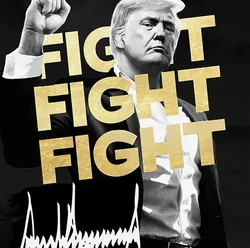
TRUMP is a brand-licensed meme float with no holder power and a warehoused supply curve
Official Trump (TRUMP) is marketed as “Trump Memes” or “Trump Meme Cards,” a fungible crypto asset on Solana, with an additional representation on TRON, and a simple core promise: trade the meme, join the community, maybe get access to promotions. The official site publishes canonical contract addresses for both chains, including Solana mint 6p6xgHyF7AeE6TZkSmFsko444wqoP15icUSqi2jfGiPN and TRON contract TXZQuyCasxN42bjAcYpP2xwYVMCF6gHBnv.
As token design, it is defined less by “utility” and more by control surfaces. There is no on-chain governance system for holders to coordinate around, no parameter voting, and no protocol-level cash flow shared with holders. OKX Europe’s crypto-asset white paper for TRUMP is blunt on this point, stating that TRUMP provides no governance rights and no claims on assets, dividends, or profits in the asset white paper.
That leaves decentralization as a structural question, not a vibes question. Who holds supply. Who can change parameters. Who gets paid. On TRUMP, the answer is not “the crowd.” It is affiliated entities, plus the base chains’ own governance systems.
Supply, emissions, and allocations: 36 months of scheduled dilution with 80% inside
The official allocation report published by the project sets the hard frame: maximum supply 1,000,000,000 TRUMP, with 200,000,000 TRUMP circulating at TGE, and an emission duration of 36 months per the allocation report.
The same official site discloses that CIC Digital LLC (described as an affiliate of The Trump Organization) and Fight Fight Fight LLC collectively own 80% of the tokens, subject to a 3-year unlocking schedule.
- Creators & CIC Digital, 1: 36% (360,000,000), 0% at TGE; 3-month lock; 10% unlocked at initial cliff; then unlock over 24 months; unlock frequency: daily.
- Creators & CIC Digital, 2: 18% (180,000,000), 0% at TGE; 6-month lock; 25% unlocked at initial cliff; then unlock over 24 months; unlock frequency: daily.
- Creators & CIC Digital, 3: 18% (180,000,000), 0% at TGE; 12-month lock; 25% unlocked at initial cliff; then unlock over 24 months; unlock frequency: daily.
- Liquidity: 10% (100,000,000), 100% unlocked at TGE.
- Public Distribution: 10% (100,000,000), 100% unlocked at TGE.
- Creators & CIC Digital, 4: 4% (40,000,000), 0% at TGE; 3-month lock; 10% unlocked at initial cliff; then unlock over 24 months; unlock frequency: daily.
- Creators & CIC Digital, 5: 2% (20,000,000), 0% at TGE; 6-month lock; 25% unlocked at initial cliff; then unlock over 24 months; unlock frequency: daily.
- Creators & CIC Digital, 6: 2% (20,000,000), 0% at TGE; 12-month lock; 25% unlocked at initial cliff; then unlock over 24 months; unlock frequency: daily.
Two things matter more than the category labels. For a comparison point on launch-driven meme distribution mechanics, see Pump.fun tokenomics.
First, the public float is structurally thin at launch. The project itself frames that as 200 million at day one growing to 1 billion over three years.
Second, the unlocking cadence is daily after cliffs for the affiliated tranches, over 24 months per tranche. That is a long, continuous sell-pressure option held by the insiders. Even if insiders do not sell, the market has to price the option.
Utility and fiscal flows: token-gated access and off-chain monetization, not protocol economics
TRUMP’s “utility” is mostly off-chain perks plus coordination around a brand. The Terms explicitly describe a $TRUMP gala dinner event scheduled for May 22, 2025 at Trump National Golf Club Washington D.C., while reserving broad discretion to reschedule or cancel.
The operational detail that matters for tokenomics is not the menu. It is the mechanism. Historically, the project’s dinner page described eligibility as based on being among the “Top 220” holders. That page is not consistently accessible via a static crawl today, but an archived capture preserves the eligibility language.
This is token-gating in its simplest form. There is no on-chain enforcement beyond what the team chooses to recognize when it runs the leaderboard and verifies wallets. In decentralization terms, the “utility” is an administrator-run allowlist event with wallet-based ranking. It can work. It is not credibly neutral.
The fiscal flow is even more important. The official site states that CIC Digital LLC and Celebration Cards LLC (owner of Fight Fight Fight LLC) “will receive trading revenue derived from trading activities” of the TRUMP meme cards.
Read that carefully. Token holders do not get a protocol fee. They do not get buyback mechanics. They do not get treasury claims. They get price exposure and the hope that attention continues to convert into bid pressure.
On-chain, TRUMP is issued as a standard Solana token under SPL conventions, not a bespoke “tax token.” The same white paper characterizes it as a memecoin with no on-chain functionality like governance or protocol access.
That tends to imply no built-in transfer fee at the token level. Solana’s Token-2022 “token extensions” can support protocol-level transfer fees, but those require explicit extension configuration and authorities. If TRUMP is the plain SPL model described, DEX fees still exist, but they accrue to liquidity providers and venues, not to TRUMP holders as a class.
Governance and parameter control: no DAO, no vote, and plenty of discretion
TRUMP does not present a holder governance system. The same white paper explicitly says TRUMP provides no governance rights and no profit rights.
So where does “control” live?
It lives in three places. By contrast, governance-forward designs such as Morpho’s model are built around explicit on-chain voting and incentive levers.
1) Supply custody. The affiliated allocations are huge, time-phased, and controlled by whatever custody and operational processes the affiliated entities use. The public gets a schedule. It does not get a governance threshold that can block a change in behavior.
2) Off-chain program design. Dinner events, giveaways, eligibility, KYC routes, and recognition of wallets are all administrated. Even the “Buy with debit card” funnel routes through third parties, and the site’s FAQ points to Moonshot using services like MoonPay for sanctions checks and AML controls.
3) Legal and licensing levers. The Terms emphasize that “TRUMP” is a registered trademark of DTTM Operations LLC and that Celebration Cards LLC uses the name and likeness under a limited license that “may be terminated or revoked.” That is not a normal crypto governance risk. It is a brand-issuer kill switch sitting above the token.
This system can coordinate quickly. That is the upside of centralization. The cost is that holders have no credible way to resist adverse changes. They can only exit. If you want a structural checklist for evaluating these tradeoffs, start with core tokenomics principles.
Settlement-layer decentralization: Solana’s validator set vs TRON’s committee thresholds
TRUMP inherits decentralization properties from the chains it lives on. That sounds obvious. It is still where most “progressive decentralization” narratives go to die, because users focus on token branding and ignore base-layer governance.
Solana side. SPL tokens are accounts governed by token programs. The Solana docs are explicit: if a mint has no mint authority, supply becomes fixed. If a mint’s freeze authority is revoked (set to null), tokens can never be frozen.
Public block explorers for Solana often render these authorities dynamically, which makes “paper verification” annoying. A third-party Solana indexer reports TRUMP’s SPL mint authority and freeze authority as null, and reports decimals as 6. Treat this as a convenience check, not a replacement for verifying on an explorer that shows mint authorities directly.
TRON side. TRON’s governance is much more explicitly committee-driven. The developer docs describe a committee of 27 Super Representatives (SRs) that maintains and modifies dynamic network parameters, with proposals passing at 18 or more SR votes during a three-day validity window in the Super Representatives docs.
For a decentralization purist, those numbers are the point. On TRON, the effective governance threshold is not “the community.” It is a small, elected validator set with explicit voting thresholds. On Solana, governance is different, but the operational reality is still stake-weighted validator coordination and client implementation risk. Either way, TRUMP holders are downstream.
Cross-chain presence adds another layer of coordination risk. The official site lists a TRON contract address, but it does not clearly document a mint-and-burn bridge, proof-of-reserves, or a canonical cross-chain accounting model for supply parity between Solana and TRON. In tokenomics terms, that is an information gap. It forces users to trust intermediaries and venues to keep representations consistent.
Risk register: dilution first, then brand license, then base-layer governance
TRUMP’s docs are not complicated. The risks are not hidden. The system is centralized where it matters, and that centralization expresses as predictable failure modes.
Top 3 risks
- Affiliated unlock overhang and liquidity shock (dominant). Trigger: cliff dates and ongoing daily unlocks across the “Creators & CIC Digital” tranches over the 36-month schedule. Mechanism: circulating supply expands from the initial 200,000,000 toward 1,000,000,000, while the same affiliated entities that collectively own 80% can choose to distribute, market-make, or sell into open liquidity. Who bears it: public spot holders, LPs providing liquidity on DEX pools, and anyone using leverage on venues that list TRUMP. Measurable indicators: increases in circulating supply proxies, large transfers from known affiliated wallets to exchange deposit addresses, persistent net sell volume around cliff windows, and widening spreads or reduced depth on major pools.
- Brand and licensing discontinuity. Trigger: termination or revocation of the limited license for name/image/likeness, or a dispute that forces the project to change branding and official channels. Mechanism: “officialness” is the product. If brand rights shift, liquidity fragments across lookalike tokens, listings become politically and legally sensitive, and venues may delist or restrict access. Who bears it: holders who cannot coordinate a fork or migration because there is no on-chain governance mandate and no guaranteed upgrade path. Measurable indicators: changes to trademark/license language, legal filings, official social account statements, and exchange risk notices or delisting announcements.
- Settlement-layer governance and censorship risk (especially on TRON). Trigger: TRON SR committee parameter changes, validator-level censorship or compliance pressure, or major base-layer incidents that disrupt transfers during volatility. Mechanism: a small validator committee can modify dynamic parameters, and proposals pass at 18/27 SR votes. Who bears it: traders and users who assume “permissionless exit” during stress, plus any bridging or venue infrastructure depending on predictable confirmation. Measurable indicators: SR proposal activity that alters fees or resource parameters, on-chain censorship reports, prolonged confirmation times, and exchange halts tied to chain instability.
Dominant risk: affiliated unlock overhang and liquidity shock
This is the risk that actually sets the token’s equilibrium. Not because selling is guaranteed. Because the option exists, at scale, and the market knows it.
The project documents a long unlock runway where 80% is held by affiliated entities. The allocation report breaks that 80% into multiple tranches with different cliffs and then daily unlocks. Structurally, this creates a persistent reflexive loop:
1) Price rises on attention and thin float. The public supply is small early.
2) Unlocks expand float. Even if the affiliated supply is “vested,” it becomes transferable over time, and the unlock cadence is frequent.
3) Liquidity becomes the choke point. Meme tokens do not have fundamental cash flows to absorb supply growth. TRUMP’s disclosures point to trading revenue flowing to entities, not to a token treasury that could credibly recycle value into market support.
4) Narrative events become liquidity events. Token-gated dinners and promotions may create bursts of demand, but they also create natural “sell the news” cliffs. The Terms even reserve discretion to substitute benefits, which reinforces that these are admin-run programs, not on-chain entitlements.
From a decentralization purist view, the deeper problem is not dilution alone. It is unilateral liquidity control. When a small set of affiliated entities holds most supply, decentralization is not about validator counts. It is about how many signatures can move the market. TRUMP concentrates that power by design.
If you want a practical monitoring posture, ignore the slogans. Watch the unlock schedule. Watch large wallet flows. Treat every cliff window as a stress test for “community strength.” Related frameworks are organized around core design components.
If you are building something adjacent and want to avoid these traps, the checklist is simple: publish enforceable vesting contracts, publish governance thresholds that can constrain insiders, and make cash flow paths auditable. If you need a second set of eyes, this is where tokenomics consulting and token economy design review pays for itself, because most failures are structural, not marketing.
This article is part of our Tokenomics Deep Dive series.