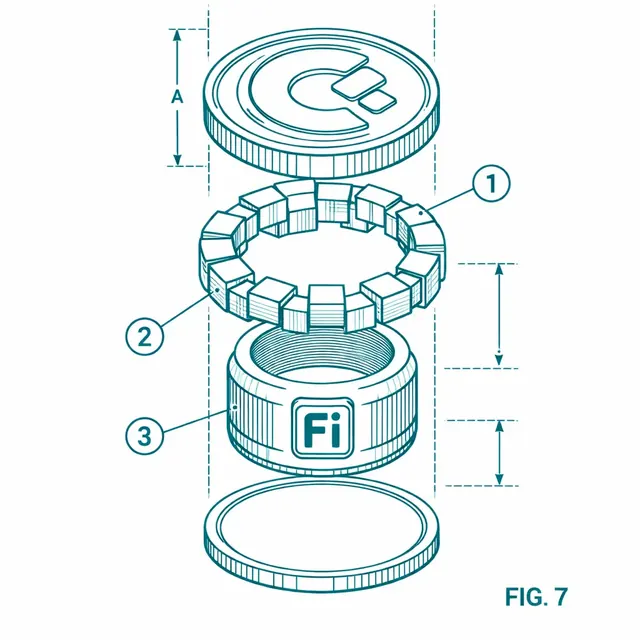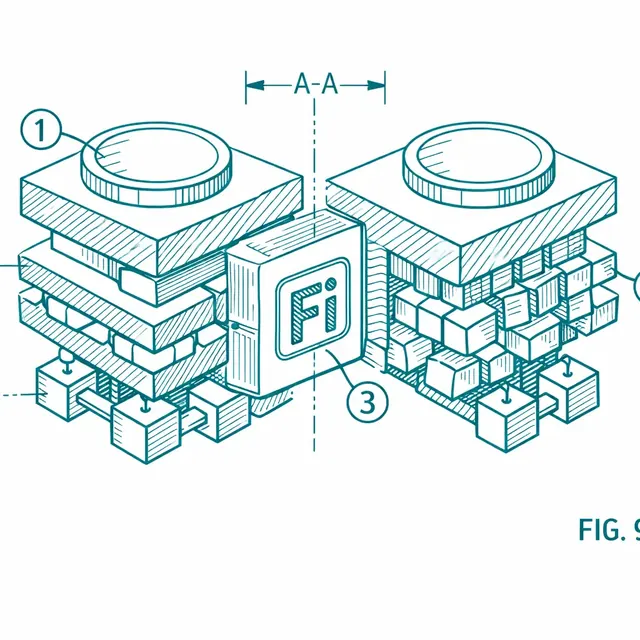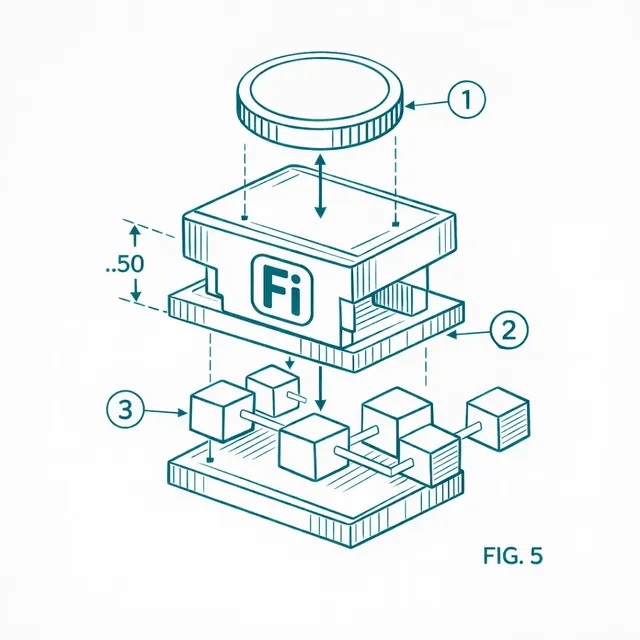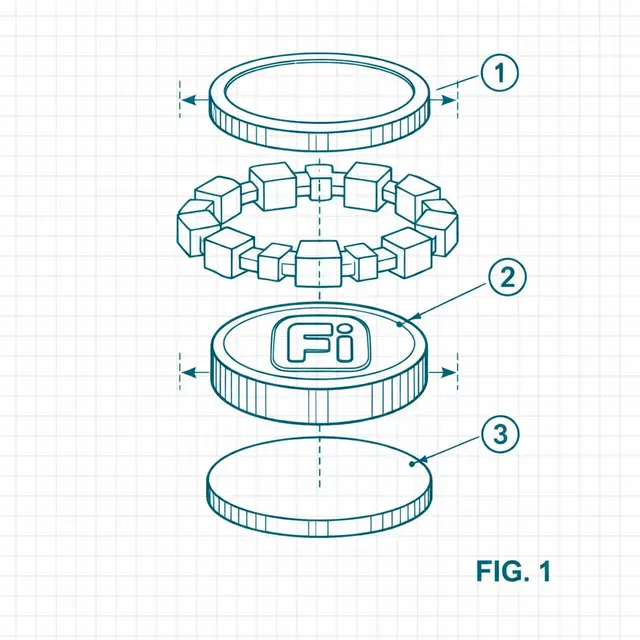
DEXs and CEXs solve different coordination problems. A decentralized exchange removes the need to hand assets to an operator and keeps market logic onchain. A centralized exchange compresses complexity into an account-based service layer that handles custody, identity checks, fiat rails, support, and a managed trading environment. The trade-off is structural, not ideological: DEXs reduce platform-side counterparty risk, while CEXs reduce user-side operational burden.
The real divide is where trust, compliance, and failure sit
The cleanest way to compare a DEX and a CEX is to ask four questions: who holds the keys, who verifies identity, who supplies liquidity, and where losses concentrate when something breaks.
| Dimension | DEXs, with Uniswap as the reference case | CEXs, with Binance as the reference case | Why it matters |
|---|---|---|---|
| Custody | Uniswap describes the protocol as self-custodial and says users remain in control of assets. | Binance holds assets in custody and says its proof-of-reserves framework shows user assets are backed 1:1. | DEXs reduce exchange custody risk. CEXs centralize it. |
| KYC | Protocol access is wallet-based, but Uniswap says third-party crypto purchase providers can require KYC and AML checks. | Binance requires identity verification before users can buy crypto on the exchange and before they can use Binance P2P. | DEX privacy is relative. It reduces account-level data collection, not onchain traceability. |
| Market model | Uniswap uses liquidity pools and AMMs instead of a traditional order book. | CEXs present an account and order-entry model with fiat funding, P2P, and other managed flows. | Execution quality, listing policy, and product breadth follow from market design. |
| Liquidity source | Uniswap says pools rely on users to fund liquidity and LPs earn fees for doing so. | CEX liquidity is coordinated through the exchange’s managed venue and market structure. | DEX liquidity is more open, but often more incentive-sensitive. |
| User experience | Users manage keys, wallet connections, approvals, and scam risk themselves. | Binance offers fiat funding options, escrow on P2P, and 24/7 support in its P2P flow. | CEXs still win on convenience for many users. |
| Failure mode | Risk sits in smart contracts, wallet security, malicious approvals, and user signing behavior. | Risk concentrates around operator custody, private keys, compliance controls, and exchange solvency claims. | Neither model eliminates risk. Each changes who absorbs it. |
Custody, KYC, and privacy are the clearest line
Control over funds is the defining advantage of a DEX. Uniswap states that its protocol is self-custodial, that users stay in control of assets, and that its smart contracts are immutable and non-upgradeable once deployed. That removes the classic exchange failure mode where a venue freezes withdrawals or mismanages pooled customer assets.
KYC is where the contrast becomes operational. Binance says users must complete identity verification before they can buy crypto through the exchange, and its P2P product also requires KYC. That is the standard CEX bargain: you hand over identity data in exchange for regulated fiat access, customer support, and a simpler interface.
DEX privacy is real, but narrower than the slogan suggests. Uniswap says third-party providers used to buy crypto can require KYC, while Uniswap Labs itself says it does not collect or store personal data for those checks. At the same time, Uniswap also emphasizes that transactions occur on public blockchains with transparent ledgers. The practical implication is that DEXs usually reduce platform-side identity collection, but they do not give transactional invisibility.
That distinction matters for serious users. If the goal is to avoid exchange counterparty risk and minimize personal data exposure to a venue, DEXs are superior. If the goal is to move seamlessly from bank account to crypto with compliance built in, CEXs remain structurally advantaged.
Liquidity and execution no longer favor CEXs by default
The old shortcut that “CEXs have liquidity, DEXs do not” is no longer accurate. A recent trading activity report says DEX spot market share rose from 6.9% in January 2024 to 13.6% in January 2026, while Binance still led all exchanges over the August 2025 to January 2026 period with $3.54 trillion in cumulative spot volume and $13.61 trillion in cumulative perps volume. CEXs still dominate absolute scale, but DEXs are not marginal venues anymore.
Uniswap is the clearest example of that shift. CoinGecko says Uniswap ranked among the top 10 spot exchanges over that same August 2025 to January 2026 window with $0.54 trillion in cumulative volume. DefiLlama showed Uniswap at about $3.131 billion in TVL and $3.579 trillion in cumulative DEX volume as of March 11, 2026. That is enough scale to matter for primary price discovery, not just tail-end token speculation.
Execution quality on DEXs has also improved through mechanism design, not just raw volume. Uniswap says v3 introduced concentrated liquidity in May 2021, which let LPs place capital in specific price ranges, and says v4 adds more fee tiers, deeper customization, and lower network costs for liquidity providers and swappers. UniswapX adds another layer by aggregating liquidity sources, shifting most network costs to fillers, and aiming to protect users from MEV front-running. The result is that the DEX side is attacking the exact frictions that once made CEXs obviously superior.
Even so, CEX advantages remain real. Binance’s exchange onboarding includes card purchases, bank-funded fiat and spot wallets, and a P2P marketplace with escrow, 24/7 support, 1,000+ payment methods, and 100+ fiat currencies on Binance P2P. For many users, especially those entering from fiat or operating across multiple jurisdictions, that service layer still beats self-custody complexity.
Risk shifts rather than disappears
DEXs reduce one class of counterparty risk, but they replace it with software and signing risk. Uniswap says users are responsible for safeguarding recovery phrases, verifying transactions, and protecting themselves from scams, and it warns that malicious websites can trick users into approving contracts that lead to total loss of tokens and NFTs. Self-custody is powerful, but it is unforgiving.
CEXs centralize the opposite risk. Binance’s proof-of-reserves page says user assets are backed 1:1, that reserves increase one-for-one with deposits, and that users can verify inclusion through a Merkle-tree-based system. That is a meaningful transparency improvement over the old black-box model, especially after the sector’s trust failures.
But proof of reserves is not full solvency proof. The PCAOB warned that limited snapshots may not address liabilities, customer rights and obligations, or whether assets were borrowed to create the appearance of sufficient reserves. The right reading is not “PoR is useless.” The right reading is that PoR is a partial control, not a substitute for complete financial transparency.
Recent loss patterns underline the difference in attack surface. CoinGecko’s 2026 report says CEXs lost well over $2.0 billion to hacks and exploits over roughly the prior year, with 71% of those losses tied to the February 2025 Bybit hack, while the largest DEX attack in the same comparison set was far smaller and DEX incidents were more associated with smart contract vulnerabilities. CEX risk tends to cluster into fewer, larger institutional failures. DEX risk tends to fragment across code, interfaces, bridges, and user approvals.
For token economies, DEXs and CEXs create very different post-launch equilibria
For token issuers, the venue choice is not just distribution. It is market design. Uniswap’s November 2025 Liquidity Launchpad paper argues that deep, correctly priced onchain markets are foundational because shallow or mispriced markets increase volatility, erode confidence, and weaken communities. That is the sustainability question in one sentence: what happens after the launch event and after the incentive budget runs out.
DEX-first liquidity is attractive because it is permissionless and continuous, but it is often too easy to confuse rented liquidity with durable liquidity. Uniswap’s protocol design makes clear that liquidity comes from users funding pools for fees, and newer launch research from Uniswap explicitly tries to promote early participation and smooth price discovery without relying on artificial rewards. That is a healthy direction. It acknowledges that subsidy-driven bootstrapping can manufacture activity faster than it can manufacture commitment.
CEX-first strategy creates a different dependency. CEXs curate listings and compress distribution into a small number of gatekept venues. CoinGecko’s March 2026 report says Uniswap listed 13.69 million tokens from January 2025 to January 2026, while even the most prolific major CEX listed only around 100 tokens per month on average and only 0.01% of all tokens created during the period. That curation is useful for quality control, but it also means a CEX listing is scarce distribution infrastructure. Scarcity can produce attention and tighter market structure, but it can also make a token economy over-dependent on external gatekeepers.
The long-term conclusion is uncomfortable for teams that want a fast answer. DEX liquidity without organic order flow becomes mercenary. CEX liquidity without onchain depth becomes outsourced legitimacy. The durable setup is usually hybrid: onchain liquidity that can survive independently, plus selective centralized access where fiat onboarding, reach, or institutional workflow actually justify it. That is a token economy design problem before it is an exchange strategy problem.
What to choose in practice
If the priority is privacy at the account layer, direct control of funds, long-tail asset access, and lower exchange counterparty risk, DEXs are the better fit. If the priority is fiat conversion, customer support, simpler onboarding, and access to a managed trading stack, CEXs still offer the cleaner operational path.
For advanced users, the right answer is often plural. Hold and route from self-custody when possible. Use CEXs when you need fiat rails, specific products, or managed support. Treat every venue as a risk transformation layer, not as a trust endpoint. That applies to Uniswap and Binance alike, even though they sit on opposite sides of the design spectrum.
For founders, exchange choice should be evaluated as part of token economy design, not as a standalone BD milestone. At FinDaS Tokenomics, that usually means asking harder questions than “DEX or CEX first”: who owns liquidity, what behavior persists after incentives end, what compliance perimeter is acceptable, and whether the market structure still works when speculative flow cools. That is where long-term survivability is decided.