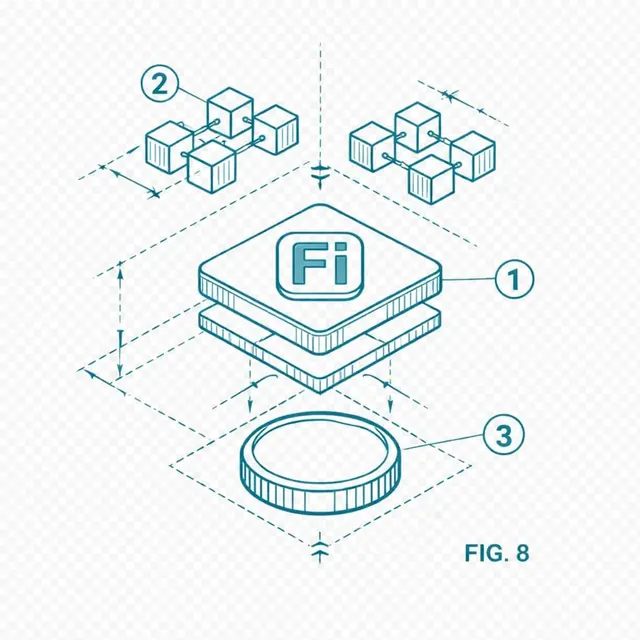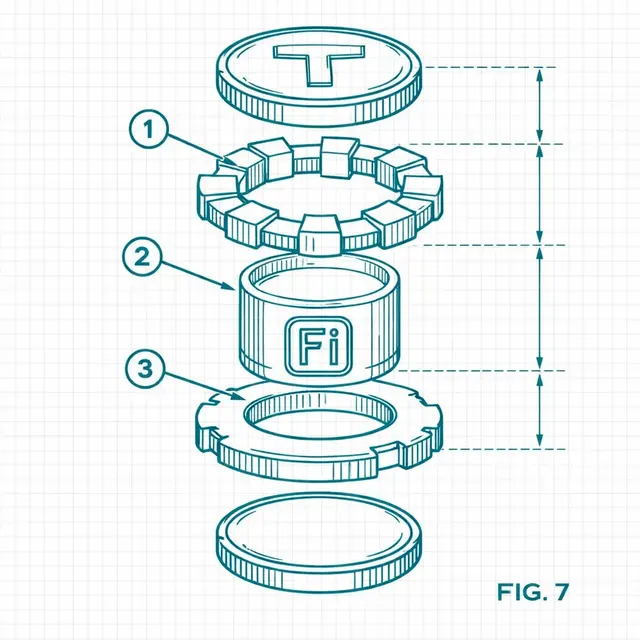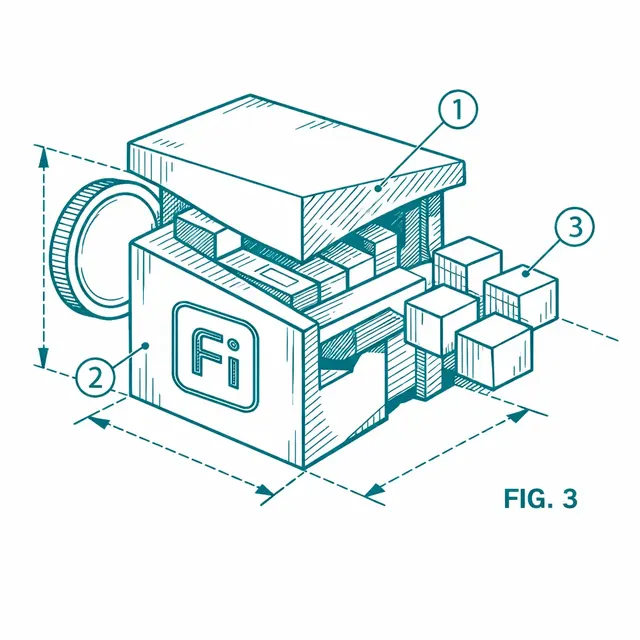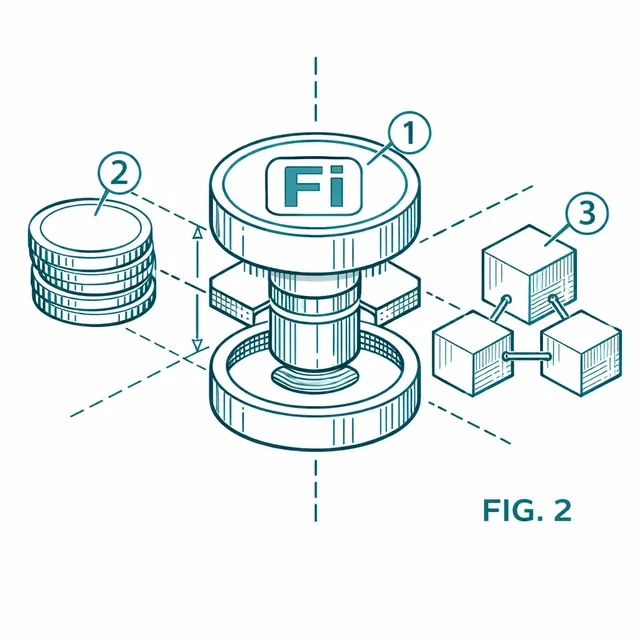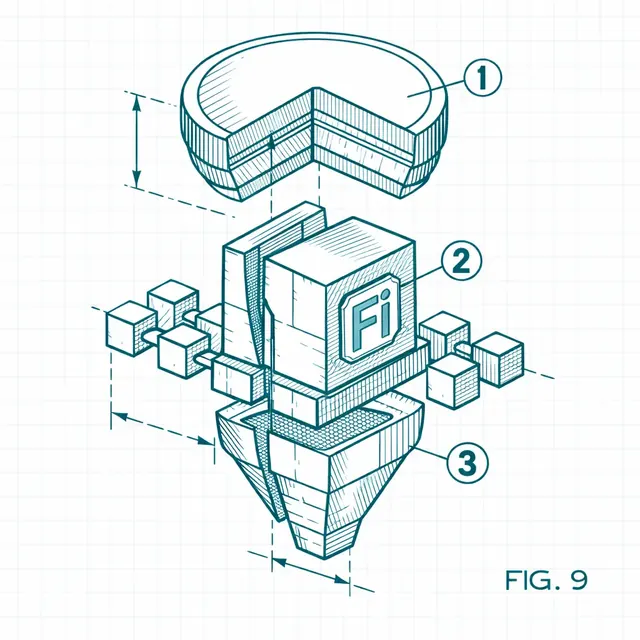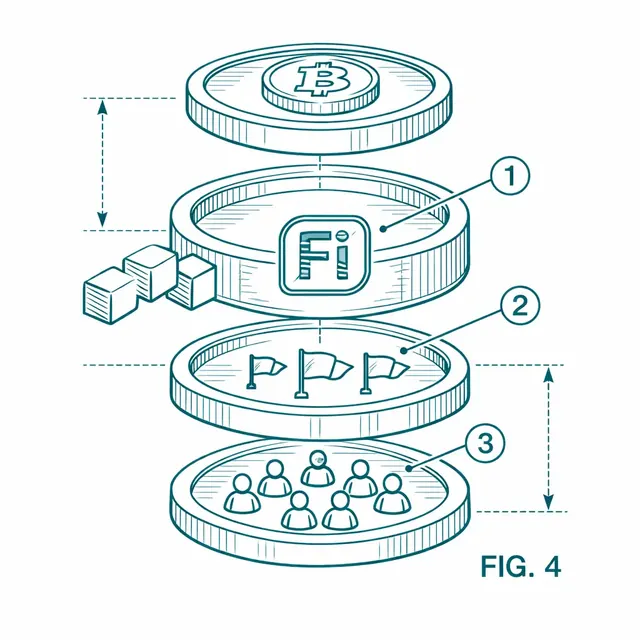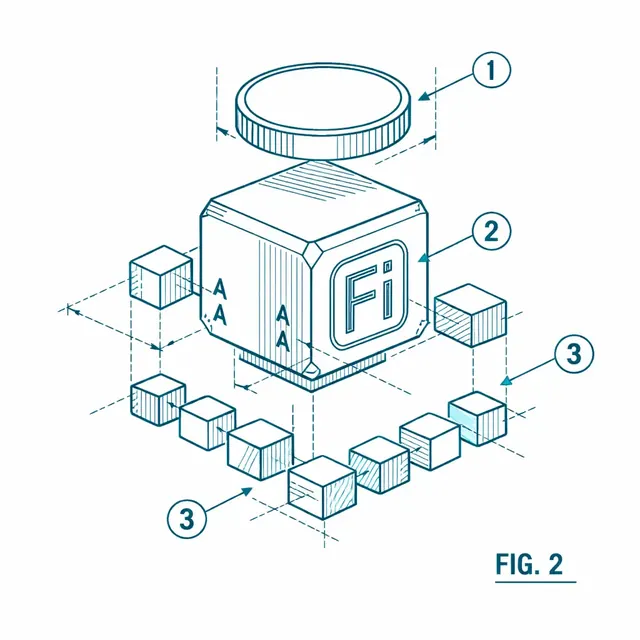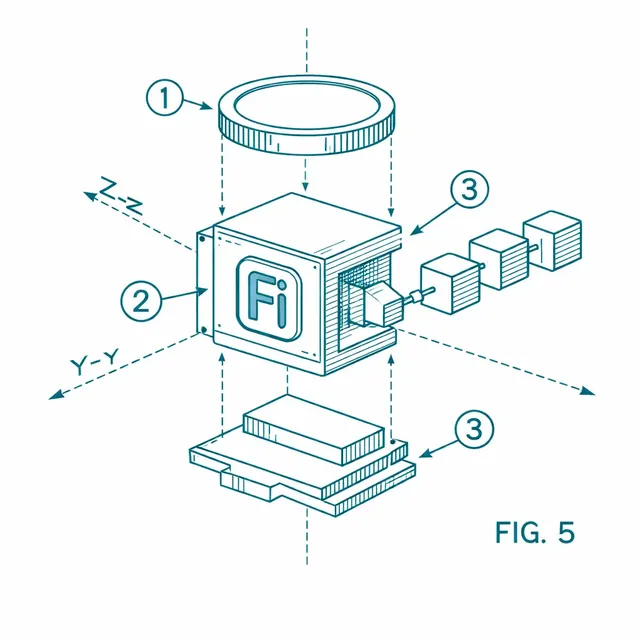
Treasury management is governance in cash form. It decides who gets paid, what risks are socialized, and who can move assets before tokenholders can react. For a DAO, spending, investing, and hedging are not separate finance tasks. They are different ways of allocating control over the balance sheet.
What is treasury management actually trying to optimize?
The core objective is solvency against real liabilities, not maximum yield. In April 2022, an Aave governance discussion proposed converting $50 million of AAVE into USDC, DAI, and ETH so grants and contributor payments would not depend on liquidating the native token during market stress. In July 2022, Lido proposed selling 20 million LDO to secure roughly two years of operating runway in stablecoins.
That framing matters because “treasury growth” is usually subordinate to payroll, grants, security budgets, and legal obligations. A treasury that is 90% native token and 10% operating cash may look large on paper and still be politically fragile. Once liabilities are denominated in USD but reserves are mostly governance token, the DAO is implicitly long its own narrative and short time.
How much should a DAO spend now versus hold back?
Runway targets are governance choices, not neutral finance settings. The cleanest approach is to bucket assets against time-based liabilities: near-term operating cash, medium-term committed spending, and strategic reserves that should not fund next quarter’s burn unless governance explicitly changes course.
Good treasury policy refuses to count the least liquid sleeve as cash. Lido’s November 17, 2025 TMC-6 guardrails capped sUSDS plus tokenized money market funds at 15% of total treasury and required remaining stablecoin liquidity, after excluding the larger of the sUSDS sleeve or the largest single tokenized money market fund position, to cover at least two months of projected runway.
That is the right instinct. A DAO should define its spending floor first, then decide what portion of idle assets can be put at redemption, basis, or smart contract risk. The reverse order usually ends with committees defending positions that were supposed to be “cash equivalents” until the day cash is actually needed.
When should treasury assets be invested instead of left idle?
Invest idle assets only after the DAO knows three things: when the cash is needed, who legally controls the position, and how redemption actually works. Arbitrum’s STEP program is a useful live example. STEP 1 diversified $30 million into six RWA products, and STEP 2 later authorized transfer of another 35 million ARB to the STEP multisig for further treasury diversification into stable, liquid, yield-generating RWAs.
Product selection is only half the issue. The earlier STEP shortlist included 17 candidates such as Securitize BUIDL, Franklin FOBXX, OpenEden TBill, Superstate USTB, Mountain USDM, and others. That variety shows that “investing the treasury” often means choosing between different legal wrappers, issuers, custodians, chains, and redemption paths rather than just comparing APYs.
The power question becomes sharper once offchain claims enter the stack. Lido’s TMC-6 explicitly allows tokenized money market fund positions to be held by the Lido Ecosystem Foundation and Lido Labs Foundation on behalf of the DAO. That can be sensible operationally. It is also a real concentration of control. Tokenholders no longer hold a bearer asset directly. They hold governance over a structure that holds the asset.
Even “onchain yield” is still a stack choice. Spark describes itself as allocating capital across DeFi, CeFi, and RWAs and packaging that yield into products like sUSDS and sUSDC. That means an allocation to a yield-bearing stable asset is never just a cash decision. It is a protocol, counterparty, and governance decision all at once.
When does hedging make sense for a token treasury?
Hedging makes sense when treasury assets and treasury liabilities live in different units. The CFTC describes hedging as using futures to limit price risk as prices change. A DAO that owes USD-denominated payroll and grants but holds mostly native tokens is effectively exposed to that price mismatch whether or not it calls the exposure “strategic.”
Spot sales, perps, futures, and options solve different problems. Immediate spot or OTC sales reduce exposure outright. Perpetuals are better for temporary price hedges when governance wants to preserve token ownership but mute short-term downside. Deribit’s education materials describe a perpetual as a futures contract with no expiry that uses funding to keep price in line with spot. Deribit also explains that funding flows between longs and shorts to maintain that alignment.
That means a hedge can create new liabilities. A short perp can protect against token drawdowns while imposing funding costs, basis risk, and margin operations. Those are governance issues because somebody must decide collateral levels, rebalance thresholds, and when a hedge stops being protective and starts becoming speculative.
Options are cleaner but not free. Deribit’s education content uses buying puts as the basic way to hedge a spot position. For a DAO, the appeal is obvious: downside insurance with a known premium. The trade-off is just as obvious: the premium is a realized budget expense. If governance will not tolerate paying for insurance in calm markets, it usually will not have the discipline to buy it in stressed markets either.
Who should be allowed to execute treasury actions?
This is the main governance question. Treasury policy is only as decentralized as the smallest group that can change thresholds, move assets, or redefine “routine” actions.
Wallet configuration is already a power map. Safe’s owner changes and signature-threshold changes go through the same transaction flow as any other treasury action, and those updates enter the transaction queue for other owners to confirm. Safe also recommends verifying owners, threshold, nonce, and that no modules are enabled when checking a new deployment. If a DAO cannot enumerate its owners, threshold, and active modules, it does not actually know who controls the treasury.
Hierarchy can be intentional. Safe’s nested Safe structure lets one Safe act as signer for another, creating multi-level approval trees. That can separate operational authority from constitutional authority. It can also hide concentration if the same operators sit on every layer.
Lido’s Easy Track shows the real trade-off between flexibility and concentration. Its initial setup limited motions to predefined routine actions, set motion duration at 72 hours, set the objection threshold at 0.5% of total LDO supply, restricted motion creation to specific approved accounts, and made those approved addresses immutable without redeploying contracts. It also assigned a separate 2/4 security multisig the power to pause Easy Track entirely. That is not a contradiction. It is how real systems buy speed. The important question is whether the exception handlers are legible and bounded.
Aave’s treasury tooling debates make the same point from the opposite direction. A proposal to shift buybacks from the Aave Finance Committee to an onchain TWAMM argued that committee execution introduced operational complexity plus custody and oversight issues because funds had to be approved to the committee and then spent by signers. A separate Aave treasury tooling upgrade treated cross-chain bridge contracts as treasury infrastructure because moving USDC between networks could extend stablecoin runway.
| Execution model | Where power really sits | Main benefit | Main cost |
|---|---|---|---|
| Committee multisig | A small signer set controls timing, venue, and emergency judgment | Fast execution | Discretion concentrates quickly, as seen in committee-driven treasury actions at Aave and Arbitrum STEP |
| Optimistic routine motions | Pre-approved creators act unless tokenholders object | Lower voter fatigue | Control still centers on fixed creators and pause signers in Lido Easy Track |
| Role-scoped automation | Governance sets parameters ex ante, executors act inside them | Fast execution with tighter bounds | Bad parameter design can still embed centralization |
| Granular roles with allowances | Power moves to whoever writes and owns the permission set | Specific function, value, rate, and spending limits are enforceable onchain | More setup complexity |
What should a treasury policy include before any spending, investing, or hedging starts?
A usable policy should answer authority questions before it answers strategy questions. Minimum contents:
- Objective hierarchy. State whether the treasury prioritizes runway, volatility reduction, ecosystem funding, reserve growth, or buybacks.
- Liability map. Separate the next 90 days, the next 12 months, and long-duration strategic reserves.
- Instrument whitelist. Define what is allowed for spot sales, OTC programs, staking, stablecoins, tokenized money market funds, perps, options, and borrowing.
- Risk caps. Set maximum exposure by issuer, venue, chain, bridge, signer cluster, hedge ratio, and leverage.
- Authority matrix. Name who can propose, execute, pause, rotate keys, and override emergency actions.
- Liquidity haircuts. Specify what counts as same-day liquidity, what gets discounted, and what is excluded from runway calculations.
- Reporting rules. Publish wallet lists, signer lists, module lists, role permissions, committee mandates, and rebalance reports.
At FinDaS Tokenomics, this is where token economy design becomes balance-sheet design. Emissions, grant pacing, buybacks, liquidity incentives, and treasury operations all compete for the same reserves. The hard part is rarely finding another yield source. The hard part is assigning authority tightly enough that the DAO can see, in advance, who may spend, invest, hedge, pause, or rewrite the limits when conditions turn against it.
The decentralization claim is only credible if spending rights, parameter changes, and emergency powers are legible before the next drawdown. If those powers only become visible during stress, the treasury was never decentralized. It was merely undisclosed.