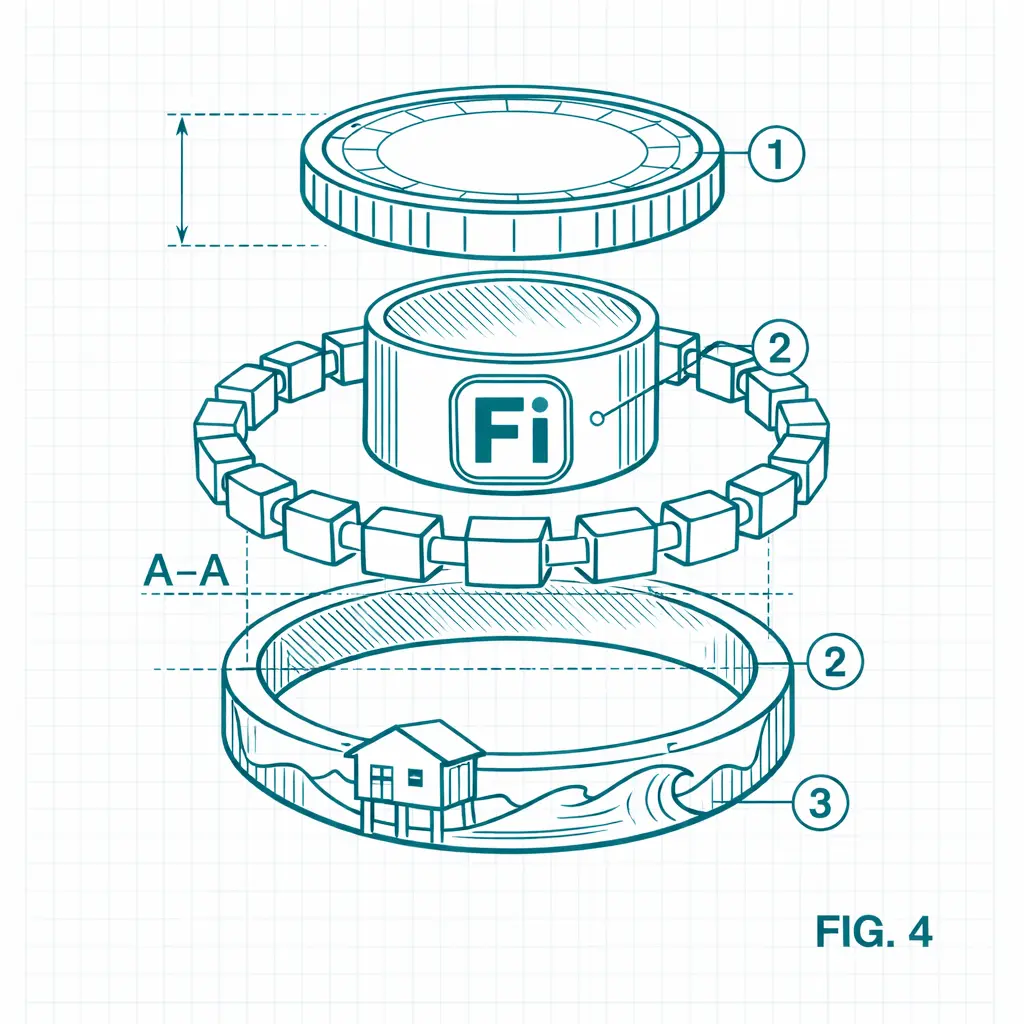
Blockchain matters in disaster relief when it removes coordination failure, not when it creates new assets
Disaster displacement reached 45.8 million internal displacements in 2024, and IDMC says that was nearly double the annual average of the prior decade. In that setting, the core operational problem is not Web3 adoption. It is getting entitlements, payouts, and case records across multiple agencies fast enough to matter.
The strongest public evidence for blockchain in disaster relief is therefore narrow and practical. WFP’s Building Blocks, UNHCR’s blockchain-assisted cash distributions, and Oxfam’s UnBlocked Cash all focus on cash delivery, de-duplication, and auditability. The most visible scaled deployments are concentrated in cash and voucher assistance rather than speculative token issuance or open-ended token economies.
That distinction matters for tokenomics. Relief systems work best when recipients receive a stable claim on food, shelter, transport, or local-currency purchasing power. Relief systems work worse when recipients, vendors, or donors are pushed into a transferable token with price volatility, ambiguous legal status, or governance rights that do not map cleanly to humanitarian accountability. This is an inference from the operating models actually used by WFP, UNHCR, and Oxfam, which abstract most blockchain complexity away from end users.
Where the evidence is strongest: cash assistance, coordination, and reconciliation
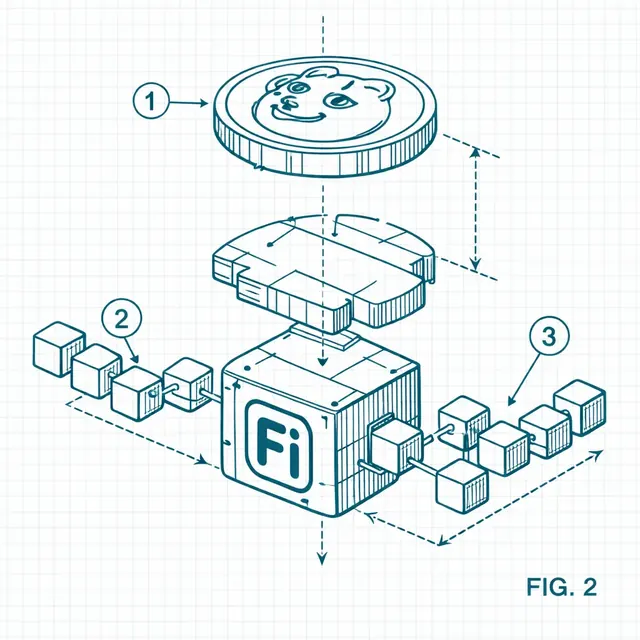
Blockchain has the clearest operational case in disaster relief when multiple organizations need a shared source of truth for who has been assisted, with what, and through which payment rail. That is a coordination problem first and a token design problem second.
| Use case | Documented example | Observed operational gain | Main constraint |
|---|---|---|---|
| Multi-agency aid coordination | WFP’s Building Blocks is a privately managed blockchain network in which member organizations are equal co-owners and co-governors. WFP says it has processed US$555 million in cash-based transfers, saved US$3.5 million in bank fees, and now supports 159 organizations. WFP also says the network has prevented more than US$270 million in overlapping assistance in Ukraine alone. | Shared records reduce duplicate assistance and let agencies coordinate multiple aid types against one beneficiary account. | Common standards, onboarding discipline, and governance still sit off-chain. Neutral infrastructure does not remove the need for institutional trust. |
| Direct cash disbursement | UNHCR delivered more than US$650 million in cash assistance to about 6 million people in 2024 across 100 countries. The blockchain-based channel in Ukraine and Argentina has delivered more than US$4.6 million since December 2022 and gives UNHCR real-time traceability at zero cost. | The numbers show blockchain can work as a targeted disbursement rail, especially where direct digital transfer and traceability matter. | The same numbers also show blockchain remains a complement, not the dominant delivery architecture. UNHCR says 38% of recipients in 2024 received cash through their own bank or mobile money accounts. |
| Disaster cash and vouchers in low-bank settings | Oxfam’s UnBlocked Cash in Vanuatu scaled to more than 35,000 beneficiaries. Oxfam reports 96% faster delivery, 75% lower distribution costs, and 96% user satisfaction. Its 2022 annual report says an evaluation found 94% of participants said their needs were being met, with a 62% reduction in food insecurity and a 61% reduction in high stress. | The model shows blockchain can improve emergency cash operations where conventional banking access is weak and vendor reconciliation is slow. | The system still depends on field training, device logistics, vendor liquidity, and local regulatory accommodation. |
UNHCR’s numbers are especially revealing. A humanitarian agency that disbursed more than US$650 million in 2024 still used blockchain for a relatively small share of total cash delivery. That does not mean the rail failed. It means the technology is most useful as a specialized infrastructure layer inside a much larger cash assistance stack.
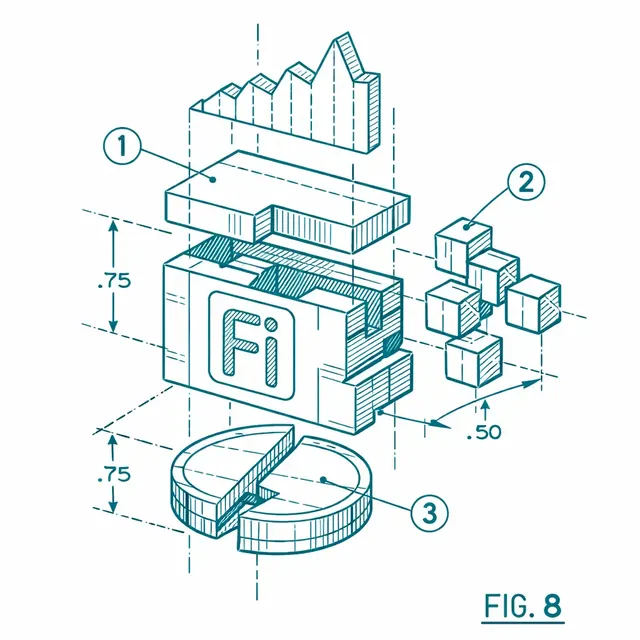
WFP’s evidence points in the same direction. Building Blocks is valuable because it reduces reconciliation cost across organizations, not because it creates a tradable asset. The economic benefit comes from fee savings, overlap prevention, and cleaner multi-agency coordination.
The hard constraints are connectivity, identity, and data protection
Connectivity is a first-order constraint on any blockchain-based relief workflow. GSMA’s 2024 humanitarian coverage study found that crisis-affected populations often have materially worse mobile coverage than national averages. In the DRC, people in need had estimated 3G coverage 11 percentage points below the wider population. In Nigeria, IDPs had estimated nationwide 3G coverage 37 percentage points below the wider population. A cryptographic solution does not help much when the network edge is missing.
Data protection is not a side issue in humanitarian deployments. The ICRC states that protecting personal data is integral to protecting life, integrity, and dignity in humanitarian action, and its handbook notes that any blockchain gains in efficiency or transparency can be offset by data-protection challenges. That is the right framing for disaster relief. Auditability is useful. Permanent exposure of vulnerable people’s data is not.
The cyber risk is concrete, not theoretical. The ICRC disclosed in March 2022 that servers holding the personal information of more than 500,000 people receiving humanitarian services had been compromised, and that the incident forced systems offline and limited humanitarian services. For relief systems, “immutability” is not a substitute for secure architecture, access control, and damage containment.
The best humanitarian blockchain designs already reflect that lesson. WFP says no sensitive information such as names, dates of birth, or biometrics are stored anywhere on Building Blocks, and that the system instead uses anonymous identifiers. That is a much better pattern than putting identity-heavy beneficiary records on-chain.
Tokenization is usually the wrong abstraction for relief delivery
The most credible relief deployments do not ask beneficiaries to hold investable crypto. Oxfam used collateralized digital versions of local currency. UNHCR’s blockchain-based aid program was designed around direct humanitarian payments and cash-out access. WFP coordinates entitlements and assistance records across agencies. In other words, the chain is doing back-office work, not turning aid recipients into token holders.
That matters because once a disaster-relief token offers yield, revenue sharing, or profit-linked upside, the legal analysis changes fast. The SEC’s digital asset framework says a token can be analyzed as a security when there is an investment of money in a common enterprise with a reasonable expectation of profits derived from the efforts of others. In the EU, MiCA imposes reserve custody, segregation, and orderly redemption-plan requirements on issuers of asset-referenced tokens.
For disaster relief, that trade-off is usually unattractive. A yield-bearing or revenue-sharing token may give a project more financing flexibility, but it also introduces securities analysis, reserve-management obligations, consumer-protection questions, and mission drift. That is the core design-flexibility-versus-legal-exposure trade-off. This is an inference grounded in SEC and MiCA frameworks and in the fact that major humanitarian deployments avoid recipient-facing investment mechanics.
Token-weighted governance is a poor fit as well. Disaster response needs accountability to affected populations, implementing agencies, donors, and local authorities. A governance model that allocates influence according to token ownership shifts control toward capital rather than field responsibility. WFP’s own model is notable precisely because it emphasizes equal co-governance among participating organizations rather than investor-style rights. Oxfam’s Vanuatu case study also shows that existing community and government structures remain central to implementation.
Jurisdiction and governance determine whether a pilot can scale
Jurisdictional exposure is the real bottleneck for cross-border blockchain relief systems. FATF reported in June 2023 that 75% of jurisdictions assessed were only partially or not compliant with its virtual-asset requirements, and that more than half of surveyed jurisdictions had still taken no steps toward implementing the Travel Rule. That is a poor backdrop for any relief product that assumes seamless global movement of tokenized value.
Sanctions risk does not disappear because a payment moves on-chain. OFAC published specific sanctions compliance guidance for the virtual currency industry in October 2021. Any disaster-relief architecture that touches public wallet infrastructure, liquidity providers, or cross-border conversion still has to deal with screening, licensing, and enforcement realities.
Local payments law matters just as much as global AML guidance. Oxfam’s Vanuatu case study states that there was no specific blockchain legislation in Vanuatu, but that the Reserve Bank of Vanuatu had ultimate authority over financial and payment instruments. The same case study records mixed government views on the technology’s implications for legislation, policy, and financial management, and notes that the Reserve Bank’s involvement took the form of a Letter of No Objection. That is how many humanitarian pilots actually scale: not through crypto-native ideology, but through regulator accommodation.
Governance neutrality also has limits. WFP presents Building Blocks as a neutral network with equal members and no hierarchy. That is useful for inter-agency coordination. It does not eliminate the need for off-chain authority over beneficiary registration, dispute resolution, fraud investigations, eligibility changes, or emergency overrides. Blockchain changes where coordination happens. It does not remove governance from the system.
What a realistic disaster-relief blockchain stack looks like
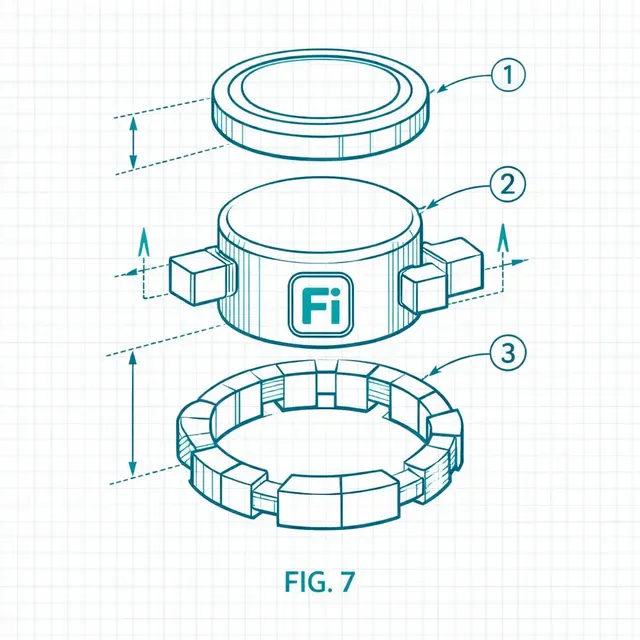
A viable architecture for disaster relief is hybrid by design. It uses blockchain where shared state and auditability help, and conventional rails where legal clarity, consumer protection, and cash-out access matter more.
- Use the ledger for shared entitlements, reconciliation, and de-duplication across agencies, where WFP has the clearest scaled evidence.
- Keep personally identifiable information and biometrics off-chain, using anonymous identifiers and protected external data stores.
- Settle into regulated payout endpoints such as bank accounts, mobile money, or licensed cash-out networks, because UNHCR and Oxfam still rely on those bridges to the real economy.
- Avoid recipient-facing yield, revenue sharing, and token-weighted governance unless the program is intentionally being built as a regulated financial product.
- Map compliance at launch, not after growth: sanctions, AML/CFT, Travel Rule exposure, local payments law, reserve requirements, and redemption obligations all shape design space.
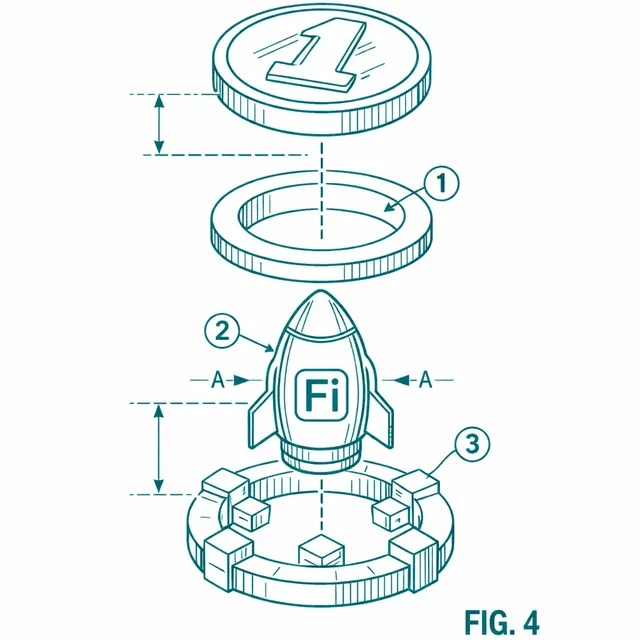
From FinDaS Tokenomics’ standpoint, this is closer to mechanism minimization than token economy expansion. The best token economy design for disaster relief is often the one that resists inventing a token at all, or confines any tokenized layer to a fully collateralized, non-speculative back-office instrument with clear redemption and compliance boundaries. That conclusion follows from the humanitarian evidence base and from the regulatory burden attached to profit-linked or broadly transferable tokens.
Blockchain can improve disaster relief when it behaves like invisible infrastructure for cash coordination, payment traceability, and inter-agency reconciliation. It becomes far less convincing when asked to manufacture investable assets, permanent identity trails, or compliance-free global money. The operational upside is real. The legal and humanitarian tolerance for avoidable complexity is low.