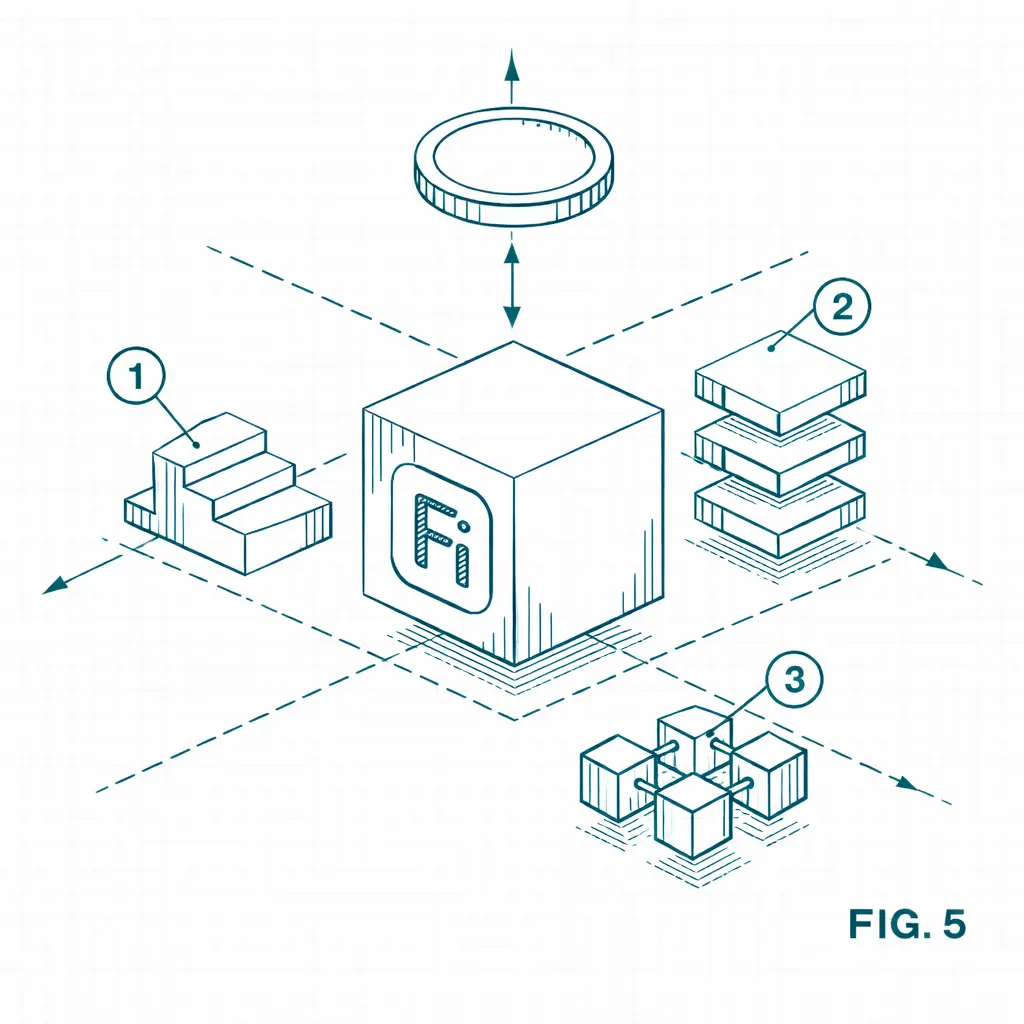
Token sale auctions are choices about uncertainty, not just fundraising UX
Token sale auctions decide who absorbs uncertainty. Some formats make buyers bear price uncertainty. Others make them bear allocation uncertainty, timing risk, or post-sale liquidity risk. The mechanism also decides how much discretion the issuer keeps after the sale starts. A batch auction clears all winning bids at one price, an LBP exposes buyers to a programmed weight curve inside an AMM, and a bonding-curve launch can keep moving price as buys and sells arrive until a migration threshold is hit.
The hard part is not naming the auction. The hard part is constraining operator power. Balancer’s LBP documentation explicitly allows a controller address to be reassigned with setController, and notes that the controller can manage the pool from a script, including changing the swap fee dynamically. Gnosis EasyAuction lets the auctioneer choose the amount sold, the minimum price, the order-cancellation deadline, and whether the auction supports atomic closure. Those are not cosmetic settings. They are governance powers that shape outcomes.
That is why token sale design should be read like a control document. If a sale can be paused, repriced, migrated, whitelisted, or settled by a privileged operator, then the market is only partly discovering price. The rest is policy. Vitalik Buterin’s 2017 analysis of token sale models made the same tension explicit: teams can use mechanism design to reduce queueing and deadweight loss, but retained inventory and flexible post-sale policy can reintroduce “central banking” style uncertainty.
The main types of token sale auctions
| Type | How it works | What it is good at | Main structural risk |
|---|---|---|---|
| Uncapped Sale | Tokens are sold during a fixed window or at a preset rate without a tight quantity cap. Ethereum’s July 22, 2014 genesis sale is the canonical early example of a time-bounded, schedule-priced sale. | Maximizes participation and is easy to understand. | Can raise too much, dilute scarcity, and leave valuation discipline almost entirely to secondary markets. |
| Dutch Auction | Price starts high and falls until demand clears. In crypto, many “Dutch-style” launches use this high-to-low logic directly or via AMM-based implementations. | Pushes buyers to reveal valuation instead of racing a queue. | If reserve price, timing, or downward schedule can be changed mid-sale, the mechanism is no longer credibly rule-based. |
| Reverse Dutch Auction | The raise target is fixed, while the token amount sold or implied valuation changes over time. Gnosis used this logic in April 2017. | Caps treasury intake while still letting the market choose when the valuation becomes acceptable. | Unsold inventory often remains under issuer control, creating future supply overhang and discretionary monetary policy. |
| Batch Auction / Gnosis Auction | Participants submit limit bids during a window. Orders clear at one uniform price, with lower bids refunded. | Strong for fairer price discovery, deterministic settlement, and reducing speed advantages. | The auctioneer still chooses minimum price, cancellation period, sell amount, and closure settings. |
| Liquidity Bootstrapping Pool (LBP) | An AMM pool starts at a high price and moves lower over time as weights shift. Balancer and Fjord both frame it as a Dutch-style launch primitive. | Combines launch and early liquidity in one on-chain surface. | Controller rights over fees, LP whitelisting, and pool management create meaningful admin trust. |
| Collect-and-Return | The sale accepts excess demand, then scales everyone back and refunds the excess pro rata. Vitalik described the simple case as a sale where $101m entering a $100m valuation implies a 1% refund to everyone. | Reduces queue pressure and avoids pure first-come, first-served gas wars. | Refund logic, sybil resistance, and settlement transparency matter more than the headline cap. |
| Initial DEX Offering (IDO) | An IDO is a launch venue category more than a single auction rule. Official launchpad docs describe it as a token sale on a DEX or specialized launchpad, often followed by immediate liquidity. | Fast path from distribution to trading. | The label hides the actual mechanism. An IDO can be fixed-price, overflow, batch, or AMM-native. Ask for the rule set, not the acronym. |
| Bonding Curve Sale | Price moves along a pre-set curve as users buy and sell. Raydium LaunchLab lets creators set the curve, target, and supply, with automatic migration to an AMM once the goal is hit. | Permissionless continuous issuance and immediate price feedback. | Curve parameters, fee sharing, and migration conditions are strong operator levers. |
| Sealed-Bid (Vickrey-Style) Auction | Bidders submit hidden bids, the highest bid wins, and the winner pays the second-highest price. | In theory, it encourages truthful bidding. | In practice, confidentiality and on-chain verification are hard. Ethereum implementations often need extra cryptographic or trusted hardware assumptions. |
Uncapped sale and collect-and-return are simple, but they push discipline elsewhere
Uncapped sales look fair because anyone can participate, but they usually replace queue unfairness with valuation ambiguity. Ethereum’s genesis sale, announced on July 22, 2014, ran for 42 days with a published exchange-rate schedule of 2,000 ETH per BTC initially, linearly declining to 1,337 ETH per BTC by the end of the sale. That structure was transparent, but it left aggregate issuance driven by demand rather than by a hard token-allocation ceiling.
The benefit of an uncapped sale is auditability. There is no hidden ranking algorithm and no mid-auction sorting logic. The drawback is that the market may finance far more inventory than the network can justify on fundamentals. That is why uncapped launches often age badly when teams treat the absence of a cap as proof of demand rather than proof of speculative throughput.
Collect-and-return is the cleaner answer to oversubscription. Instead of rewarding whoever wins the gas war, the contract accepts demand through the window, computes a common scale factor, and refunds the excess. Vitalik’s simple example of collect-and-return logic was direct: if buyers send $101 million into a $100 million sale, everyone gets a 1% refund. The mechanism is structurally fairer than a speed contest, but only if the refund rule is fixed in advance and the settlement path is mechanically verifiable.
From an operator-discretion perspective, collect-and-return is underrated because it narrows the issuer’s room to improvise. A team can still manipulate wallet limits, whitelist rules, or anti-sybil filters, but it has less room to favor latency or selectively reopen supply. That makes it a strong choice when the project wants broad access without pretending to solve price discovery. It is a distribution mechanism first, not a valuation engine.
Dutch, reverse Dutch, and sealed-bid Vickrey auctions solve different problems
A descending-price Dutch auction is strongest when the project wants price discovery without a one-shot sellout. The logic is simple: start above where demand is expected, move lower over time, and let buyers step in when the price matches their valuation. Fjord’s and Balancer’s LBP documentation both describe this high-to-low dynamic explicitly, which is why Dutch-style logic remains so useful for on-chain launches.
Reverse Dutch auctions flip the variable that clears. In the Gnosis design discussed in 2017, the cap on funds raised was fixed at $12.5 million, while the portion of tokens sold depended on how quickly the sale reached that cap. That reduced fundraising uncertainty for the issuer, but it also concentrated supply risk in the issuer because unsold tokens remained under Gnosis control. The later Gnosis governance discussion is unusually candid about the result: only 4.6% of the original 10 million GNO were sold in the April 2017 reverse Dutch auction, leaving the supply visibly centralized for years afterward.
That trade-off matters. Reverse Dutch formats are attractive when a team wants a hard treasury cap, but they are weak whenever retained inventory is not governed by hard release rules. In that case the sale may look market-driven on day one, while the real pricing power sits with the treasury for months or years afterward. That is speed of iteration bought at the cost of structural accountability.
Sealed-bid Vickrey-style auctions attack a different problem. They try to make honest bidding rational by hiding bids during the sale and charging the winner the second-highest price. The theory is elegant. The implementation is not. Sealed describes the basic Vickrey rule in plain terms, but research on Ethereum implementations shows why this format has not become the default for token sales: preserving bid privacy and settlement correctness on-chain generally requires extra cryptographic machinery or trusted components.
For token launches, that means a Vickrey auction often relocates trust instead of removing it. If bids are private because an enclave, relay, or off-chain coordinator keeps them private, then the sale is no longer purely contract-governed. That can still be worth it. It just needs to be stated plainly.
Batch auctions are the cleanest fit when fairness matters more than immediacy
Batch auctions are the most mature answer to the “who clicked first” problem. Gnosis EasyAuction defines them clearly: a pre-defined token amount is offered, buyers submit bids with limit prices during the bidding window, and the final price is the bid that brings cumulative demand up to the sell amount. Everyone above that cutoff settles at one uniform clearing price, and everyone below it gets refunded.
This is why batch auctions remain one of the best default choices for public token sales. They separate participation from execution speed. They also make the auction logic extractable: sell amount, bidding token, minimum price, cancellation deadline, auction end date, and closure method are all auction parameters that can be published ahead of time. If those parameters are frozen on-chain and the settlement is deterministic, buyers can evaluate the rules instead of fighting mempool latency.
The caveat is straightforward. Batch auctions still have an operator. EasyAuction gives that operator meaningful setup discretion over minimum price, timing, minimum order size, and whether atomic closure is allowed. A batch auction is fair only relative to the published parameter set. It is not automatically neutral.
An Initial DEX Offering should be read through the same lens. IDO is not a mechanism. It is a deployment context. Official launchpad documentation from HeadStarter and Tokenix defines IDOs as token sales conducted on a DEX or specialized launchpad, often with an immediate transition into trading liquidity. Gnosis’ own EasyAuction repository says batch auctions found product-market fit for IDOs. The implication is simple: when a project says “IDO,” the next question is still “what auction rule, what settlement rule, and who controls post-sale liquidity?”
CoinList’s auction product shows the same batch logic in a more managed environment. On July 30, 2024, CoinList reintroduced auctions as a uniform-clearing sale format where bids are sorted from highest to lowest, the whole allocation clears at the lowest qualifying price, and unsuccessful bids are refunded. On January 13, 2026, CoinList announced Zama as its first fully on-chain token sale using a sealed-bid Dutch auction, with bids sorted after the window closes and partial fills at the clearing price if necessary.
LBPs and bonding curves are powerful because they fuse sale and market, which is also why they need the tightest controls
Liquidity Bootstrapping Pools are useful because they turn distribution into live trading from the first block. Balancer’s LBP flow relies on gradual weight updates, and Fjord describes the format as a high-to-low pricing mechanism that lets participants buy when the price feels fair. That is efficient capital formation. It is also a larger control surface than a batch auction.
Balancer’s documentation makes the discretion explicit. The pool can have a controller address. That controller can be reassigned. Swap fees can be changed dynamically from a script. The issuer can whitelist LPs, add new capital later as a buyback mechanism, or restrict public liquidity provision. Balancer also warns that if public LPs are allowed, whales can unbalance the pool, and if pausable tokens are used, participants can get stuck in unofficial pools.
That does not make LBPs bad. It makes them governance-heavy. A well-run LBP can outperform a fixed-price sale because it produces both distribution and a live reference market. A badly specified LBP is a soft-admin market where buyers are effectively trusting a controller not to intervene opportunistically. Fjord’s newer zero-liquidity LBP design goes even further by using virtual liquidity so projects can launch without upfront collateral. That lowers capital barriers for teams, but it increases the importance of clear parameter disclosure because the initial market is partly virtual by design.
Bonding-curve sales push this fusion of sale and market even further. Raydium LaunchLab allows creators to set a pricing curve and migration rules, fundraising target, supply, vesting options, and fee-sharing choices. Buyers trade directly on the curve, with price rising on buys and falling on sells, and the token migrates to a Raydium AMM pool when the target is met. In some modes the LP is burned after migration, and creator fee sharing can be enabled as a platform-configurable option.
That is excellent for permissionless experimentation. It is weaker for institutional-grade accountability. A bonding curve is only as neutral as the curve parameters, fee recipients, graduation threshold, and migration rules. If those are modifiable, or if the launch platform can toggle fee sharing and related options, then the sale is not “just math.” It is math wrapped in platform policy.
How to choose the right format
The right token sale auction depends on what the project is actually trying to optimize. If the priority is broad access with minimal mechanism complexity, uncapped or collect-and-return structures are viable. If the priority is robust public price discovery, batch auctions are usually the strongest default. If the priority is immediate on-chain liquidity and continuous trading, LBPs and bonding curves are more natural. If the priority is truthful bidding under confidentiality, sealed-bid systems are intellectually appealing but operationally heavier.
For FinDaS Tokenomics, the decision rule is simple. Prefer the format that minimizes live operator discretion while still matching the project’s real objective. That is a token economy design question before it is a marketing question. Teams doing tokenomics consulting or internal sale design should publish the control map with the sale spec, not after it.
Who can change parameters after launch? Check controller, admin, pause, upgrade, and whitelist rights. Balancer’s LBP docs are unusually clear that these rights can matter mid-sale.
Who controls unsold inventory? Reverse Dutch structures are especially sensitive here because retained supply can become a long-tail policy lever.
Is the clearing rule deterministic? Batch auctions are strongest when the full parameter set is fixed before bidding begins.
What happens after the sale ends? Fjord states that raised funds cannot be withdrawn during the sale, are transferred to the project wallet after the sale concludes, and participant tokens are only claimable after the sale ends. Post-sale settlement is part of the mechanism, not an operational footnote.
Does the launch venue hide the real rule set? “IDO” is the classic case. Always ask whether the sale is fixed-price, overflow, batch, Dutch-style, or curve-based.
The most reliable summary is blunt. Batch auctions are usually the best public-sale default when fairness and accountability matter. LBPs and bonding curves are stronger when launch and liquidity must be fused, but only if controller powers are tightly bounded. Reverse Dutch structures can work, but only when retained inventory is credibly constrained. Uncapped sales are simple, not safe. And sealed-bid Vickrey-style designs are elegant, but they are only as trustless as the privacy stack underneath them.