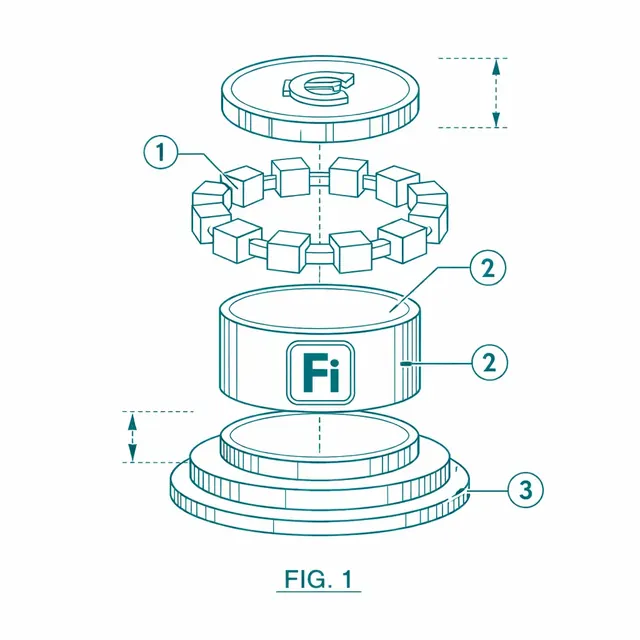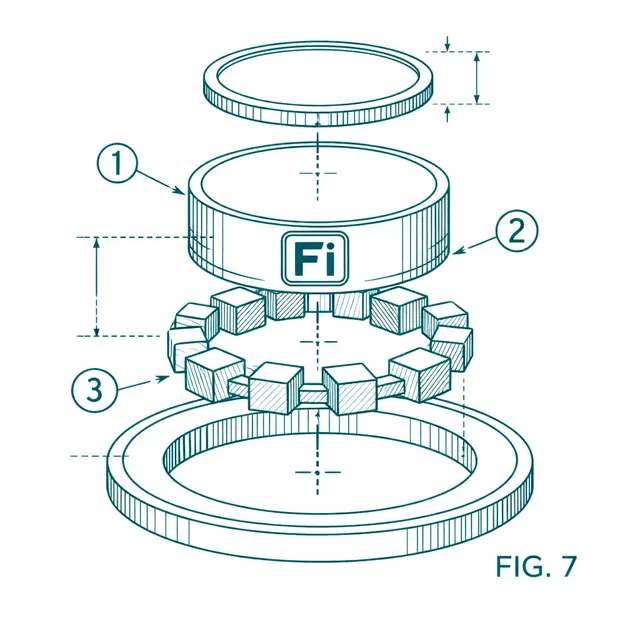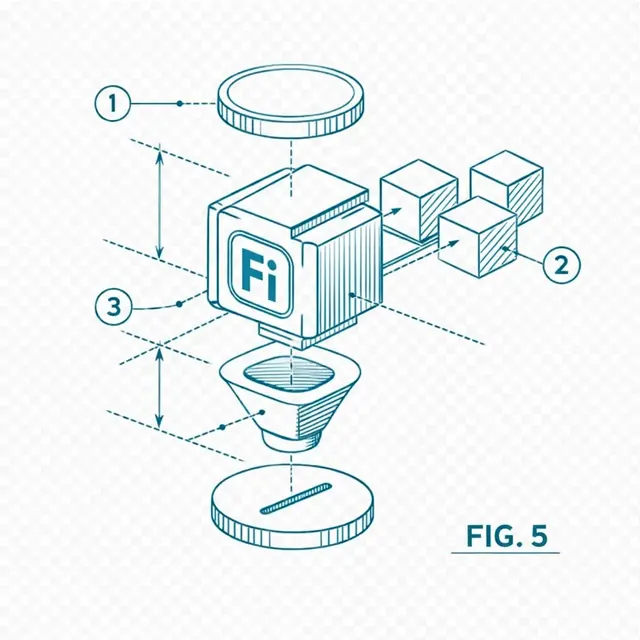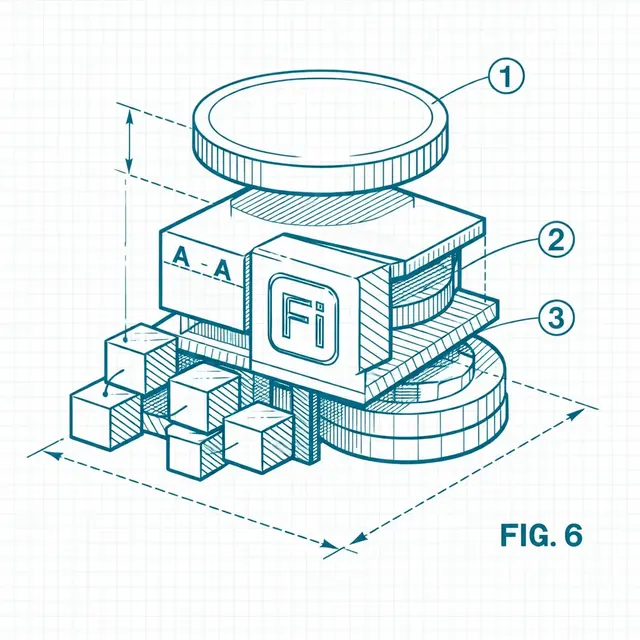
Off-chain revenue does not strengthen a token by default. It only reaches token value when governance and legal docs define a transmission path such as revenue-funded burns, revenue-funded staking rewards, or a legally enforceable claim on off-chain assets or cash flows. KuCoin’s KCS ties burns to overall revenue, Maker’s surplus auctions burn MKR only after surplus accumulates beyond a governance-set limit, and xStocks reflects off-chain stock dividends through an on-chain multiplier rather than through narrative correlation alone.
The hard part is not the payout slogan. The hard part is funding security, proving reserves, and preserving legal enforceability. Sky keeps a protocol-owned surplus buffer, Aave’s Umbrella explicitly slashes staked assets to cover deficits, and modern RWA token stacks assume identity, compliance, and administrative controls from day one. That is the right order of operations for a serious token economy.
Value accrual starts with an explicit bridge, not with correlation
A token only captures off-chain revenue if the cash flow changes one of three things on-chain: supply, claims, or security capacity. Supply changes when revenue funds buybacks and burns. Claims change when the token represents a redeemable or legally defined economic interest. Security capacity changes when revenue capitalizes an insurance fund, a staking module, or an operating reserve that keeps the protocol credible through stress. KuCoin, Maker, Aave, and xStocks each implement one of those bridges explicitly.
Most failed designs stop one step earlier. They describe a profitable company, exchange, or off-chain business line and assume the token will rerate because the brand is stronger. That assumption is economically weak. If the revenue stays inside a corporate balance sheet with no binding path to token supply, token claims, or protocol security, tokenholders own a story, not a mechanism. The public record on successful examples is unusually consistent on this point: the bridge is documented, parameterized, and repeatable.
The viable integration models are narrow
There are only a few credible ways to route off-chain revenue into on-chain token value. The right choice depends on whether the token is supposed to function like a utility asset, a security backstop, or a regulated claim instrument.
| Model | How revenue reaches token value | What it is good for | Main constraint |
|---|---|---|---|
| Revenue-funded buyback and burn | Off-chain revenue buys tokens in the market and removes them from supply. KCS states that monthly burns are calculated from KuCoin’s overall monthly revenue, and its whitepaper describes platform-revenue-funded repurchases and burns. | Simple value transfer for a broad tokenholder base | Does not by itself absorb losses or fund protocol defense |
| Buy-and-distribute or staking rewards | Revenue funds token acquisition or emissions that are paid to stakers or reserve accounts. Aave’s March 4, 2025 proposal routes 50% of GHO revenue to stakers and starts a buyback-and-distribute program at $1 million per week for six months. | Aligning holders with long-term participation and treasury policy | Needs a clear rule for who takes slashing or dilution risk |
| Surplus-buffered burn | Revenue first accumulates inside the protocol. Only surplus above a governance-set threshold is used for token buyback or burn. Maker documents this through surplus auctions that sell surplus Dai for MKR and then burn the MKR. | Protocols that need loss-absorbing reserves before payout | Slower value accrual in exchange for stronger solvency |
| NAV or rebasing wrapper | The token tracks an off-chain asset position, and cash flows are reflected in token balances or redemption value. xStocks reinvests dividends into additional shares and updates an on-chain multiplier so balances continue to represent the correct economic exposure. | Tokenized equities, funds, and other RWA products | Requires custody, legal structure, corporate-action handling, and jurisdictional restrictions |
| Direct regulated claim token | The token itself is a security-style instrument with compliance checks, identity verification, transfer restrictions, and administrative controls. OpenZeppelin’s RWA suite and the ERC-3643 ecosystem are built around that assumption. | Projects that want enforceable legal claims | Permissioning and compliance become part of the product, not an optional layer |
The practical takeaway is blunt. If the token must remain broadly permissionless and exchange-like, buybacks or treasury-funded utility are usually cleaner than direct dividends. If the token must represent a legal claim on off-chain revenue, the design is drifting toward a tokenized security and should be built that way from inception.
Security budget should be funded before tokenholder payouts
Off-chain revenue is most valuable when it hardens the system before it flatters the chart. Maker’s surplus auction design already reflects that logic: surplus Dai is only auctioned for MKR after the system has accumulated net surplus beyond a governance-defined threshold. Sky’s current security documentation is even more explicit that governance controls a surplus buffer in DAI or USDS that serves as reserves fully owned by the protocol.
Aave makes the same trade-off in newer form. Its March 4, 2025 tokenomics proposal says the DAO should keep an amount equivalent to 2× OPEX in collector contracts before leaning into buybacks, while the live Umbrella design states that staked assets may be slashed during shortfall events to cover protocol deficits. That is a stronger template than pure buyback maximalism because it acknowledges that value accrual without credible defense is fragile.
The economic point is simple. A token that drains every dollar of off-chain revenue into burns can look efficient during growth and underfunded during stress. A token that first capitalizes insurance, operations, and intervention capacity usually looks less exciting in the short term and more credible in the long term. For infrastructure tokens, that trade-off is often worth taking.
Accounting, attestation, and circuit breakers are part of tokenomics
Once revenue is earned off-chain, the token model inherits off-chain data risk. Someone has to state how much cash was received, where it sits, whether it is encumbered, and when it becomes distributable. Chainlink’s Proof of Reserve product is built around that exact problem: publishing verified reserve data on-chain, tying mint integrity to reserve checks, and using reserve feeds as circuit breakers for minting, redemptions, or other protocol actions when backing falls short.
xStocks shows what a full-stack answer looks like in practice. The product documentation says each token is fully collateralized 1:1 by the corresponding underlying asset, uses a bankruptcy-remote issuing SPV, segregated custody, a three-party account control agreement, and publicly verifiable proof of reserves. Its dividend handling is also specific: cash dividends received by the custodian are reinvested into additional shares, net of withholding taxes, and token balances are adjusted through a multiplier.
That level of specificity matters because “off-chain revenue” is not a single data point. It is a chain of states: invoice or trade, cash receipt, custody, accounting treatment, reserve eligibility, distribution approval, and on-chain settlement. If even one link is discretionary and opaque, tokenholders are back to trusting management. In a serious token economy, the attestation layer is part of the product, not an afterthought.
If you want direct claims on off-chain profits, build for regulated rails
Direct participation in off-chain profits usually pushes the token toward a regulated instrument. OpenZeppelin’s RWA token suite is explicit that these tokens are security tokens representing ownership or rights to real-world assets and therefore need transfer restrictions, compliance modules, freezing, recovery, and administrative controls. That is not cosmetic infrastructure. It is the baseline needed when the token itself carries the legal claim.
xStocks lands in the same territory from a different angle. Its legal overview says the tokens are issued by a Jersey SPV, classified as bearer debt instruments in tracker-certificate form, fully collateralized by the corresponding underlying asset, and not marketed, offered, or solicited in the United States or to U.S. persons. The product gives economic exposure, not shareholder voting rights. That is the kind of legal precision required when on-chain value is sourced from off-chain securities and corporate actions.
U.S. securities analysis is not reducible to one checkbox, but the SEC’s digital asset framework still makes the core issue hard to ignore: the analysis turns on economic reality, and a reasonable expectation of profits derived from the efforts of others remains central. Teams that promise tokenholders a share of off-chain business income should assume legal architecture is a first-order design variable.
The implication for Web3 teams is practical. If the strategic goal is open access, broad composability, and minimal permissioning, it is often cleaner to route off-chain revenue into protocol-owned reserves, buybacks, or utility subsidies. If the strategic goal is enforceable cash-flow rights, then the right comparison set is tokenized securities infrastructure, not governance-token theater.
A workable design sequence for Web3 teams
The cleanest sequence is cash flow first, token interface second. Start by mapping where off-chain revenue is generated, which entity receives it, what costs must be paid before it becomes distributable, and what reserve policy the system needs to remain credible in stress testing. Only then choose whether the token should absorb value through burn, staking rewards, NAV accretion, or direct regulated claims.
Define distributable revenue, not gross revenue. Maker and Sky both separate protocol-owned reserves from payout logic, and Aave’s current approach explicitly keeps a reserve multiple before scaling buybacks. Gross revenue is a marketing number. Net distributable revenue is a tokenomics number and the basis of a treasury strategy.
Choose one transmission mechanism and make it auditable. KCS uses revenue-linked buybacks and burns. xStocks uses dividend reinvestment plus multiplier updates. Mixing several poorly specified paths usually creates governance confusion and double counting.
Specify the proof layer. Reserve attestations, custody segregation, and circuit breakers are part of the product. Without them, off-chain revenue claims are operational promises.
Make security spending explicit. If the system relies on validators, stakers, insurers, market makers, or governance responders, say how they are funded and what can be slashed or diluted in a crisis. Aave’s Umbrella documentation is a good example of naming the deficit-coverage mechanism directly.
Let governance change parameters slowly. Sky’s governance security delay exists for a reason. Off-chain revenue bridges are sensitive because they affect reserves, payouts, and legal exposure at the same time.
At FinDaS Tokenomics, this is usually where token economy design work becomes concrete. The useful questions are not “how do we make the token pump” or “should we add a fee switch.” The useful questions are which entity receives the cash, which liabilities sit ahead of tokenholders, how much reserve the system needs under stress, and whether the token is meant to be a utility asset, a security backstop, or a regulated claim instrument. That sequencing produces a more defensible token economy than retrofitting a payout meme onto an off-chain business.
The strongest designs accept a less aggressive short-term distribution profile in exchange for a more durable security budget. For informed Web3 teams, that is not conservatism for its own sake. It is the price of turning off-chain revenue into on-chain value without hollowing out the system that is supposed to sustain it.