Treasury strategy is governance strategy in slow motion. The asset mix matters, but the first-order question is who can move funds, who can change the signer set, who can widen a whitelist, and who can rewrite the rules after the market moves against the project. Safe smart accounts let owners and thresholds be modified, and OpenZeppelin timelocks are explicitly designed to delay privileged actions, which is why any serious treasury plan has to start at the permission layer rather than at the portfolio layer.
That framing is uncomfortable for teams that prefer to describe the treasury as “community owned.” In practice, most token-based projects route control through some combination of token voters, a multisig, a foundation, and one or more external managers. Arbitrum’s 2025 treasury consolidation proposal said the DAO’s treasury management had become fragmented across multiple committees, then proposed a new three-part council with a voting body, an execution body, and a communications body, while the Arbitrum Foundation retained responsibility for fund movement and custody. That may improve execution speed. It also concentrates operational power into a smaller and more legible set of actors.
Start with a control map, not a target APY
A treasury strategy should begin with a written control map that names every party that can change a financially material parameter. For a token project, that list usually includes the tokenholder vote, the treasury multisig, any legal wrapper that can open bank or brokerage accounts, and any external manager that can deploy assets within a mandate. If that map is missing, the treasury is not decentralized. It is merely undocumented.
The dangerous parameters are usually not the obvious ones. Asset allocation bands matter, but signer rotation, threshold changes, emergency withdrawal rights, venue whitelists, and mandate revocation rights matter more. Safe’s own documentation makes clear that owner sets and thresholds can be changed. Aera’s treasury vault design makes the same point from another angle: the vault owner can execute arbitrary actions, deposit, and withdraw liquid assets, while guardians operate inside an onchain constraint system and a whitelisted set of protocols. Those are power boundaries, not implementation details.
Arbitrum’s 2024 strategic treasury proposal is a useful template for writing control boundaries plainly. It said the DAO would retain full ownership of assets, the strategic group would not have withdrawal rights to the Safe, role-based access controls would be pre-approved, and the DAO could shut the structure down through governance. That is the right level of specificity. “Managed by the DAO” is not.
- Who can spend without a fresh tokenholder vote?
- Who can change signers or thresholds on the treasury wallet?
- Who can whitelist or delist venues and managers?
- Who can recall capital from deployed strategies?
- Who can act in an emergency, and what review follows?
Size the treasury against liabilities, not against FDV
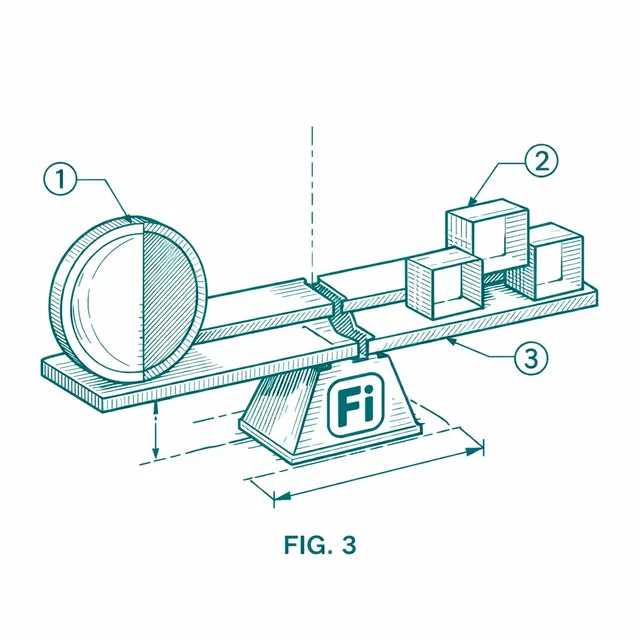
The correct denominator for treasury planning is liabilities, not market cap. If payroll, grants, legal bills, market makers, and vendors are paid in dollars or dollar-like terms, the treasury has dollar liabilities even if the balance sheet is mostly native tokens. Arbitrum’s treasury management proposal described this problem directly: several DAO-funded programs and service providers had dollar-denominated contracts, while the DAO did not always have enough ARB at then-current prices to meet the agreed rate. That is a treasury mismatch, not a market problem.
ENS and Uniswap both moved toward explicit runway segmentation. On November 29, 2022, ENS governance said the DAO would keep $16 million in USDC in its main wallet and timelock as roughly two years of runway. ENS later formalized stricter endowment guidance through its Investment Policy Statement, including a more conservative 40% stablecoin allocation and a minimum stablecoin allocation of at least three years of DAO operating expenses in stablecoin or stablecoin-neutral positions.
Uniswap Foundation used a similar liability-first logic. Its October 5, 2023 funding proposal asked for $46.2 million to cover two years of operating and grants runway with a 10% buffer for price risk, required governance approval for grants larger than $2 million, and described a treasury diversification policy that kept six months of operating runway in cash and six months of grants funding in an FDIC-insured bank account while the rest could be placed in low-risk yield-bearing assets. The same discipline belongs in stress testing treasury assumptions.
By September 30, 2025, Uniswap Foundation reported $54.4 million in USD and stables on hand plus 15.3 million UNI, with expected runway through January 2027. The structure is the point. Stable operating liquidity and native-token strategic exposure were held as separate treasury functions, not blended into one pool and called diversification.
| Bucket | What it covers | Default asset bias | Who should control changes |
|---|---|---|---|
| Operating runway | Payroll, vendors, legal, fixed grants, market making commitments | Stables, cash, short-duration treasury products | Tokenholders set policy bands; operators execute inside them |
| Strategic reserve | Long-term upside and ecosystem alignment | Native token, ETH, long-duration strategic holdings | Tokenholders only |
| Protocol defense | Liquidity support, safety backstops, emergency interventions | Highly liquid reserve assets | Pre-authorized emergency body with rapid ex post review |
| Growth capital | Investments, incentives, ecosystem deployments | Mandate-specific | Budget approved by tokenholders, deployed by accountable delegates |
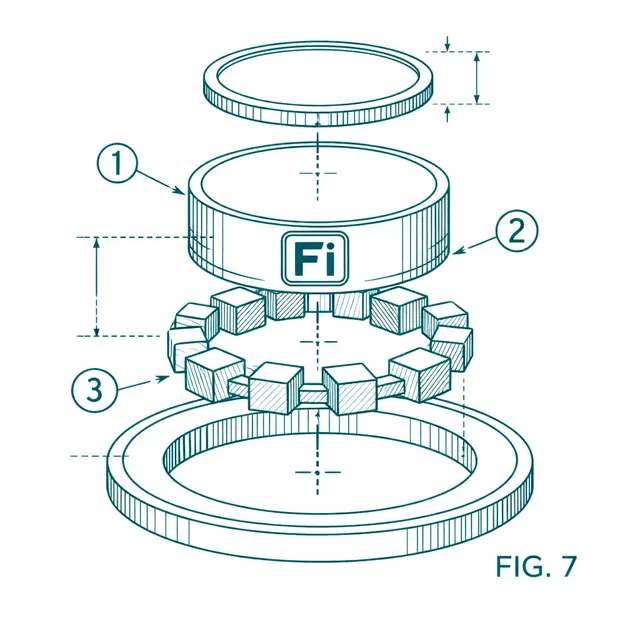
Separate operating liquidity from strategic reserves and deployment capital
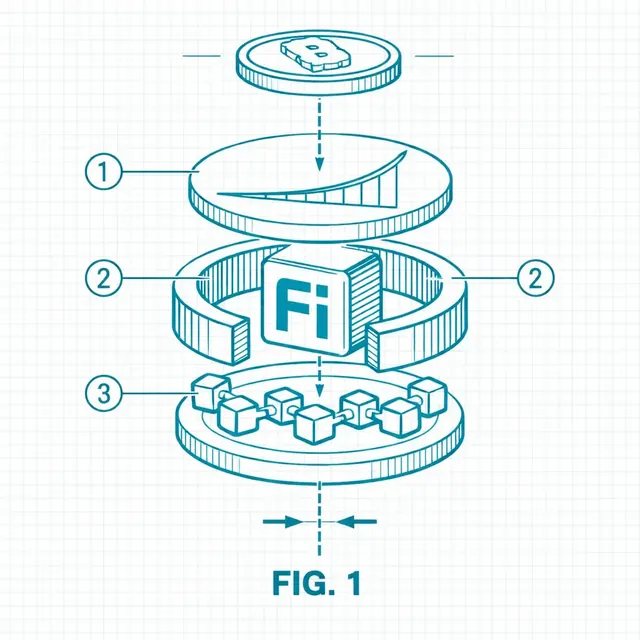
The worst treasury design keeps everything in the native token and pretends time will solve it. Native-token concentration is political comfort dressed up as conviction. It keeps governance power concentrated in the same constituency that benefits from not selling, but it forces the organization to liquidate into weakness when liabilities arrive. A treasury policy should make that trade-off explicit instead of hiding it inside vague language about long-term alignment.
There is now a large enough onchain treasury product set to separate liquidity needs from strategic holdings. RWA.xyz reported tokenized U.S. Treasuries totaling $10.71 billion across 64 products as of February 14, 2026. That does not remove risk. It changes the risk stack from crypto beta toward issuer, structure, redemption, and access risk. But it does mean projects can hold a meaningful operating reserve without leaving the digital asset ecosystem entirely.
Arbitrum’s STEP framework shows the logic clearly. STEP 2.0 authorized another 35 million ARB to a multisig to diversify treasury exposure into real-world assets that were intended to be stable in value, liquid in conversion, and yield-generating with returns uncorrelated to crypto markets. That is a treasury function with two goals at once: reduce treasury volatility and support a strategic sector inside the ecosystem. Those goals can coexist, but they should never be confused. Strategic sector support is not the same thing as treasury safety.
A practical rule is simple. Operating liquidity should not depend on the next governance token rally. Strategic reserves can. Growth deployments may. When a project mixes those mandates inside one wallet with one approval path, the strongest political faction usually captures the treasury narrative. That is exactly when the treasury stops being a balance-sheet tool and becomes a legitimacy prop.
Build an execution stack that can be audited and recalled
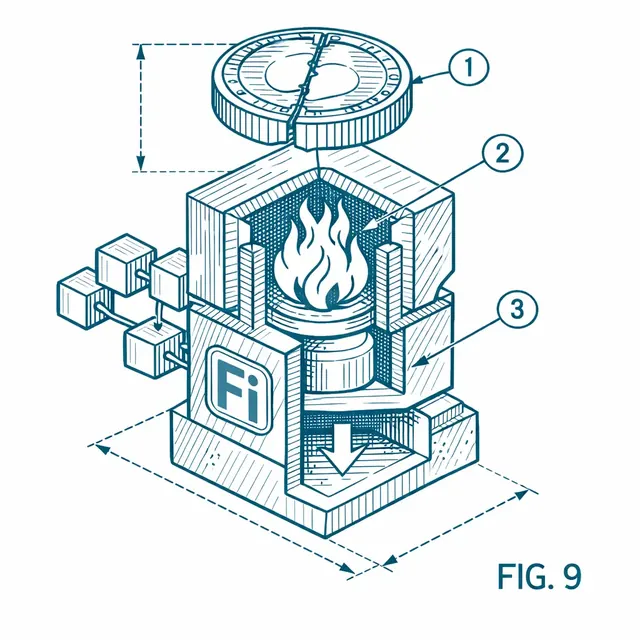
A treasury mandate is only real if the execution stack enforces it. Safe provides multisig thresholds and owner management. OpenZeppelin timelocks can impose a delay before privileged actions go live. Aera vaults let owners define whitelisted protocols and constrain guardians onchain. Used together, those primitives let a project separate policy from execution: governance sets the allowed range, operators act inside it, and users get time to react before privileged changes settle.
The key design choice is whether managers hold withdrawal authority. Arbitrum’s 2024 strategic treasury proposal said the management group would execute pre-approved strategies but would not have withdrawal rights to the Safe, and that the DAO could recall or shut down the structure through governance. That is materially safer than outsourcing full custody. It is also slower. That trade-off is healthy. Operational flexibility should be purchased consciously, not by accident.
The strongest treasury setups publish five operational controls in advance.
- Public signer list and threshold.
- Timelocked changes for signer rotation, manager replacement, and whitelist expansion.
- Predefined allowable venues and instruments.
- Emergency recall path with named authority and mandatory forum disclosure.
- Independent reporting that lets tokenholders verify positions, not just trust summaries.
If a project cannot publish those controls, it does not have a treasury strategy. It has a treasury operator.
Delegate narrowly, and keep constitutional powers broad
Most token projects need delegated treasury execution. Very few should delegate constitutional treasury powers. The clean line is this: managers and committees can rebalance inside pre-approved ranges, but tokenholders should retain authority over new strategy types, custody changes, mandate expansions, and changes to the people who control the wallet.
Uniswap Foundation offers one workable example of bounded delegation. The Foundation could administer grants and operations, but grants larger than $2 million still required governance approval. That is a real boundary. It tells the market which spending remains political and which spending is operational.
Arbitrum’s newer treasury architecture uses a different pattern. The 2025 consolidation proposal gave the Oversight and Transparency body approval power over allocations, required a 3/5 consensus for deployment decisions, allowed emergency withdrawals from prior allocations, and kept a tokenholder clawback path through Snapshot votes with a 3% votable-supply threshold. The mechanism is more centralized in day-to-day execution than naive DAO rhetoric suggests, but it is also more explicit about how power can be reversed. That is a better form of centralization than pretending it does not exist.
In practice, a treasury governance design should usually have three lanes.
- Budget lane: recurring operating spend inside an approved annual or semiannual budget.
- Rebalancing lane: asset shifts inside policy bands, executed by a committee or manager.
- Constitutional lane: new counterparties, custody changes, threshold changes, mandate expansions, and major deployments, all reserved for tokenholder approval.
That structure is less ideologically pure than full direct governance. It is also less likely to blow up the treasury because a handful of signers decided speed was more important than consent.
Report the treasury as a power system, not just a portfolio
Treasury reporting should show more than balances, APY, and PnL. Arbitrum’s strategic treasury proposal called for monthly reports and real-time dashboards, and ENS’s IPS was designed to set responsibilities, performance evaluation standards, and annual review. Those are good foundations, but the missing piece in many DAO reports is governance telemetry: who changed what, under which authority, and how much delegated discretion remains unused.
A useful monthly treasury report for a token project should disclose current runway by liability currency, concentration by asset and counterparty, unrealized governance exposure from unvested token commitments, all mandate changes since the prior report, and every emergency or out-of-band action. Without that layer, tokenholders can see performance but not power. For governance, power is the risk variable.
That is also where treasury strategy meets token economy design. Unlock schedules, incentive budgets, buyback programs, liquidity support, grants, and runway policy all compete for the same balance sheet. At FinDaS Tokenomics, the recurring failure mode is not poor yield selection. It is letting treasury policy drift into a set of informal privileges that nobody wrote down. If a team brings in a tokenomics advisor or token economy consulting partner, the required deliverables should include a liability map, a reserve policy, a decision-rights matrix, and a recall procedure. Anything less is portfolio management without constitutional design.
The durable treasury is not the one with the highest paper return. It is the one that can survive a drawdown, keep paying its obligations, and make power legible enough that the community knows exactly who can change the rules.