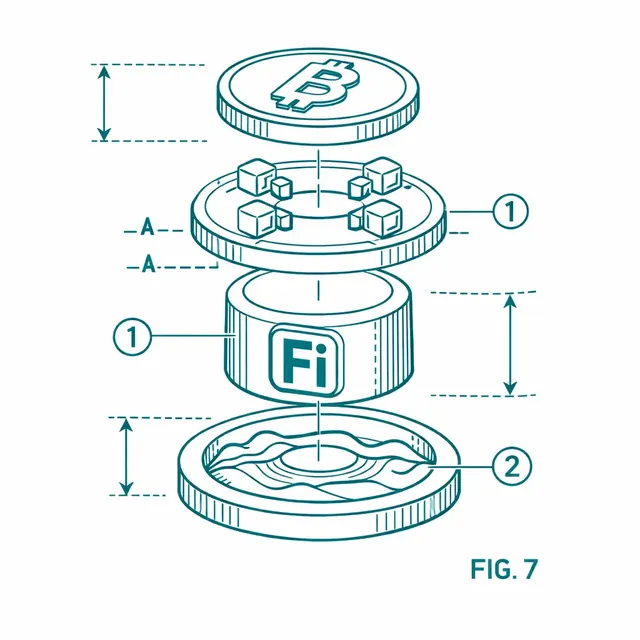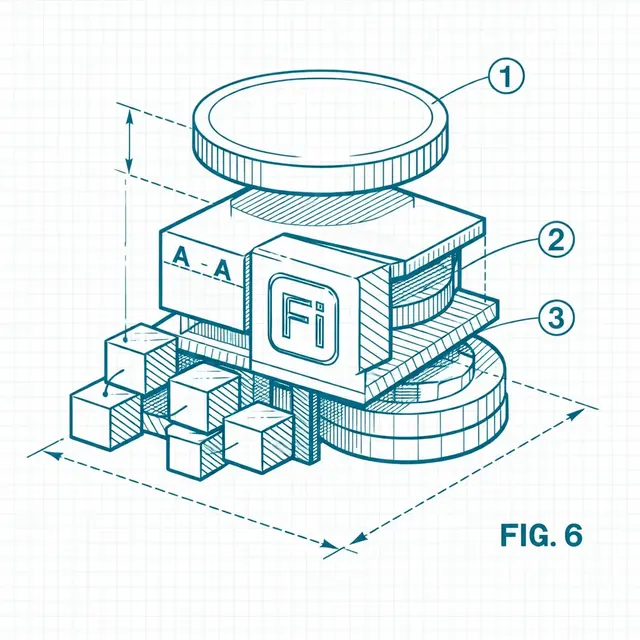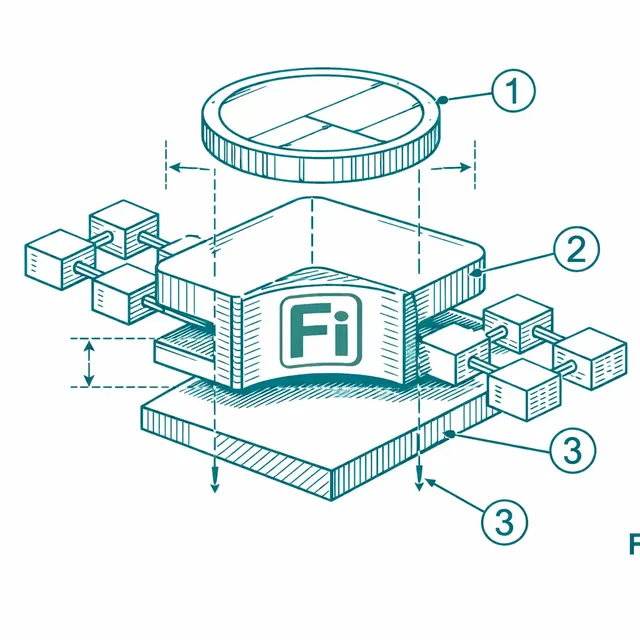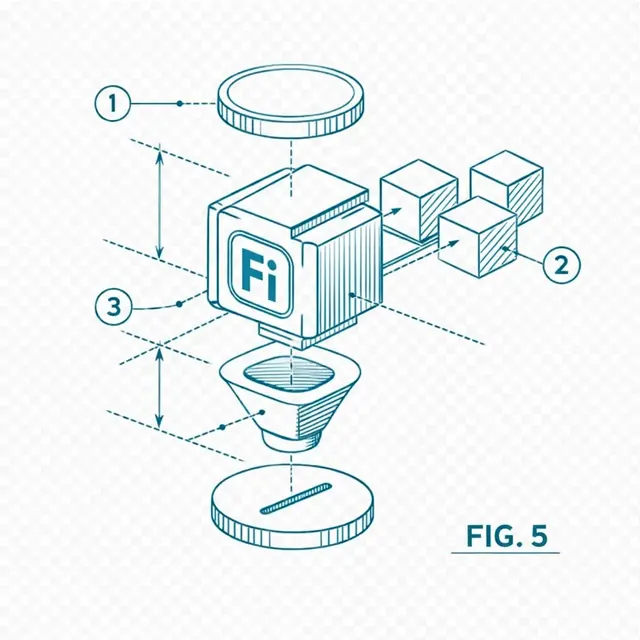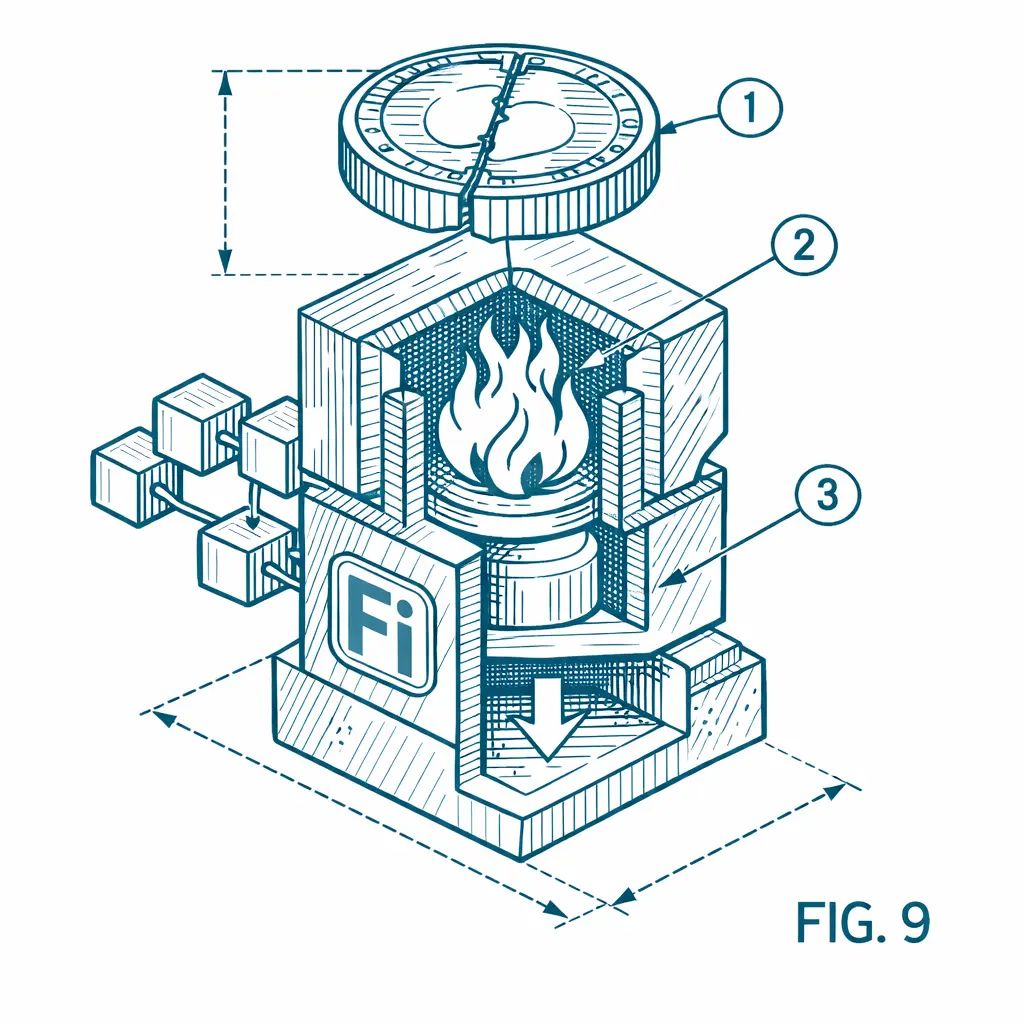
Buyback-and-burn damages token markets when the treasury treats liquidity as infinite. In AMMs, it is not. Uniswap’s documentation is explicit that price impact rises as trade size grows relative to pool liquidity, and the v2 whitepaper explains why: swaps move reserves along a constant-product curve rather than matching against a fixed quote sheet. A treasury that repeatedly buys into shallow pools is not just “creating demand.” It is consuming executable depth and often making the token harder to trade for everyone else.
A burn only solves the supply-accounting part of the problem. OpenZeppelin’s ERC20 implementation is clear that burning destroys tokens and reduces total supply. That happens after the tokens have been acquired. The quote asset spent on the buyback is already gone from treasury, and the market depth taken out during execution does not reappear just because the purchased tokens are later sent to the zero address.
Buyback-and-burn works only when buybacks are smaller than the market’s ability to refill depth
The core constraint is execution capacity, not narrative strength. If a token trades mostly in one or two shallow pools, every treasury buy shifts the reserve ratio, worsens entry price for the treasury, and raises future slippage for ordinary users. If LPs are external and mercenary, a visible buyback program can even attract short-term liquidity that leaves as soon as volatility rises. That creates a cycle of shallow depth, expensive buybacks, and increasingly fragile price action.
Buyback-and-burn is therefore safest in tokens that already have thick secondary liquidity, recurring protocol surplus, and limited near-term unlock pressure. It is weakest in early-stage governance tokens with thin pools, fragmented venues, and large future emissions. In those cases, the treasury is effectively trying to manufacture scarcity while the market microstructure is still underbuilt.
The practical implication is simple. Size the program to market depth first, then talk about burn ratios. That starts with a disciplined treasury strategy. Teams that reverse that order usually end up optimizing for optics. Advisory credibility on this topic does not come from saying “deflationary” often. It comes from showing how much volume the treasury can execute without materially degrading post-trade liquidity.
Separate the three jobs: demand support, float reduction, and liquidity preservation
One mechanism rarely optimizes all three objectives at once. These are separate token economy design components. Open-market buyback-and-burn supports demand and reduces float, but it usually weakens liquidity unless some of the treasury flow is recycled into LP depth. That is why the better token economy designs separate the acquisition decision from the disposition decision.
Jupiter is a useful example of this separation. In its transparency disclosures, Jupiter states that since February 2025, 50% of onchain revenues have been allocated to the Litterbox Trust to acquire JUP on the open market as a long-term strategic reserve rather than burn it immediately. That structure still converts protocol revenue into token demand, but it preserves optionality instead of locking the protocol into permanent supply destruction.
Maker shows a second alternative. The Maker Protocol’s surplus auctions sell surplus Dai for MKR and then burn the winning MKR bid. Mechanically, that means the protocol does not need to run a simplistic recurring market sweep through one visible liquidity venue. It relies on competitive auction participation to source the token before burning it.
BNB shows a third route. BEP-95 burns a portion of gas fees each block, with the burn ratio adjustable by governance. That creates deflation linked to network activity without requiring open-market token repurchases at all.
The design lesson is straightforward. If liquidity is thin, ask whether the protocol really needs immediate burn, or whether it mainly needs a credible path to value accrual. Buyback-and-lock, auction-based burn, or fee-linked burn can achieve much of the same signaling effect with less damage to execution quality.
The execution layer matters more than the burn wallet
A weak execution policy can ruin an otherwise sound buyback budget. Large episodic buys tell the market exactly when the treasury will cross the spread. That invites front-running, adverse selection, and unnecessary slippage. The more serious approach is to convert treasury intent into a slow, parameterized execution program.
Aave’s 2025 Aavenomics implementation is notable here because it frames buybacks as an excess-revenue deployment program with explicit budgeting. The proposal targeted an initial $1 million per week for six months and tied future sizing to broader treasury management rather than to a fixed ideological burn target.
A separate Aave governance proposal then argued for executing buybacks through an onchain TWAMM-style mechanism, with an initial $100,000 to $500,000 pilot spread over roughly two weeks to one month in order to reduce price impact and operational overhead. Whether or not a specific venue is adopted, the governance logic is sound: continuous execution is usually superior to treasury impulse buying.
Paradigm’s TWAMM paper explains the mechanism cleanly. Long-term orders are split into many virtual sub-orders that trade at an even rate over time, pushing execution closer to a time-weighted average price and reducing the market shock of any single transaction.
For most projects, the best operating policy is a boring one. Fund buybacks only from realized protocol surplus. Execute continuously or in small tranches. Route across the deepest available venues. Publish pause conditions. And never let the treasury become the biggest predictable buyer in its own market.
A practical rule is to cap buyback flow to a single-digit share of reliable venue volume and active pool depth unless the protocol itself controls a meaningful portion of that liquidity. That threshold is an analytical inference, not a universal law, but the mechanism is clear: once treasury demand becomes a large fraction of executable liquidity, the protocol starts paying for its own signaling through worse market quality.
Protocol-owned liquidity is the missing half of most burn programs
A sustainable burn program usually needs a liquidity budget beside the burn budget. Olympus’ documentation states the principle directly: protocol-owned liquidity, or POL, ensures users can swap without relying on external liquidity mining incentives. That is the correct frame. If the protocol wants persistent demand-side intervention, it should also want persistent trading depth it can count on.
QuickSwap’s recent tokenomics changes are a concrete example of a protocol moving from pure burn theater toward a mixed operating model. After running the QUICK “Trial of Fire,” where 100% of protocol revenue was used for buyback-and-burn, QuickSwap shifted to a structure that allocates revenue across farming rewards, burns, and treasury-owned liquidity. In the transition phase, the published split was 60% to farming rewards, 5% to burns, 10% to TOL, and 25% to development. After that phase, QuickSwap said the model moves to 50% farming, 40% burns, and 10% TOL. That is closer to sustainable yield for liquidity pools than to pure burn optics.
SaucerSwap’s governance discussion made the same trade-off even more explicitly. Its revised buyback allocation proposed dedicating part of buybacks to protocol-owned liquidity specifically to deepen key pairs, improve execution quality, and reduce slippage. That is a much better methodology than treating 100% burn as automatically optimal.
Concentrated liquidity can make this more capital efficient, but only if the team can actively manage it. Uniswap notes that v3 introduced concentrated liquidity, allowing LPs to choose price ranges. Uniswap also notes that out-of-range liquidity becomes single-sided and stops earning fees. That means a treasury cannot simply deposit liquidity once and assume the problem is solved. Narrow ranges create better local depth, but they require active rebalancing and operational discipline.
The most robust structure is usually a two-layer book. Use a wider passive treasury range to guarantee baseline tradability. Then use a narrower active range, if the team has the tooling and mandate to manage it, around the price zone where buybacks are expected to execute. Without that second operational layer, concentrated POL can look efficient on paper and still fail in live markets.
Use the right archetype for the token’s stage, not the loudest one
| Archetype | What it optimizes | Main liquidity risk | Best fit |
|---|---|---|---|
| Open-market buy + immediate burn | Fast visible deflation | Highest execution impact in thin markets | Mature tokens with deep external liquidity and real surplus, as seen in QuickSwap’s burn-heavy phase |
| Buyback + lock or reserve | Demand support with optionality | Lower immediate float reduction than burning | Protocols that want flexibility, like Jupiter’s strategic reserve approach |
| Buyback + staker distribution | Aligns long-term holders with revenue use | May not reduce supply at all | Governance tokens where retention matters more than pure deflation, as in Aave’s buy-and-distribute framing |
| Surplus auction burn | Competitive price discovery before burn | Operational complexity | Protocols with strong internal cash-flow systems, like Maker |
| Fee-in-kind burn | Activity-linked deflation without market buys | No direct secondary-market support | Infrastructure tokens with strong fee flows, like BNB’s BEP-95 |
The mistake is assuming the first row is always the premium version. It is only the most visible version. In many token economies, it is the least technically appropriate version.
Governance quality determines whether buyback-and-burn is credible
A buyback program is credible only when governance can audit its source of funds, execution path, and post-trade effects. Maker’s surplus auctions are formalized at the module level. Aave’s proposals specify budgets and execution mandates. SaucerSwap’s RFC ties burn, staking, and POL to explicit percentages and proposes public tracking of burns. That is the right standard: parameters first, slogans later.
The minimum operating dashboard should track six things.
- Buyback spend as a share of realized protocol surplus, not gross revenue.
- Average execution price versus external TWAP or comparable benchmark.
- Post-trade slippage on standard order sizes in the token’s core venues.
- Protocol-owned liquidity depth and the share of total market depth the protocol controls.
- Net circulating supply change after burns, unlocks, emissions, and incentive distributions.
- Treasury runway after buybacks under stressed revenue assumptions.
If governance cannot answer those six questions, it is not really running buyback-and-burn. It is running treasury-funded marketing.
For tokenomics consulting and token economy design work, this is where methodology matters more than branding. At FinDaS Tokenomics, we treat buyback-and-burn as a market microstructure and treasury policy problem. The useful test for any tokenomics advisor is not whether they recommend a burn. It is whether they can model pool depth, vesting pressure, execution cadence, and POL requirements before governance commits capital. That is the difference between visible tokenomics and durable tokenomics.