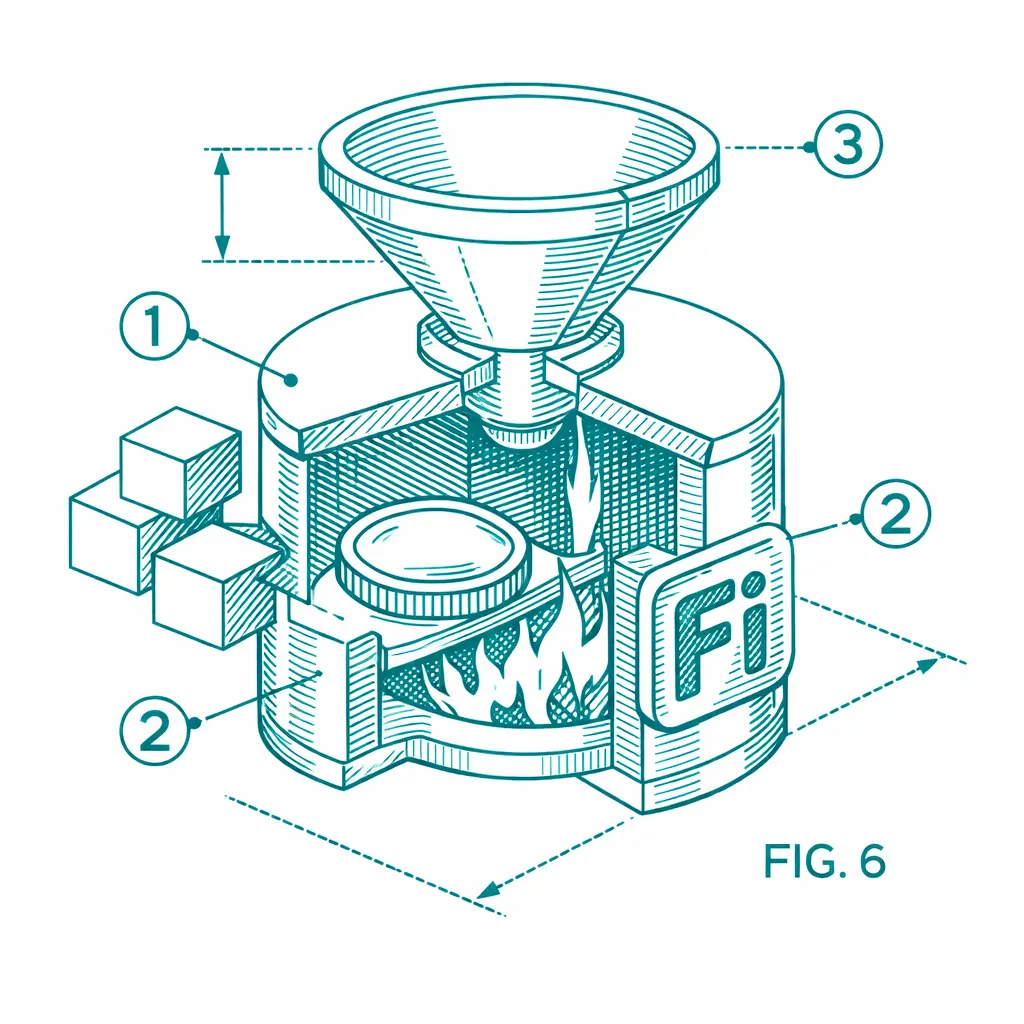
What does a token burn actually change?
Token burns matter only when they change the future path of spendable supply. Ethereum burns the base fee under EIP-1559, Solana burns 50% of each base fee while paying the other 50% to the validator, and BNB combines a quarterly Auto-Burn with a real-time gas-fee burn under BEP-95. Those are all called “burns,” but they remove supply through very different mechanisms.
A burn can reduce current circulating supply, reduce future issuance pressure, or both. Ethereum’s burn is block-by-block and scales with blockspace demand. BNB’s Auto-Burn is formulaic, reported quarterly, and aims to reduce total supply to 100,000,000 BNB, while its real-time burn destroys a validator-governed share of gas fees each block. Solana’s fee design is narrower: base fees are partially burned, but validators also receive transaction fees and protocol-based inflation rewards.
Does a burn automatically increase price?
No. A burn does not create value from nothing. The more durable economic framing is supply relative to productivity. An NBER working paper on platform tokenomics argues that the ratio of token supply to platform productivity is a key state variable for token price, and that buybacks can raise price only by using funds that might otherwise support productive investment.
The EIP-1559 design report describes fee-burning as a holder transfer similar to a stock buyback because removing ETH from supply increases the claim of remaining holders. But even there, durable price support comes from recurring demand for blockspace, not from the word “burn” itself. A one-off treasury burn can improve optics. It does not automatically create users, fees, or cash flow. The last point is an inference from the same supply-versus-productivity logic.
When does the market usually price a burn in?
Markets care more about net issuance than about the burn ceremony. Ethereum.org’s supply note, last updated on February 23, 2026, uses a simple example: with roughly 1,700 ETH/day of issuance, an average gas price of about 16 gwei is enough to offset that day’s issuance. That is the right timing lens. The important moment is when a burn changes the expected supply regime, not when tokens hit a dead address.
Scheduled burns are often partly priced before execution. BNB says its Auto-Burn is independently auditable, reported quarterly, and independent of the centralized exchange. On January 15, 2026, BNB Chain reported its 34th quarterly burn at 1,371,803.77 BNB. The durable information content was not just the headline amount. It was the confirmation that the rules-based burn machine was still operating. That reading is an inference, but it follows from the disclosed formula and cadence.
Which burn models are most sustainable?
The most sustainable burns are funded by activity or surplus, not by pure narrative management. From a long-horizon token economy perspective, a burn is healthiest when higher burn volume reflects higher usage, fee capture, or realized surplus rather than an attempt to compensate for weak demand with artificial scarcity.
| Model | Trigger | Economic backing | Sustainability read |
|---|---|---|---|
| Ethereum | Base fee is burned on each transaction. | Direct blockspace demand. | Strong. The burn is automatic and usage-linked. Ethereum.org’s February 23, 2026 example shows that roughly 16 gwei average gas can offset about 1,700 ETH/day of issuance. |
| BNB | Quarterly Auto-Burn plus a real-time gas-fee burn under BEP-95. | Mixed. Partly formula-driven, partly tied to onchain gas-fee activity. | Medium to strong. Better than a purely discretionary burn, but the quarterly target system is a weaker productivity signal than a pure fee-burn model. That last sentence is an inference from the mechanism design. |
| Solana | 50% of base fees are burned, 50% go to the validator, and prioritization fees go fully to the validator. | Transaction fee flow, alongside protocol-defined inflation rewards for validators. | Medium. The burn is real, but it should be read as one element of fee design rather than as a standalone deflation thesis because issuance remains part of validator compensation. |
| Maker | Surplus Dai is auctioned for MKR and the MKR is burned; debt auctions can mint MKR when the system is under stress. | Real protocol surplus from stability fees. | Strongest economic discipline. Burn happens only in surplus states, and dilution is explicit in deficit states. That is much healthier than promising permanent burns regardless of operating reality. |
How should teams think about burn timing?
Teams should burn after productive surplus is real. Maker’s auction architecture is the cleanest reference point: surplus Dai is auctioned for MKR and the MKR is burned. If the system swings into deficit, debt auctions mint MKR instead. That sequence is economically honest because burn is downstream of operating performance, not a substitute for it.
Automatic timing is usually better than discretionary timing. Ethereum burns every block. Solana burns a fixed share of base fees. BNB runs a quarterly Auto-Burn and a block-by-block gas-fee burn whose ratio can be adjusted through governance. Rules-based timing reduces narrative gaming and makes the burn leg easier to model against emissions, unlocks, and validator incentives.
Short-term timing still matters around unlock schedules and incentive programs. If a protocol burns 2% of supply but emits 5% through staking rewards, liquidity mining, or vesting over the same period, the net supply shock is still expansionary. That arithmetic is why emissions sustainability matters more than a single burn headline. The broader supply-versus-productivity logic is consistent with the NBER framework on normalized token supply.
What should investors and token designers check before calling a burn bullish?
The fastest checklist is simple.
- What funds the burn? Usage fees, protocol surplus, and external revenue are stronger than idle treasury stock because they reveal economic output rather than accounting optics.
- Is the burn large relative to float? A burn should be evaluated against circulating supply, fully diluted supply, and the next unlock schedule. A large headline burn can still be smaller than coming emissions or vesting.
- Is it automatic or discretionary? Formula-based or per-block mechanisms are easier to underwrite than ad hoc announcements. Ethereum, Solana, and BNB all publish rules for their burn mechanics.
- Who loses revenue when the burn happens? Solana explicitly splits base fees between burn and validator rewards, and BNB’s BEP-95 notes that higher burn ratios can reduce validator and delegator rewards. A sustainable burn cannot quietly hollow out security budgets.
- Can the system reverse under stress? Maker is the clearest reminder that honest tokenomics allows burn in surplus states and minting in deficit states.
At FinDaS, tokenomics consulting work usually treats burns as the last line in the model, not the first. In token economy design, the right sequence is demand, fee capture, validator or security compensation, growth incentives, and only then discretionary supply destruction. If the burn is not downstream of productivity, it is usually a temporary narrative tool rather than a durable equilibrium feature.
The practical rule is blunt. Burns are most credible when they recycle real economic output into lower supply. They are weakest when they try to substitute scarcity theater for product-market fit. For informed Web3 investors, the chart reaction matters less than whether the protocol can still fund security, user acquisition, and development after the burn is paid for.