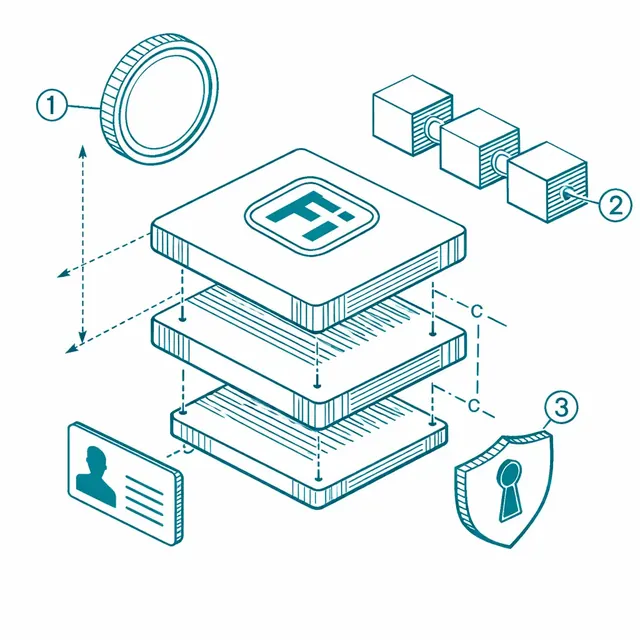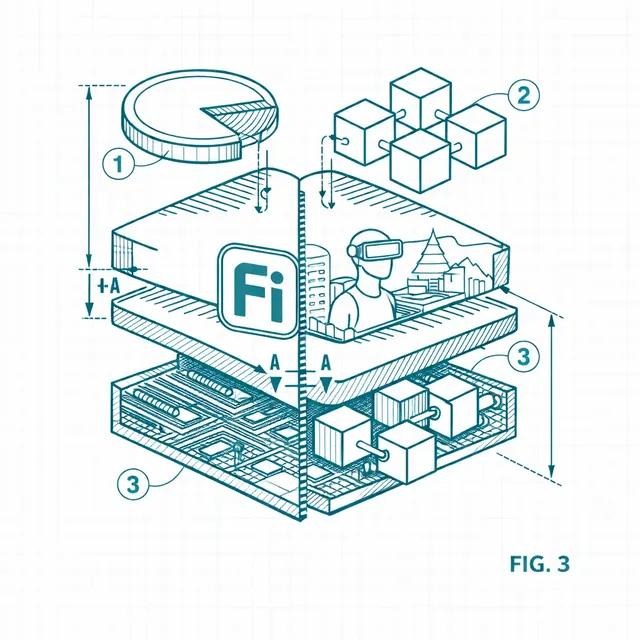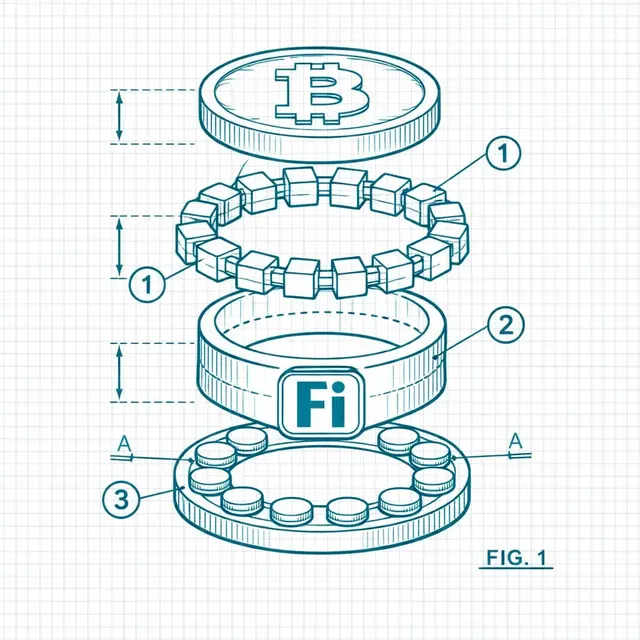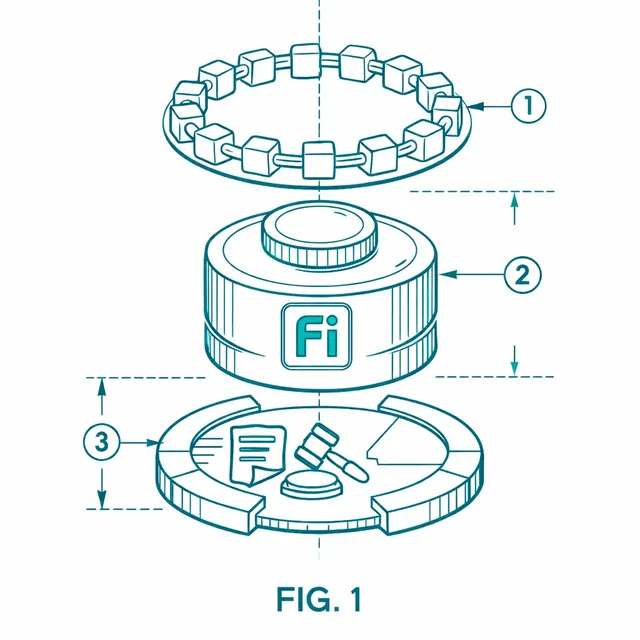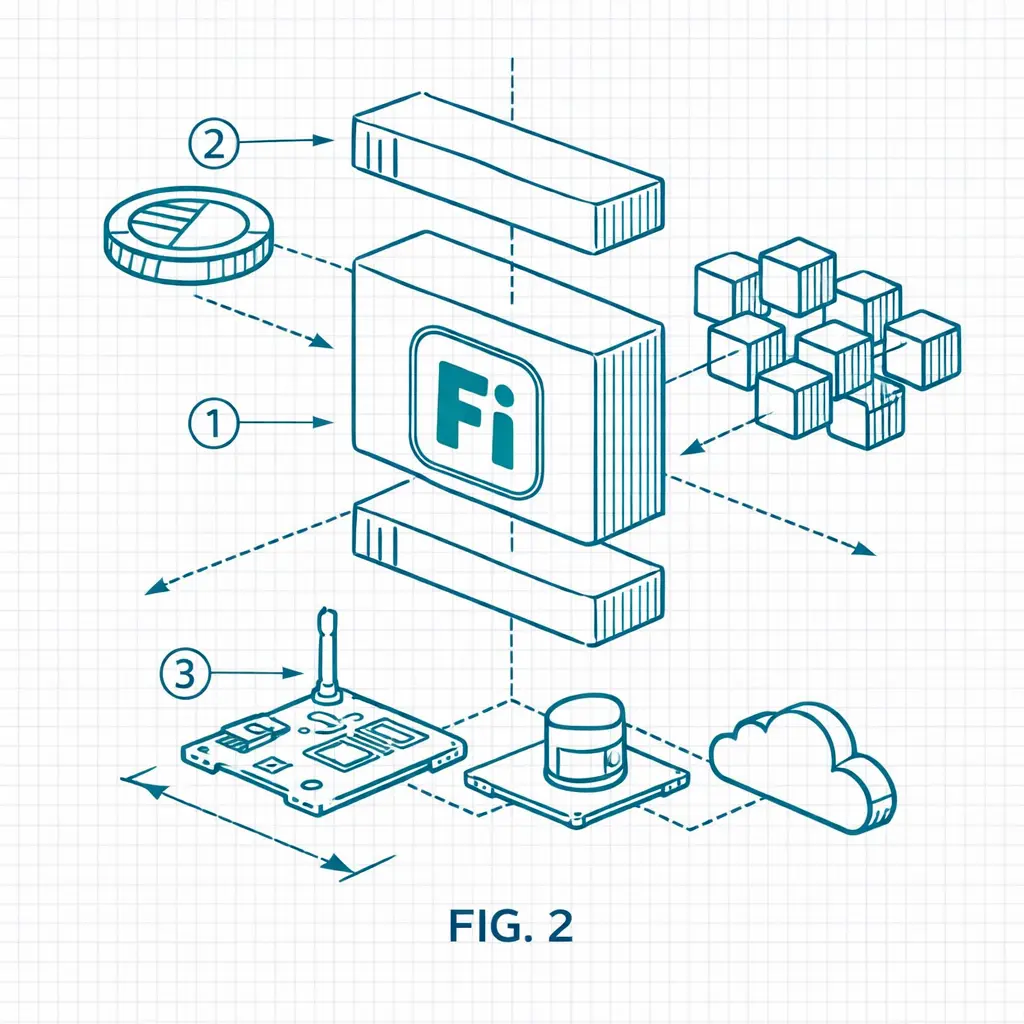
Web3 improves IoT when it coordinates rights, proofs, and payments. It disappoints when asked to carry raw telemetry.
IoT already has mature transport and interoperability layers. MQTT is an OASIS standard built for lightweight publish/subscribe messaging on constrained networks, and OPC UA is positioned by the OPC Foundation as a secure, semantic interoperability layer that scales from field devices to cloud systems. Web3 adds the most value above those layers, where multiple parties need shared state, portable credentials, auditable permissions, and automated settlement across organizational boundaries, not where devices simply need to move packets from sensor to server.
Most Web3 x IoT architectures should treat the blockchain as a control plane, not a telemetry plane. Ethereum’s own documentation notes that calldata is the cheapest permanent way to put data onchain, while contract storage is the most expensive form of storage, with a previously empty 32-byte slot costing 22,100 gas in the example shown on the page. The same documentation also states that blockchains do not store secrets directly because every node must be able to verify state transitions. That makes raw sensor streams, video, and private machine logs poor candidates for onchain storage. A better pattern is to keep bulk data offchain, store only commitments or critical state transitions onchain, and use content-addressed storage so any tampering changes the identifier.
Smart contracts also cannot directly interrogate the physical world. Chainlink’s oracle documentation states that smart contracts cannot natively interact with external data and systems, and that centralized oracles introduce a single point of failure. For IoT, that means every machine-to-machine payment, insurance trigger, maintenance contract, or device marketplace still depends on an offchain trust pipeline that collects evidence, filters bad inputs, and presents deterministic facts to the chain. The blockchain can automate settlement. It cannot, by itself, verify whether a temperature sensor was genuine, a GPS fix was spoofed, or a gateway actually provided coverage.
Security starts at the device edge. A token cannot rescue weak firmware, weak identity, or weak attestation.
NIST’s device cybersecurity baseline is still the cleanest summary of what secure connected devices need to expose at minimum: device identification, device configuration, data protection, logical access control to interfaces, secure software update, and cybersecurity state awareness. Those are not optional implementation details. They are the preconditions for any credible tokenized machine economy because the economic layer inherits every weakness in the device layer beneath it.
Remote attestation is the missing bridge between device security and onchain settlement. RFC 9334 defines an attestation architecture where an Attester generates evidence about the integrity of device layers, often anchored in a lower layer that is meant to be immutable or hard to modify. RFC 9124 does the same for firmware distribution by defining the information elements required to secure IoT firmware updates, including a required signature element in non-dependency manifests that authenticates the signer and protects the manifest from modification. If a Web3 x IoT system cannot prove what software a device is running and who authorized updates, any automated payment rule sits on top of sand.
Portable machine identity is finally becoming standards-based instead of vendor-specific. W3C’s Decentralized Identifiers became a Recommendation on July 19, 2022, and the specification explicitly contemplates DIDs for products and IoT devices. W3C’s Verifiable Credentials Data Model v2.0 became a Recommendation on May 15, 2025, and defines a way to express cryptographically secure, machine-verifiable claims. In practical IoT terms, that means ownership, calibration, maintenance history, manufacturing provenance, operator authorization, and compliance status can be expressed as credentials instead of buried in siloed dashboards.
Tokens fit best where the service unit is objectively meterable.
The strongest token designs in IoT pay for services that can be measured with narrow ambiguity. Radio coverage, packet relay, storage availability, compute execution, and signed access rights are all better candidates than vague notions of “data contribution.” If the protocol cannot specify exactly what was produced, how it was measured, and what adversary model the measurement survives, the token is compensating narrative, not utility. The mechanism design rule is simple: reward proofs, not promises.
| Pattern | What is actually measured | Payment mechanism | Token fit |
|---|---|---|---|
| Decentralized wireless connectivity | Coverage evidence and delivered traffic. Helium’s IoT design separates Proof-of-Coverage from data transfer, and IoT traffic is billed in 24-byte increments. | Usage is paid in Data Credits. One DC equals $0.00001 and is created by burning HNT. DCs are non-transferable and intended to keep usage pricing predictable. | Strong fit when rewards are tied to verifiable network service and end-user pricing is kept stable. |
| User-permissioned machine data | DIMO creates an onchain Vehicle ID NFT, supports delegated privileges, and requires a Vehicle JWT to access telemetry through its API stack. DIMO also states that each device ID conforms to a W3C standard. | Economic value sits mainly in identity, consent, anti-sybil controls, and access delegation rather than per-packet token settlement. | Medium fit. The token works best as an access and coordination layer, not as a price tag on every raw data point. |
| Industrial multi-party coordination | Existing systems already have strong transport and data-model standards through MQTT and OPC UA, while DID/VC standards can carry identity and claims across entities. | Stablecoin or fiat settlement is often sufficient if counterparties are known and legal contracts already exist. | Native token is optional. The need must come from settlement automation or shared incentives, not branding. |
Live systems already show the difference between useful tokenization and speculative tokenization.
Helium is the clearest example of a Web3 x IoT design that tries to pay for a real network primitive instead of abstract “participation.” Helium documents describe Proof-of-Coverage as a way to verify hotspot location, configuration, and wireless coverage, and the current IoT hotspot architecture describes offchain oracle components that ingest receipts, verify events, compute reward output, and inject rewards back into the network. Data-only hotspots provide another useful separation: they can earn for actual data transfer but not for Proof-of-Coverage. That distinction matters because it isolates different service types and reduces the chance that a single reward stream pays twice for the same contribution.
Helium’s most important design choice is arguably not its emissions logic but its demand-side usage pricing. Data Credits are used for all network usage, one DC equals $0.00001, DCs are non-transferable, and IoT messages are billed in 24-byte increments. That is mechanism design discipline. End users buy a stable service unit. Speculative exposure stays one layer away. In DePIN and IoT, that separation is usually healthier than forcing every machine customer to hold the volatile reward asset directly.
DIMO illustrates a different pattern. DIMO’s Vehicle ID is an onchain NFT tied to a real vehicle, the protocol supports multiple delegated privileges for that NFT, and telemetry access requires a Vehicle JWT. DIMO also states that the cost of minting a device onchain provides some protection against sybil attacks, that DIMO apps must prove they received telematics or verified documentation from the vehicle owner before minting, and that data from supported hardware is signed and checked against historical data and other metadata. This is not a pure “sell my sensor stream” model. It is closer to a consented data-rights and machine-identity system with a tokenized coordination layer.
The contrast between Helium and DIMO is instructive. Helium tokenizes delivery of a network service. DIMO tokenizes identity, permissioning, and machine-linked access. Both are more defensible than protocols that pay emissions for unverifiable dashboards or self-reported sensor activity.
The hard problems are spoofing, oracle design, and governance drift.
Centralized oracle design can quietly erase the point of decentralization. Chainlink’s documentation states that centralized oracles are a single point of failure and that incorrect inputs can lead to irreversible smart contract outcomes. In IoT, this is not theoretical. A false sensor report can trigger a payout, open a gate, unlock a battery, or reroute inventory. Once that state transition hits an immutable ledger, remediation becomes a legal or operational process instead of a protocol-native rollback.
Rewarding easy-to-spoof telemetry is the most common design mistake in Web3 x IoT. NIST’s baseline emphasizes device identity, protected interfaces, software update, and cybersecurity state awareness. RFC 9334 emphasizes evidence rooted in trusted device layers. DIMO’s own privacy and security documentation adds secure hardware elements, signed data, and owner-verification requirements before minting. The shared lesson is blunt: if identity and attestation are weak, token rewards will flow toward emulation, replay, and fraud before they flow toward real-world service.
Governance flexibility is also a hidden cost. Physical operators deploy gateways, vehicles, chargers, meters, or industrial devices into environments with long payback cycles. If reward weights, admission rules, fee formulas, or slashing logic can be changed frequently without hard bounds, the system stops looking like infrastructure and starts looking like policy risk. The trade-off is real. Governance can preserve adaptability, but every discretionary lever reduces the predictability that makes machine economies financeable in the first place.
Regulation is beginning to favor user-controlled machine data and higher device-security baselines.
The EU Data Act is now directly relevant to Web3 x IoT design. The European Commission states that the Data Act entered into force on January 11, 2024 and became applicable on September 12, 2025. The Act is framed around fair access to and use of data, and the Commission explicitly connects it to data generated by connected devices such as cars and industrial equipment. For tokenized data markets, this matters because exclusive manufacturer control over machine data is becoming a weaker assumption in at least one major jurisdiction.
The EU Cyber Resilience Act matters just as much on the supply side. The Commission states that the CRA entered into force on December 10, 2024, that reporting obligations begin on September 11, 2026, and that the main obligations apply from December 11, 2027. The law imposes cybersecurity requirements on products with digital elements across their lifecycle. That means insecure device onboarding, weak update mechanisms, and vague post-sale support are becoming harder to externalize. A token incentive does not exempt an IoT product from baseline security obligations.
The policy direction is consistent with a rule-based Web3 architecture. Users should have clearer rights over device-generated data. Manufacturers should carry clearer security duties. Credentials, attestations, and auditable permissioning can help implement that world. A discretionary token economy with fuzzy rights and weak device proofs cannot.
Design rules for serious Web3 x IoT token economies
- Keep the data plane offchain. Put hashes, settlement events, permissions, and disputes onchain. Keep bulky or sensitive telemetry offchain and content-addressed.
- Use open device and messaging standards first. MQTT, OPC UA, DIDs, and VCs reduce vendor lock-in and make cross-party coordination easier before any token is introduced.
- Define one measurable service unit. Coverage, verified delivery, storage availability, or signed access are all defensible. “Useful data” is not a service unit.
- Separate stable usage pricing from speculative reward exposure. Helium’s Data Credits are a good reference point because the spend unit is fixed in USD terms even though the reward asset is not.
- Make attestation upstream of payment. Payment logic should consume verified evidence, not raw device claims.
- Bound governance levers. Publish clear formulas, update cadence, and parameter limits. Hardware networks need predictability more than theatrical decentralization.
- Prefer revocable delegated permissions over permanent data sales. That is closer to how real device access works, and it aligns better with emerging rights around connected-device data.
For teams doing token economy design in DePIN or machine-economy systems, the right starting document is not an emissions spreadsheet. It is a measurement spec. At FinDaS Tokenomics, that usually means defining the service unit, the adversary model, the attestation path, and the small set of parameters that are fixed versus governable before any discussion of incentives. In Web3 x IoT, tokenomics consulting only adds value after the protocol can already prove what the machine actually did.