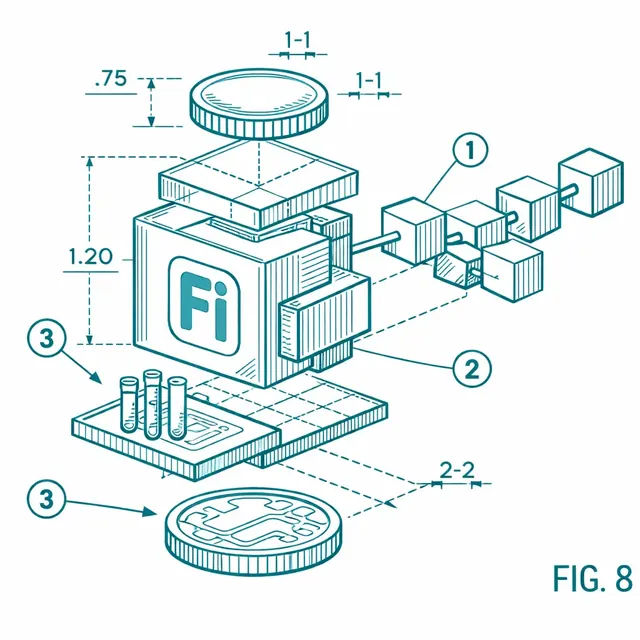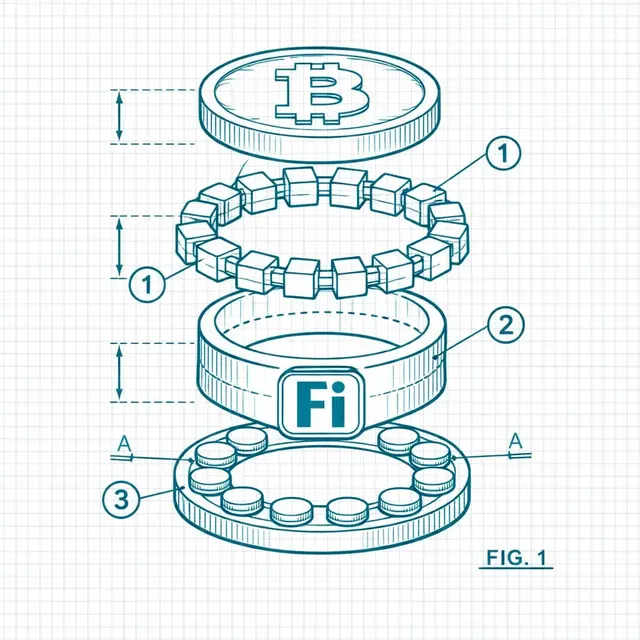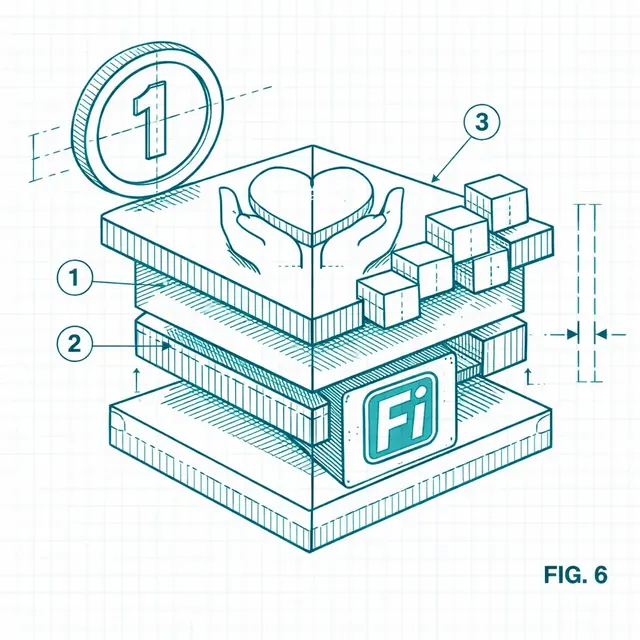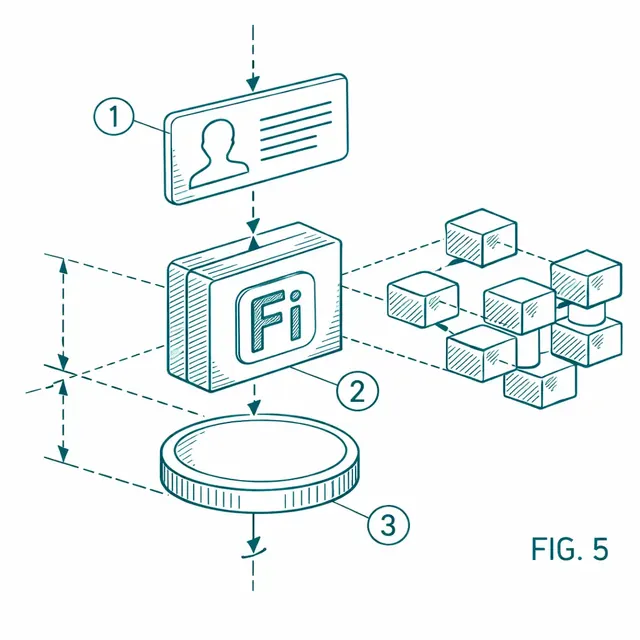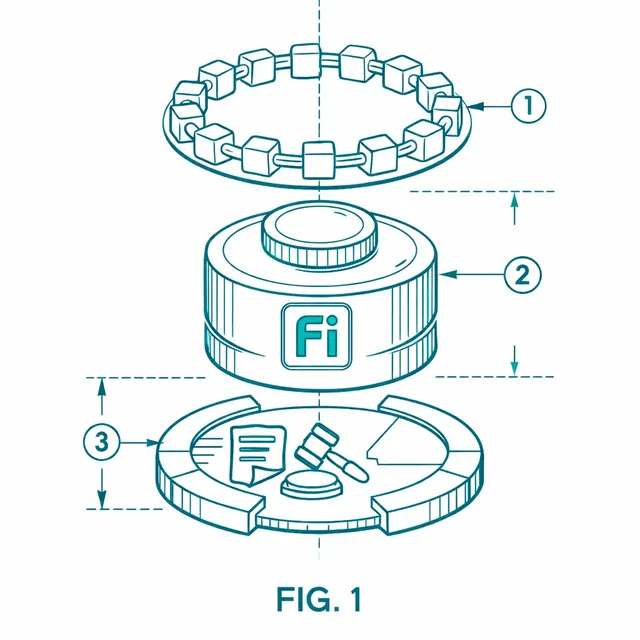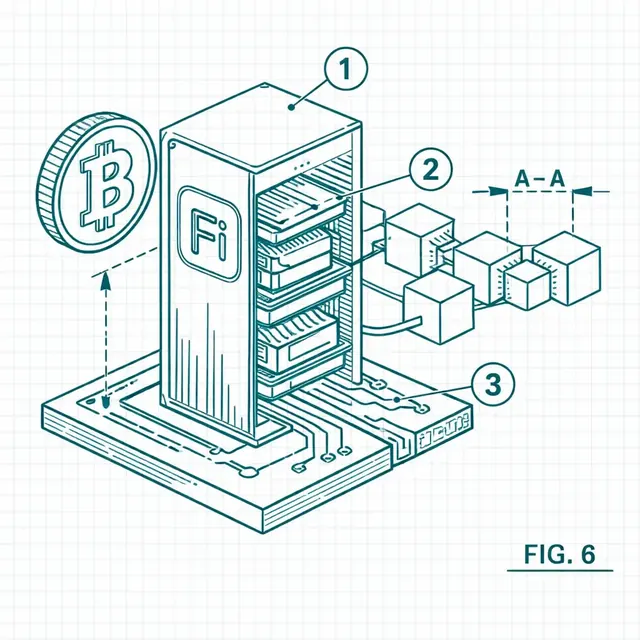
Blockchain is becoming relevant to e-commerce for a narrow, practical reason: it can now replicate merchant-grade payment logic without forcing merchants to hold speculative assets. Shopify started rolling out USDC checkout through Shopify Payments on June 12, 2025, and Visa said on December 16, 2025 that its stablecoin settlement program had crossed a $3.5 billion annualized run rate.
The winning architecture is not shoppers paying with volatile governance tokens. It is dollar-backed stablecoins, deterministic smart-contract escrow, and compliance-ready identity rails. Circle disclosed in its SEC filing that USDC had $60.1 billion in circulation across 4.9 million meaningful wallets as of March 31, 2025, and had processed more than $25 trillion in onchain transactions since launch. Stripe said in its February 27, 2025 annual letter that stablecoin transaction volume more than doubled between Q4 2023 and Q4 2024 and monthly active stablecoin wallets had reached 40 million.
Stablecoins are the first blockchain primitive that actually fits commerce
Stablecoins fit e-commerce because commerce needs price certainty, not upside optionality. The SEC Division of Corporation Finance said on April 4, 2025 that a narrow class of USD-backed, redeemable, reserve-backed payment stablecoins used for payments do not involve the offer and sale of securities in the circumstances described by the statement. The same statement explicitly excluded yield-bearing stablecoins and alternative stability designs from that view. That distinction matters. Checkout systems want par settlement, predictable accounting, and immediate price intelligibility for buyers and merchants.
Shopify’s implementation shows why stablecoins are different from earlier crypto checkout attempts. Buyers can pay with USDC on Base from supported wallets, while merchants can keep their existing Shopify Payments setup and choose to receive payouts in fiat or in USDC. Shopify also says customers can pay from any of the 480 wallets it supports on Base without gas fees charged by Shopify. That is a very different proposition from asking a merchant to accept an asset that can move 10% before fulfillment closes.
The key analytical point is simple. E-commerce does not need “crypto adoption” in the abstract. It needs a settlement asset that behaves like money, can be encoded into deterministic rules, and can move across borders at software speed. Stablecoins are the first onchain asset class that meets that threshold at scale. Volatile tokens do not.
Commerce needs payment state machines, not wallet-to-wallet transfers
The real breakthrough is not that merchants can accept an onchain asset. It is that onchain payment systems are finally being rebuilt around the actual state machine of commerce. Shopify’s engineering team described the problem directly: commercial purchases involve race conditions between checkout, settlement, tax finalization, inventory reservation, cancellations, and fulfillment. Simple wallet-to-wallet transfers do not handle that. Card systems do, because they separate authorization from capture.
That is why the Commerce Payments Protocol jointly deployed by Shopify and Coinbase matters more than the checkout button itself. The protocol implements six explicit operations: authorize, capture, charge, void, reclaim, and refund. Funds move into escrow on authorization and out on capture. Payers can reclaim funds after expiry if an operator fails to act. Operators cannot mutate the original payment intent, including the receiver address, payment token, maximum amount, or expiries, because those fields are signed by the payer and enforced by the contract.
This is the mechanism-design lesson most crypto commerce projects missed for years. E-commerce is not a transfer problem. It is a constrained transition problem. The useful onchain system is the one that makes every transition legible, time-bounded, and machine-enforceable. The Base team’s open-source repository describes the protocol as a permissionless system for onchain payments that mimics traditional authorize-and-capture flows, and Coinbase’s merchant stack frames the same rails as instant final settlement with auth/capture, refunds, ledgering, and subscriptions already handled.
The trade-off is clear. Card rails embed discretionary dispute processes and chargebacks. Onchain rails reduce merchant chargeback risk, but they shift buyer protection into explicit refund logic, escrow rules, operator behavior, and merchant policy. From a systems perspective, that is not a weakness. It is a redesign of where the rules live. But it only works if those rules are specified up front instead of being hand-waved into future governance.
Cross-border sellers and marketplaces benefit first
The earliest large-scale winners are likely to be cross-border merchants, digital marketplaces, and platforms with fragmented payout flows. Visa’s USDC settlement rollout is built around seven-day settlement windows, treasury efficiency, and blockchain interoperability for issuer and acquirer partners. Shopify’s USDC flow is built around borderless checkout and existing order flows. Those are not ideological use cases. They are cost, timing, and reconciliation use cases.
Industry data points the same way. Chainalysis reported that in Sub-Saharan Africa it observed regular multi-million dollar stablecoin transfers supporting trade flows between Africa, the Middle East, and Asia, including energy and merchant payments. In Brazil, Chainalysis found that year-over-year stablecoin transaction value on local exchanges rose 207.7% and said the main use cases appeared to be B2B cross-border payments. That is where onchain settlement has immediate edge: when the alternative is slow banking rails, patchy dollar access, or high-friction correspondent networks.
| Commerce use case | Why blockchain fits | Main constraint |
|---|---|---|
| Cross-border checkout | Stablecoins provide par-value settlement across borders and can plug into merchant checkout with existing fulfillment flows. | Off-ramp quality, local compliance, refunds |
| Marketplace and platform payouts | Programmable escrow, auth/capture, and ledger-style settlement suit split payments and delayed release. | KYC, tax reporting, dispute handling |
| Merchant treasury settlement | Always-on settlement windows improve liquidity timing and weekend operations. | Bank integration and regulator comfort |
| Restricted-goods and compliance-heavy checkout | Verifiable credentials can prove attributes without exposing full identity datasets. | Wallet penetration and verifier interoperability |
| Product provenance and resale | Digital product passports and signed credentials create portable compliance and authenticity data. | Upstream data quality |
| Consumer loyalty tokens | Possible, but only when transferability and programmability add more value than complexity | Volatility, accounting, tax, securities risk |
Marketplaces are especially interesting because they already operate like rule engines. They decide when a seller is paid, when funds are held back, how refunds are allocated, and how platform fees are taken. That is structurally closer to a programmable escrow system than to a one-step card sale. If blockchain becomes core infrastructure anywhere in e-commerce, it will likely happen first in these multi-party flows.
Identity and product data are the second commerce layer
Payments are only half of the story. The second layer is verifiable commercial data. The EU’s Ecodesign for Sustainable Products Regulation introduces the Digital Product Passport, which the European Commission describes as a digital identity card for products, components, and materials. The Commission says the passport will store information such as materials and origins, repair activities, recycling capabilities, and lifecycle impacts, and that customs authorities will be able to perform automatic checks on the existence and authenticity of passports for imported products.
That does not mean every product passport should live on a public chain. It means e-commerce is moving toward portable, machine-verifiable product metadata. Blockchain becomes useful when many parties need access to the same record and no single party should be the sole source of truth. In sectors like luxury goods, regulated products, repair ecosystems, and secondary markets, that condition often holds. In a vertically integrated merchant stack, it may not.
Identity follows the same pattern. W3C announced Verifiable Credentials 2.0 as a standard in 2025, framing it as infrastructure for trusted and privacy-preserving digital identity. The specification itself requires conforming verifiers to perform verification, check required properties, and reject non-conforming documents. That matters for commerce because age-gated goods, seller verification, warranty claims, B2B onboarding, and cross-border tax or customs checks all benefit from portable credentials that can be verified without copying entire customer records into every merchant database.
The important design implication is that the future of e-commerce on blockchain is as much about attestations as payments. A product may carry verified origin data. A buyer may present an age credential. A merchant may prove licensing status. These are narrower use cases than the old “everything onchain” thesis, but they are far more credible.
Most commerce tokens should be rule-bound liabilities, not floating assets
Most commerce systems still do not need a tradeable token. The asset that works best at checkout is the asset with the fewest moving parts: stable value, one-for-one redemption, no governance rights, and no promised yield. That is almost exactly the profile the SEC staff described for the payment stablecoins covered by its April 4, 2025 statement.
That has major implications for token economy design. A commerce token should usually behave like a tightly specified liability, not like a miniature central bank with discretionary emissions and political governance. If the merchant promise is a discount, cashback, or credit, then the system should encode redemption rights, expiry, transfer restrictions, and liability caps directly. If those rules cannot be expressed clearly, the token is probably a bad instrument for the job.
- The token should not be required to appreciate for the commerce model to work.
- Refund rights should be encoded ex ante, not negotiated ad hoc.
- Reward emissions should be bounded by unit economics, not community sentiment.
- Governance powers should be narrow and operational, not open-ended monetary policy.
- Merchants should know exactly when liabilities are created, redeemed, or expired.
From the standpoint of FinDaS Tokenomics, this is where commerce-related tokenomics becomes a mechanism design problem rather than a branding exercise. The practical question is not “how do we make a token exciting?” It is “which commercial rights should be expressed as fixed state transitions, and which should remain offchain because they require judgment, exceptions, or regulated human review?” In most retail contexts, less token surface area is better.
Regulation is narrowing the design space, and that is good for commerce
The regulatory environment is finally becoming specific enough to shape real architecture. In the EU, MiCA entered into force on June 29, 2023. The provisions for e-money tokens and asset-referenced tokens became applicable on June 30, 2024, and most rules for crypto-asset service providers applied from December 30, 2024. That is important because e-commerce does not scale on policy ambiguity. It scales when issuers, service providers, and merchants know which liabilities are allowed and under what supervisory regime.
In the United States, the GENIUS Act was signed into law on July 18, 2025. The statute says it takes effect on the earlier of 18 months after enactment or 120 days after final implementing regulations are issued. It also requires permitted payment stablecoin issuers to maintain reserves on at least a one-to-one basis and limits eligible reserves to highly liquid assets such as cash, demand deposits, short-dated Treasuries, overnight repo structures, and government money market funds. Those are merchant-friendly rules because they reduce uncertainty about what exactly backs the payment asset.
The law is also a reminder that “decentralized commerce” will not mean ungoverned commerce. The GENIUS Act defines lawful orders that can require an issuer to seize, freeze, burn, or prevent the transfer of payment stablecoins, and it ties U.S. market access for foreign payment stablecoins to the ability to comply with those orders. That is a hard constraint. It reduces ideological purity, but it increases the probability that stablecoins can be used inside regulated merchant and banking systems.
The tension here is real. Rule-based systems sacrifice some governance adaptability. But commerce usually prefers bounded rules to flexible committees. Merchants want explicit reserve standards, deterministic settlement windows, auditable escrow logic, and predictable compliance hooks. The blockchain merchant stack that scales will look boring in the right places: stable balances, clear expiries, fixed refund paths, portable credentials, and regulated issuers. The more deterministic it becomes, the more likely it is to survive contact with actual e-commerce.