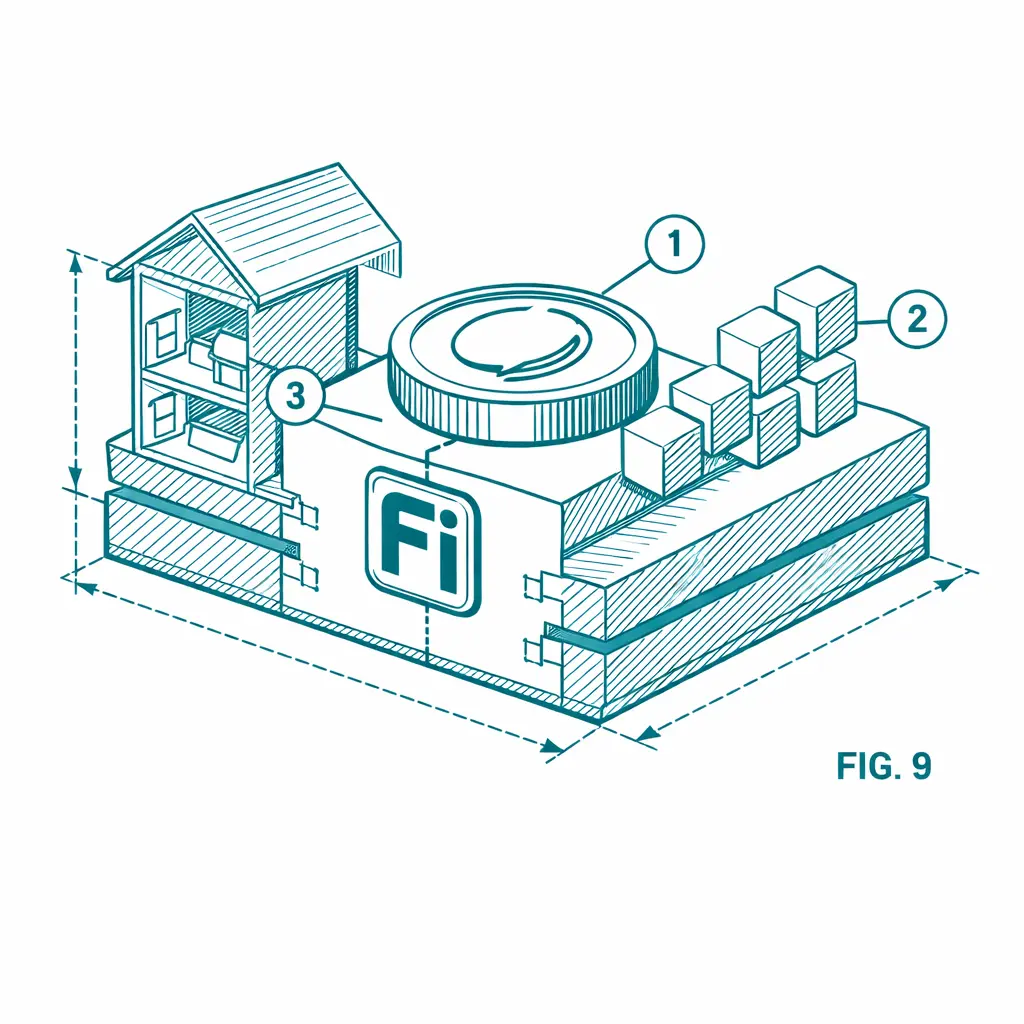
Tokenized real estate is a packaging technology, not a magic upgrade to property economics. On March 10, 2026, RWA.xyz tracked $438.88 million of tokenized real estate across 64 assets and 11,730 holders. That is roughly 1.66% of the platform’s $26.43 billion distributed RWA market. The scale gap matters. The Federal Reserve has noted that real estate is less uniform, less liquid, harder to value, and more legally complex than assets such as gold or short-duration securities. In plain terms, putting property claims onchain does not remove the hardest part of real estate. It just changes the wrapper and, if done well, improves some parts of the operating rail.
Three legal structures sit under the same “real estate token” label
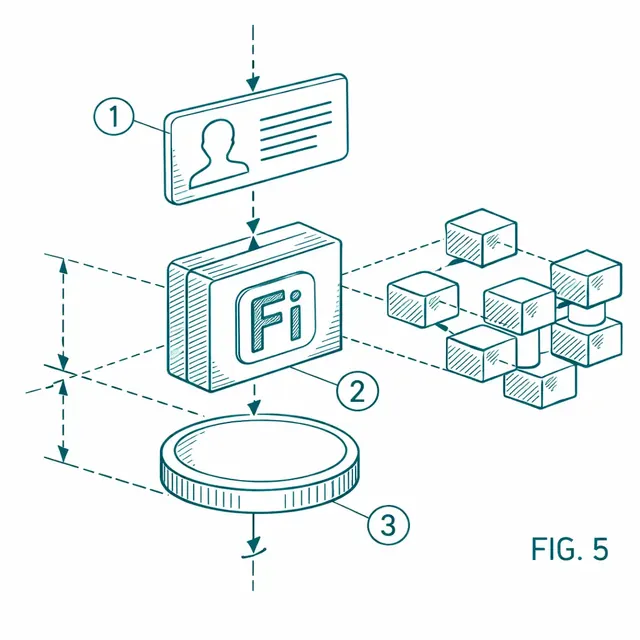
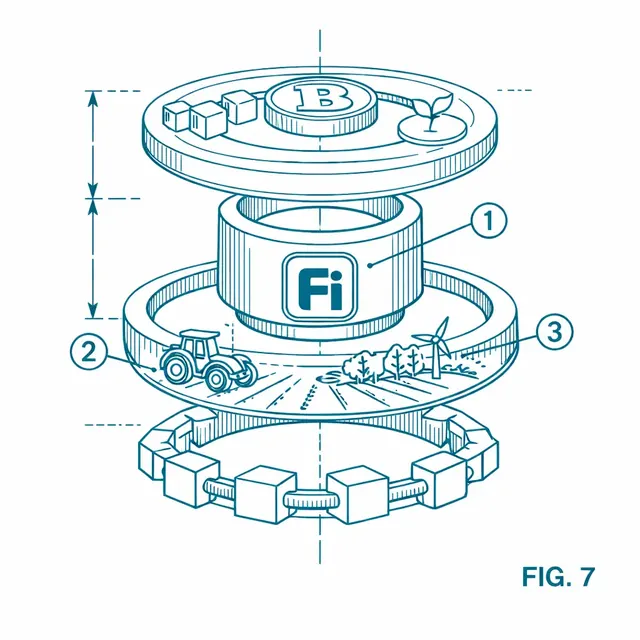
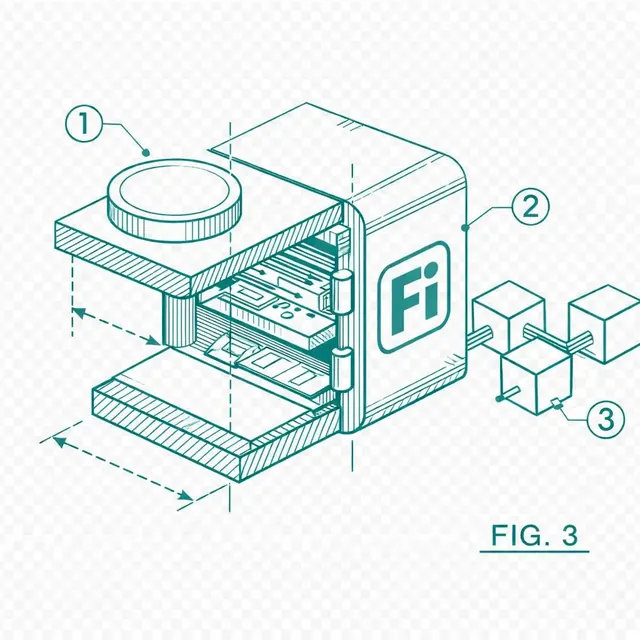
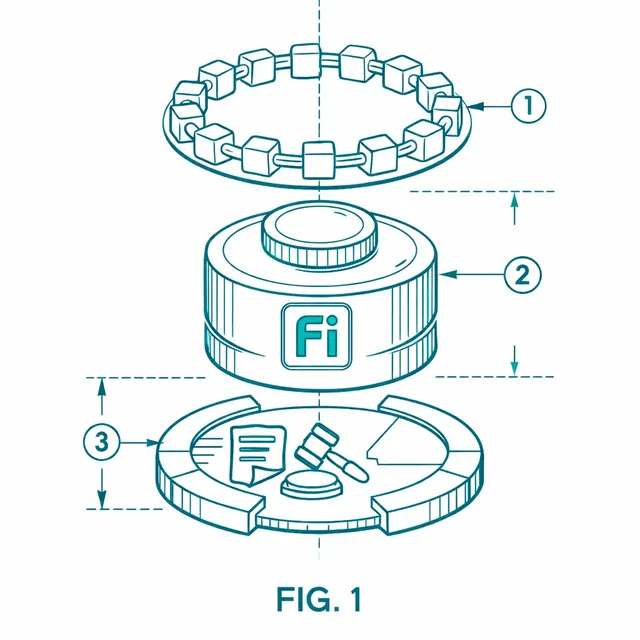
Web3 x real estate is not one product category. RWA.xyz’s real estate coverage explicitly spans real estate-backed debt, equity investments in single properties, diversified portfolios, and some structures that record ownership onchain through regulatory frameworks coordinated with local governments. The Federal Reserve’s tokenization paper makes the same point from a different angle. In many U.S. offerings, the token does not represent the deed itself. It represents a legal claim on an entity that owns the property. That distinction is not cosmetic. It determines what the holder actually owns, how cash flows are distributed, and which rules apply.
- SPV or LLC equity tokens give holders an interest in a vehicle that owns a building or portfolio. RealT’s white paper says each series owns one discrete property and the LLC membership interests are split into digital token units. Economically, this looks closer to a private real estate security than to direct title transfer.
- Real estate-backed debt tokens give exposure to loans, bridge financing, or securitized claims tied to property cash flows. RWA.xyz includes these instruments in the same real estate bucket, which is useful for market mapping but easy to misread if an investor assumes every token is pure property equity.
- Registry-linked title tokens aim to synchronize token ownership with an official property register. Dubai’s pilot is the clearest current example. Dubai Land Department launched Prypco Mint in May 2025, and Ctrl Alt said in February 2026 that its system is directly integrated with DLD so title deeds can be issued, managed, and transferred onchain while remaining aligned with the official registry.
The analytical mistake is to treat all three models as if they deliver the same rights. They do not. An LLC membership token, a debt claim, and a registry-linked title instrument may all use blockchains, but they sit at different points in the capital stack and depend on different legal anchors. For valuation, that matters more than the chain, the wallet UX, or the settlement speed.
The market is live, but the numbers still argue for caution
The segment is real enough to study and still small enough to keep perspective. As of March 10, 2026, RWA.xyz showed RedSwan Digital Real Estate at $135.2 million, Ctrl Alt at $125.3 million, Groma at $67.5 million, and Reental at $54.0 million. Those four platforms accounted for about 87.01% of tracked tokenized real estate value. That concentration suggests the category is not yet a broad, deep market. It is a narrow set of issuance programs and pilots carrying most of the volume.
Current footprint also sits far below the sector’s most-cited forecasts. Deloitte projected in April 2025 that tokenized real estate could reach $4 trillion by 2035, up from less than $0.3 trillion in 2024, with loans and securitizations expected to make up the largest share. That may prove directionally right. It is still a forecast, not a present market fact. Today’s public-chain real estate footprint is measured in hundreds of millions, not trillions, and much of it remains structurally closer to private securities distribution than to liquid property markets.
That gap between forecast and current state is not a reason to dismiss the sector. It is a reason to focus on mechanism. Fractional access, investor onboarding, cap table management, transfer restrictions, servicing automation, and registry synchronization are plausible value drivers. “Liquidity” by itself is too vague to underwrite.
Where blockchain adds real value in real estate
Blockchain adds the most value where real estate is administratively heavy. SEC Commissioner Hester Peirce said in May 2025 that smart contracts can define how securities are purchased, sold, and transferred and can automate dividends, interest, and other distributions. That observation matters for real estate because the asset class is full of manual workflows. Ownership records, eligibility checks, transfer restrictions, investor communications, and distribution waterfalls are all expensive frictions in traditional private markets. Tokenization can compress those frictions when the legal and operational model is coherent.
Dubai’s pilot shows what “coherent” looks like better than most crypto-native decks do. Dubai Land Department said Prypco Mint launched in the pilot phase on May 25, 2025, with investment starting at AED 2,000, full property-level information on pricing and risk factors, and no use of cryptocurrencies during the pilot phase. Ctrl Alt then said on February 20, 2026 that phase two introduced controlled secondary trading, after ten properties had been tokenized for more than $5 million in value. The lesson is straightforward. The strongest use cases are not trying to evade the existing property system. They are trying to wire tokenization into it.
RealT shows the same principle from the cash-flow side. RealT outsources property management to local operators, deducts management and maintenance costs from rental income, and states plainly that token holders are only paid when rent is actually collected. That is financially healthy design language because it keeps the token tied to a boring but auditable source of value. No amount of composability changes whether a tenant pays, whether repairs are needed, or whether the underlying property was bought at a sensible basis.
The TradFi reading is simple. Tokenization can improve the plumbing. It does not manufacture net operating income. If the asset is overlevered, vacant, mismanaged, or legally messy, the token just makes those weaknesses easier to distribute.
Law and servicing still dominate the product
In the United States, tokenized real estate that is structured as a security is still a security. The SEC staff statement published on January 28, 2026 defines a tokenized security as a financial instrument that is a security under federal law but formatted as or represented by a crypto asset, with ownership records maintained in whole or in part on one or more crypto networks. The same statement says the core difference from traditional issuance is the database used for the master securityholder file. That is important because many Web3 narratives still imply that onchain formatting changes the substance of the instrument. In regulatory terms, it usually does not.
That legal continuity explains why private-placement discipline still matters. FINRA’s 2026 oversight report says private placements are unregistered, non-public securities offerings that rely on exemptions under the Securities Act. FINRA also says firms recommending them must conduct reasonable investigations into the issuer, management, business prospects, assets, claims being made, and intended use of proceeds. For tokenized real estate, that means the old questions survive the new rails. Who owns the asset. What rights are transferred. What are the fees. What is the servicing arrangement. What are the red flags in the sponsor’s projections.
Europe is moving in the same general direction, even if the path is still experimental. ESMA said on June 25, 2025 that the EU’s DLT Pilot Regime had seen initially limited uptake but was now attracting growing interest, and it recommended amendments that could make the regime permanent and more flexible. That is a useful reminder that the bottleneck is rarely just technical readiness. Market structure rules, thresholds, permissions, and supervisory comfort determine how far tokenized real estate can move beyond pilots.
For real estate specifically, property law adds another layer that securities lawyers do not solve alone. If the token is meant to reflect title, the land registry, not the smart contract, is the system that confers enforceable ownership. If the token reflects an SPV interest, then corporate documents, offering terms, and servicing contracts matter more than the chain. Either way, compliant product design beats maximalist decentralization slogans.
Liquidity is the most overstated part of the story
Most tokenized real estate today is more transferable than traditional private market paper, but not meaningfully liquid in a public-market sense. RedSwan’s site states that there is currently not an active secondary market for the digital assets featured on its platform and that an investor’s ability to liquidate depends on market conditions and the availability of a buyer. Prypco Mint says investors can sell tokens on its marketplace once a lock-in period expires, while Dubai’s phase-two launch describes secondary trading as a controlled market under a regulated pilot. Those are sensible disclosures. They also puncture the lazy assumption that tokenization automatically turns buildings into 24/7 liquid instruments.
Onchain activity data tells a similar story. RWA.xyz showed only 875 monthly active addresses across the tracked tokenized real estate segment on March 10, 2026. That is movement, not depth. You can divide ownership into smaller pieces. You cannot force continuous two-way markets to appear, especially when the assets are heterogeneous, disclosures are non-standard, and transfer restrictions may apply.
The World Economic Forum’s tokenization report gets the principle right. Tokenization can improve transparency, efficiency, and accessibility, but only if stakeholders align on standards, safeguards, and scalable solutions. Real estate is a near-perfect stress test for that claim because every missing standard shows up fast in due diligence. Investors need consistent asset data, servicing records, valuation methods, fee disclosures, tax treatment, and transfer rules long before they need another story about 24/7 markets.
Value capture matters more than utility theater
A credible real estate token should map cleanly to a cash-flow claim. That claim can be rental income, interest from a loan pool, proceeds from a disposition, or a legally defined governance right over those flows. RealT’s disclosures are useful here because they are economically blunt: token holders are paid when rent is collected, and management and maintenance costs come out first. RedSwan’s platform shows targeted yields on offerings, but its own disclaimer says targeted returns are sponsor-modeled, subject to change, and investments involve risk including principal loss. That is what mature product language looks like. The token is a claim on an uncertain business process, not a self-funding flywheel.
That is also why many platform-level tokens around real estate feel financially weak. If the asset token already carries the economic claim, a second token needs a defensible reason to exist. It should capture a measurable fee stream, secure a necessary service layer, or govern a scarce network function that cannot be replicated by a standard corporate structure. Otherwise it is mostly narrative leverage layered on top of an already regulated asset. From FinDaS Tokenomics’ standpoint, token economy design in real estate starts with the offchain waterfall, legal wrapper, servicing obligations, disclosure cadence, and transfer restrictions. The token comes after that map is clear. In this niche, serious tokenomics consulting is closer to structuring a private market product than designing a consumer crypto flywheel.
What deserves attention in 2026
The most credible Web3 x real estate programs in 2026 share five traits. They specify exactly what the token holder owns. They tie the token to an enforceable legal record, whether that is a deed register or a vehicle-level ownership file. They show how cash actually reaches holders. They describe the secondary market that exists today rather than the one that may exist later. And they publish enough operating data for an investor to underwrite the asset instead of the interface. Dubai’s registry-linked pilot, RealT’s explicit rent-servicing model, and the SEC’s framing of tokenized securities all point in the same direction. The winning model is not “real estate, but onchain.” It is regulated property exposure with cleaner rails and fewer administrative leaks.
- Ask what sits behind the token. A deed, an LLC interest, a note, or a fund unit are different instruments with different valuation logic.
- Ask who services the asset. Property management, rent collection, maintenance, and reporting still drive realized returns.
- Ask where legal finality lives. For title models, registry integration matters. For security-token models, the issuer’s books and transfer-agent logic matter.
- Ask what the real exit path is. A marketplace button is not the same thing as deep secondary liquidity.
- Ask how value accrues. If the answer is not rent, interest, fees, or liquidation rights that can be traced through contracts, the token probably has more story than substance.
That is the core investment filter. Real estate tokenization becomes compelling when it lowers issuance friction, widens distribution, improves reporting, and preserves enforceable rights. It becomes fragile when it mistakes digitization for liquidity or UI polish for economic substance. The sector does not need more decorative utility. It needs cleaner claims on real cash flows.