Blockchain is becoming an infrastructure choice for identity verification, not the identity system itself
Digital identity verification has moved out of the whitepaper phase and into a standards phase. Decentralized Identifiers became a W3C Recommendation on July 19, 2022. Verifiable Credentials Data Model v2.0 and Bitstring Status List v1.0 became W3C Recommendations on May 15, 2025. OpenID for Verifiable Presentations 1.0 reached Final status on July 9, 2025, with OpenID Foundation approval announced on July 10, 2025.
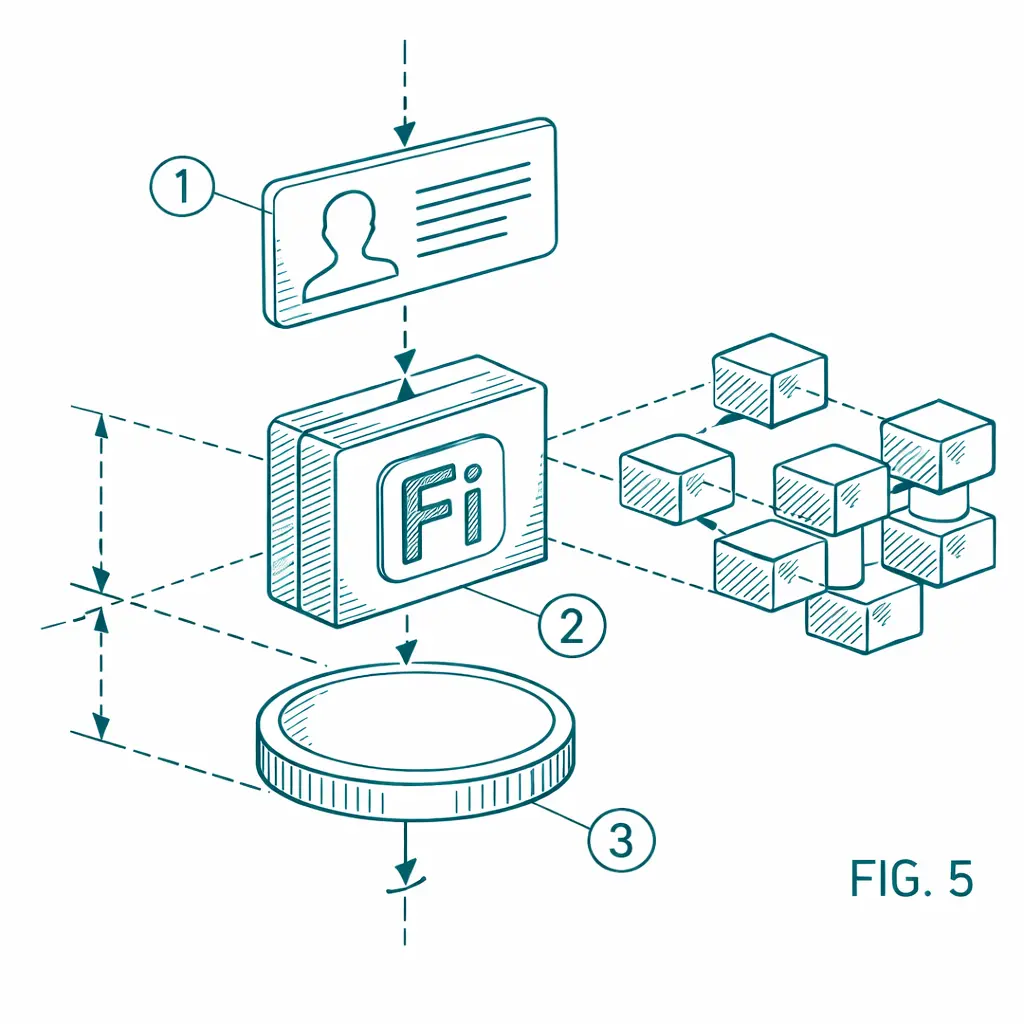
That shift matters because the winning architecture is increasingly clear. Credentials are issued by an authority, held in a wallet, presented to a verifier, and validated against shared trust material and status information. The verifiable data registry can be many things, including trusted databases, government ID databases, and distributed ledgers. Blockchain is one possible registry layer. It is not the credential, not the proofing process, and not the whole trust system.
Europe is pushing this stack into production. Regulation (EU) 2024/1183 requires EU member states to provide an EU Digital Identity Wallet built on the same specifications by the end of 2026, and the Commission adopted common technical standards in December 2024 to lock in security requirements and interoperability rules.
The practical question is no longer whether blockchain can be used for digital identity verification. It can. The practical question is narrower and more important: which parts of verification benefit from a shared tamper-evident registry, and which parts become harder, costlier, or less private when pushed onchain. For long-term system design, that distinction matters more than ideology.
Blockchain adds the most value when it anchors trust metadata, not personal identity data
Blockchain is most useful in identity verification when it acts as a shared coordination layer for public keys, issuer identifiers, schema references, and credential status. The W3C stack is built around exactly those needs. A credential has an issuer. A verifier validates proofs. Optional status information tells the verifier whether the credential has been revoked or suspended. None of that requires publishing a person’s raw identity data on a ledger.
This is why the strongest blockchain use case in identity is registry integrity, not identity storage. If several issuers and verifiers do not want to rely on a single operator, a ledger can provide a common write surface for trust metadata. That can reduce bilateral integration overhead. It can also make tampering more visible. But the useful object onchain is usually a pointer, hash, DID document reference, or status artifact. It is rarely the underlying personally identifiable information.
Status handling shows the point clearly. Bitstring Status List v1.0 is a W3C Recommendation designed as a privacy-preserving, space-efficient, high-performance way to publish revocation or suspension information. The spec warns against approaches that “phone home” on each verification because that can let an issuer infer where and when a holder is using a credential. It also requires large enough status lists to preserve group privacy.
Consent and selective disclosure also sit above the chain layer. W3C says holder software is expected to divulge information only when the holder consents, and the broader privacy goal is disclosure of only what is necessary for the interaction. That is a wallet, protocol, and policy problem. A blockchain may support parts of the trust fabric, but it does not create privacy by itself.
The EU wallet design follows the same logic. The Commission states that wallet data is stored locally, that users control what they share, and that the design includes zero tracking, data minimization, selective disclosure, and zero-knowledge proofs. That is an explicit rejection of identity systems that create avoidable metadata exhaust.
Blockchain does not solve proofing, inclusion, recovery, or legal accountability
Identity verification fails long before cryptography fails. NIST SP 800-63-4, published on August 1, 2025, frames digital identity around identity proofing, authentication, federation, risk-based assurance levels, privacy, customer experience, and redress. That is a reminder that trustworthy identity systems are socio-technical systems. They do not reduce to signature verification.
A verifiable credential proves that a stated issuer signed a claim and that the verifier can validate its proof and status. It does not prove that the issuer performed strong identity proofing, collected correct attributes, or maintained fair recourse. Those properties come from the issuer’s processes, assurance level, governance, and legal accountability.
Inclusion is an even bigger constraint. The latest ID4D Global Dataset says roughly 850 million people still lack an official ID. Among adults in low-income countries, the most cited reasons are documentary requirements at 46%, distance to registration points at 44%, and high cost at 40%. This is the real baseline problem. A ledger does not fix missing source documents, long travel distances, or exclusionary onboarding flows.
The World Bank also states that no one should be denied identification or related services because they lack mobile connectivity, internet connectivity, or digital literacy. That principle is directly relevant to Web3 identity design. If a system assumes seed phrase management, gas balances, or constant online access, it is already misaligned with mass-market identity inclusion.
Recovery and redress are equally underweighted in blockchain-first narratives. NIST says relying parties and credential service providers must provide documented, accessible, trackable issue-handling and redress processes, and it emphasizes testing these processes with users to avoid unintended harm. A ledger entry does not tell a user how to recover from a stolen device, a bad enrollment decision, or a wrongly revoked credential.
The durable architecture question is where trust, privacy, and portability actually live
The first design decision is what belongs onchain. The safest answer is usually: only public verification material and shared status metadata. The W3C registry model supports that narrow role, and the EU wallet model reinforces it by keeping user data local and minimizing disclosure.
The second design decision is how verification requests are transported and validated. OpenID4VP, the credential presentation protocol, matters because it turns credential presentation into a standard protocol layer on top of OAuth 2.0, supports multiple credential formats in the same transaction, and includes both same-device and cross-device flows. That is what production interoperability looks like. It is less glamorous than “self-sovereign identity” slogans, but much more operationally important.
The third design decision is holder binding. OpenID4VP supports cryptographic holder binding, claims-based holder binding, and formats that can support biometric binding. That matters because different credentials need different durability properties. A device-bound access pass and a long-lived diploma should not be forced into the same recovery model.
The fourth design decision is governance. The World Bank’s identification principles stress that ID systems need comprehensive legal frameworks, purpose limitation, data minimization, correction rights, oversight, and accountability. The EU wallet framework similarly relies on certification, audits, and registered relying parties. Trust comes from enforceable institutional structure, not from distributing state across validators and hoping that substitutes for liability.
The fifth design decision is privacy leakage over time. W3C explicitly warns against status systems that enable tracking, and the EU wallet architecture makes no-tracking and selective disclosure core features. That is the right direction. An identity system that verifies accurately on day one but leaks behavior on every reuse will degrade user trust with each transaction.
Native tokens usually weaken the identity stack unless they solve a very specific coordination problem
The strongest evidence in the market is what production-oriented identity systems are not doing. The current standards stack does not require a native token. The EU Digital Identity Wallet framework does not depend on one. Microsoft Entra Verified ID is built around open standards and uses did:web for issuer and verifier identifiers, not a mandatory chain token for each verification event.
Commercial monetization also points in a different direction from token-first design. Microsoft prices Verified ID as a managed service: up to 50,000 transactions per month at no cost, with further usage tied to Entra licensing rather than token staking or emissions. That is mundane, but it is also a clear sign of where sustainable operator incentives are easier to maintain.
From a long-term sustainability perspective, native-token identity schemes usually introduce three new liabilities. They add user friction if holders or verifiers need gas or staking exposure. They create subsidy dependence if issuers or verifiers participate mainly for token rewards. They blur accountability if governance token holders are meant to influence rules that ultimately have legal, privacy, and recourse consequences for real people.
That does not mean a token is impossible. It means the bar is high. A token layer only has a defensible role if it pays for a scarce shared resource that cannot be billed more simply, if the system still works after incentives compress, and if governance rights do not conflict with regulated identity obligations. Most projects do not clear that bar. They optimize for early network appearance rather than post-incentive survivability.
This is where token economy design becomes a discipline rather than a launch tactic. For identity networks, the core question is not how to attract wallets in quarter one. The core question is whether issuers still issue, verifiers still verify, and disputes still get resolved when speculative demand disappears.
What Web3 builders should optimize for if they want identity systems that last
Start with the narrowest credible blockchain role. That is a practical rule for identity management more broadly. If the system needs a shared registry among institutions that do not want a single operator, use blockchain for public verification material and status coordination. If a trusted registry already exists and governance is clear, adding a chain may create more cost and complexity than trust.
Adopt the standards that already have institutional gravity. That means W3C verifiable credentials for the data model, OpenID4VP for presentation, and strong attention to selective disclosure, revocation privacy, and cross-device flows. These are not optional details. They are where ecosystems become portable instead of captive.
Design for recovery, auditability, and recourse before designing for composability. Identity systems are judged by false rejections, correction speed, revocation hygiene, dispute handling, and privacy leakage. NIST and the World Bank both push in that direction. Teams that ignore those dimensions usually end up with elegant demos and brittle institutions.
Measure success with boring metrics. Count verifier acceptance rates, recovery completion rates, privacy-preserving status latency, issuance renewal cost, and the share of users who can complete flows without expert help. World Bank data on exclusion shows why this matters. Identity does not fail only when cryptography breaks. It fails when ordinary users cannot pass through the system.
For teams considering a token layer on top of identity verification, tokenomics consulting should begin with the post-subsidy state. At FinDaS Tokenomics, the relevant question is whether the token economy improves structural resilience or merely finances temporary activity. In identity, durability usually comes from standards compliance, issuer accountability, privacy discipline, and clear operating incentives. A token can sometimes support that stack. It cannot replace it.