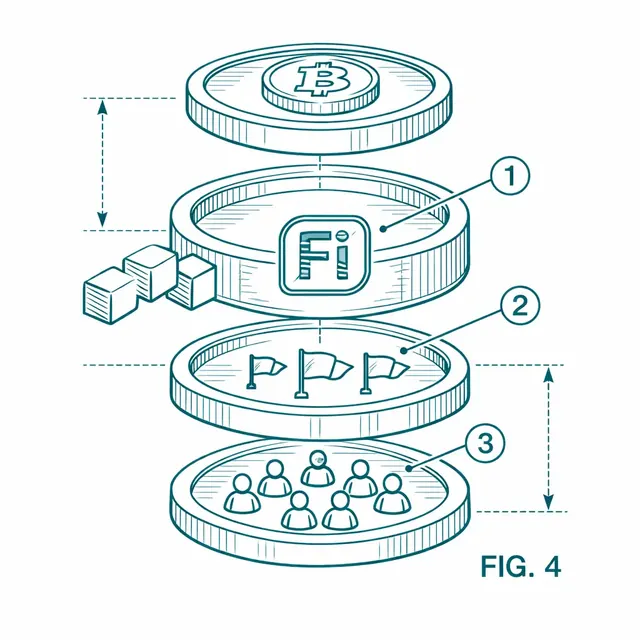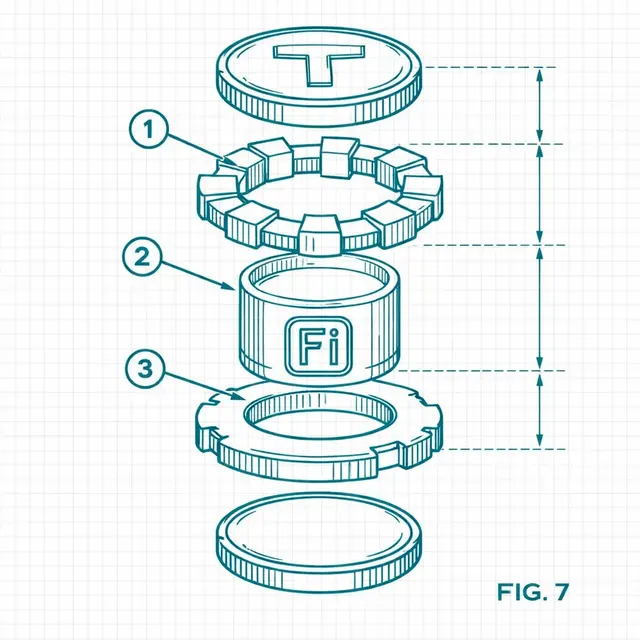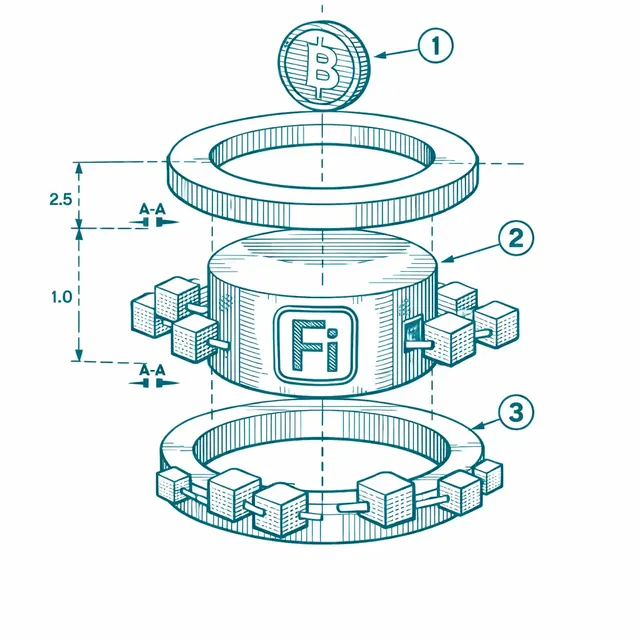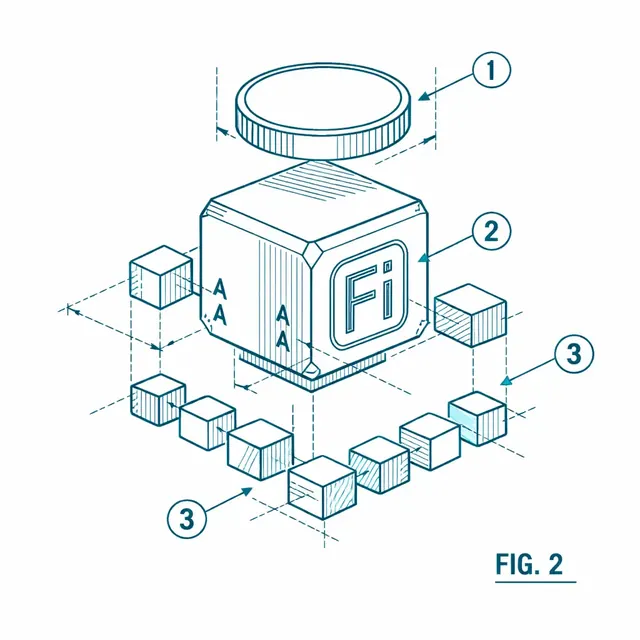
Liquidity is three different things at once. A CEX is a venue with custody and a matching engine. A DEX is a protocol that settles trades through smart contracts. A market maker is not a venue at all. It is a firm or strategy that commits capital to keep two-sided markets tradable. Teams that blur those categories usually buy the wrong solution.
What is the real difference between a CEX, a DEX, and a market maker?
A centralized exchange combines custody, venue operations, and matching. Coinbase states that Coinbase.com holds customer crypto in hosted wallets, while Coinbase Exchange runs a continuous first-come, first-served order book with price-time priority. That means the operator controls admission, custody, market rules, and the matching stack.
A decentralized exchange separates trading logic from venue discretion. Uniswap describes the protocol as persistent, non-upgradable smart contracts, and its swaps execute against passive liquidity pools rather than FIFO limit orders. That makes the core execution rule more transparent and more programmable, even if the user experience still depends on wallets, interfaces, and routing layers.
A market maker is a liquidity supplier, not an exchange. The SEC defines market makers as firms that stand ready to buy or sell at publicly quoted prices, and the NYSE describes designated market makers as participants that often use their own capital to ensure liquidity and reduce imbalances. In crypto, the legal wrapper differs by venue, but the economic role is the same: absorb inventory risk and keep spreads tighter than they would otherwise be.
| Dimension | CEX | DEX | Market maker |
|---|---|---|---|
| What it is | Custodial trading venue | Onchain trading protocol | Capital provider or quoting firm |
| Execution logic | Order book, price-time priority | AMM pools or auction-based matching | Quotes, inventory management, or LP management |
| Primary liquidity source | Resting orders and professional makers | Pool reserves, LP ranges, solvers | Own balance sheet or contracted capital |
How does liquidity actually form on each venue?
On a CEX, liquidity forms from resting limit orders. Coinbase’s trading docs state that limit orders let traders specify price and size, while market orders consume available liquidity immediately and can execute across multiple price levels. That is the classic order-book model. Tight books require many participants, or a few large participants, willing to leave quotes resting near the mid.
On an AMM-style DEX, liquidity forms from pooled reserves and a pricing rule. Uniswap v2 uses the constant product invariant x*y=k, and traders pay a 0.30% fee that goes to liquidity providers unless governance enables a protocol fee path. The important point is structural: execution is rule-based and visible, but the curve itself guarantees price impact when trade size pushes the pool away from its current reserve ratio.
On concentrated-liquidity DEXs, liquidity is no longer spread from zero to infinity. Uniswap explains that LPs can allocate capital inside custom price ranges, which gives deeper liquidity around the mid-price but only while the position stays in range. Once price exits the range, that liquidity stops earning fees and turns into a one-sided inventory exposure.
Not every DEX is an AMM. CoW Protocol describes its design as a permissionless protocol using fair combinatorial batch auctions, which means some decentralized trading systems source liquidity through auction-based price finding and solver competition rather than passive pools alone. For token teams, that matters because “DEX” does not imply one market microstructure.
Which one usually gives better execution?
Better execution depends on trade size, pair quality, and how actively liquidity is maintained. A deep CEX order book can be superior for size because traders can use price-time-priority limit orders, post-only logic, IOC, or FOK instructions. But a CEX market order still has no price guarantee and can slip through multiple levels if the book is thin.
A DEX can deliver strong execution when the pool is deep at the relevant price and routing is efficient. Uniswap’s docs are explicit that price impact falls when more liquidity is available at a given price, and slippage tolerance only defines what execution range the user will accept while the transaction is pending. That is a different risk surface from an offchain book. You replace venue discretion with deterministic curve math plus onchain ordering risk.
Custody changes the decision as much as spread does. That means the CEX versus DEX choice is also a choice between operator-managed balances and self-custodial transaction signing.
What do market makers actually do, and do they matter on DEXs too?
Market makers matter because venues do not quote themselves. The market maker’s job is to stand ready with bids and offers, manage inventory, and take short-term adverse-selection risk in exchange for spread capture, rebates, or other commercial terms. The venue defines the rules. The market maker decides how much balance sheet to deploy inside those rules.
Market makers are not only a CEX phenomenon. On Uniswap v3-style pools, a professional liquidity provider can run concentrated ranges, rebalance inventory, and collect fees only when capital is active in range. On auction-based DEXs, professional solvers can also compete to fill flow. The implementation changes, but the economic function is still the same: convert inventory and latency management into tradable liquidity.
What market makers cannot do is fix a broken token launch by themselves. If order flow is persistently one-sided, spreads widen, quotes pull, or LP ranges go inactive. Liquidity provision is something exchanges actively incentivize because it does not appear automatically. For token teams, that means any market-making mandate should specify minimum quote size, maximum spread, venue coverage, inventory limits, and reporting rules up front.
What usually goes wrong in token launches?
The most common mistake is treating listing as liquidity. A CEX listing gives you a venue. A DEX pool gives you a contract and a curve. Neither guarantees durable two-sided depth after the opening burst. That is why newer launch design work emphasizes explicit pre-commitment of release schedules, price floors, fee tiers, tick spacing, and post-auction liquidity configuration rather than vague promises of “support.”
On DEXs, poorly chosen ranges are a frequent failure mode. Once price leaves a position’s range, liquidity becomes inactive and stops earning fees. Narrow ranges look efficient on day one and brittle on day two.
On CEXs, the hidden failure mode is discretionary dependence. The matching engine itself is deterministic, but the surrounding commercial arrangement often is not. If the team cannot state who is quoting, with what capital, under what spread limits, across which hours, then “liquidity” is mostly a slogan. From a mechanism design perspective, flexible support without hard constraints is not a system. It is a hope trade.
How should a token team choose between CEX, DEX, and a market maker?
The practical answer is usually not “pick one.” The practical answer is to decide which layer should be deterministic, which layer can be discretionary, and which party carries inventory risk.
- If the priority is transparent, programmable, self-custodial price discovery, start with a DEX design where pool parameters, range logic, and treasury LP behavior are specified ex ante. That favors rule-based predictability.
- If the priority is operator-managed books and familiar order types, a CEX gives you that through a custodial venue and an order book with price-time priority. That favors execution tooling and venue control.
- If the priority is tighter spreads during thin early markets, a market maker can help, but only if the mandate is explicit. Quote obligations beat soft assurances. Reporting beats anecdotes. Inventory caps beat heroic discretion.
- If the token has uncertain fair value at launch, auction-based or rule-driven bootstrapping can be cleaner than jumping straight into fragmented venue expansion. That is especially true when the team wants price discovery and secondary liquidity to follow one published parameter set.
At FinDaS Tokenomics, we treat this as a token economy design problem before we treat it as a venue selection problem. Good liquidity architecture starts with explicit rules for inventory, quote behavior, fee logic, treasury exposure, and launch sequencing. That is the part of tokenomics consulting that most directly determines whether a market stays tradable after the first week.