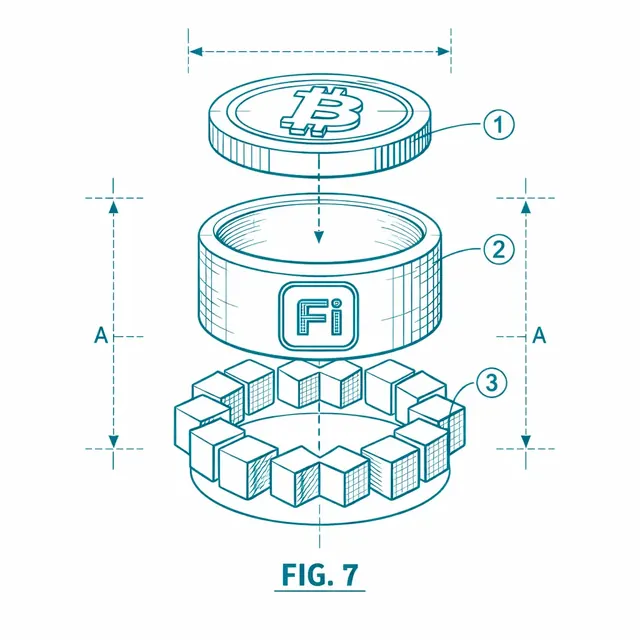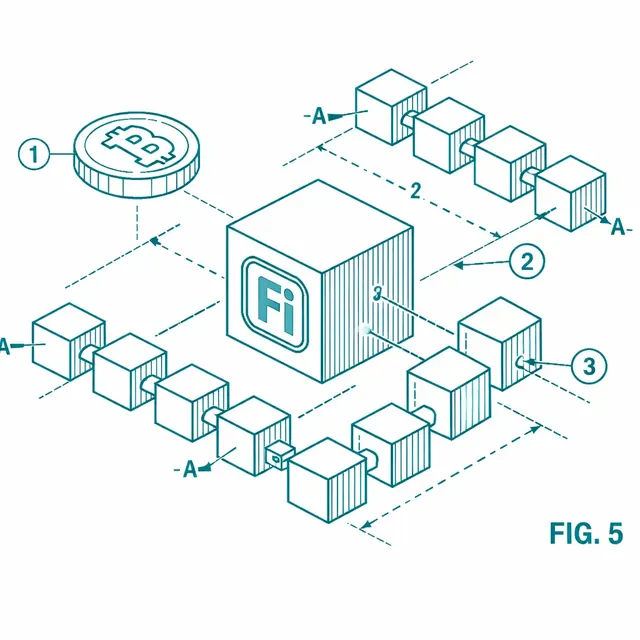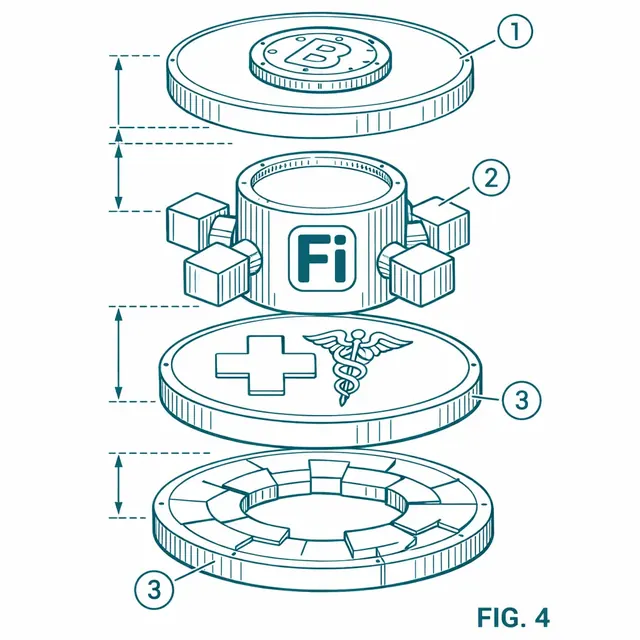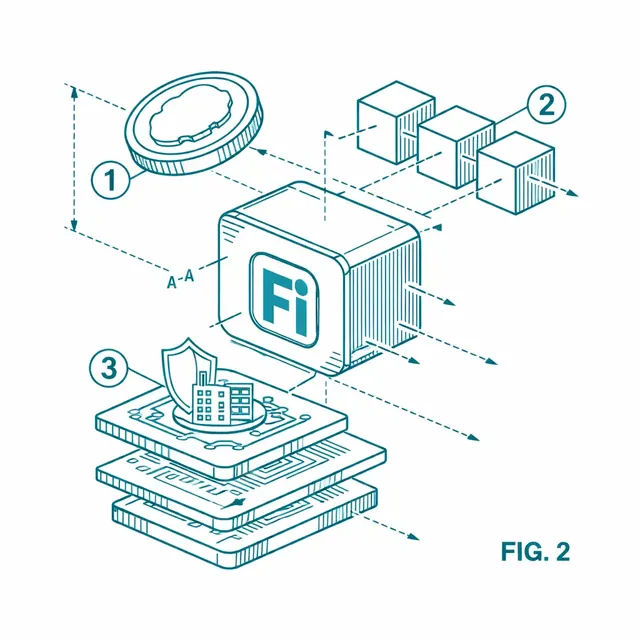
Blockchain is not a smart-city strategy. It is a narrow coordination tool.
Smart-city systems fail more often on interoperability, data governance, and institutional coordination than on the absence of a ledger. NIST’s IoT-Enabled Smart City work puts interoperability at the center of city architecture, and ISO 37166:2022 focuses on standardized data integration and sharing mechanisms for heterogeneous urban infrastructure data.
That framing matters because blockchain is often pitched as a shortcut to “trust.” In city systems, trust is usually split across agencies, utilities, contractors, mobility operators, universities, and service providers. A ledger can help only when those actors need a shared state that is tamper-evident, jointly auditable, and not comfortably delegated to a single database owner. The European Data Protection Board describes blockchain architectures in terms of distributed storage, disintermediation, tamper-resistance, transparency, governance mechanisms, and off-chain components. Those are coordination properties, not magic infrastructure properties.
The strongest conclusion is simple. Most smart-city workloads do not need a blockchain as the primary data plane. High-frequency sensor streams, traffic optimization, building telemetry, and emergency response depend on latency, uptime, and clear operational accountability. Those needs are usually better served by conventional databases, message queues, and signed event logs. Blockchain belongs at the coordination edge, where multiple institutions need shared proofs, status registries, or settlement rules that remain auditable across administrative boundaries.
Identity and credentials are the most credible public-sector use case
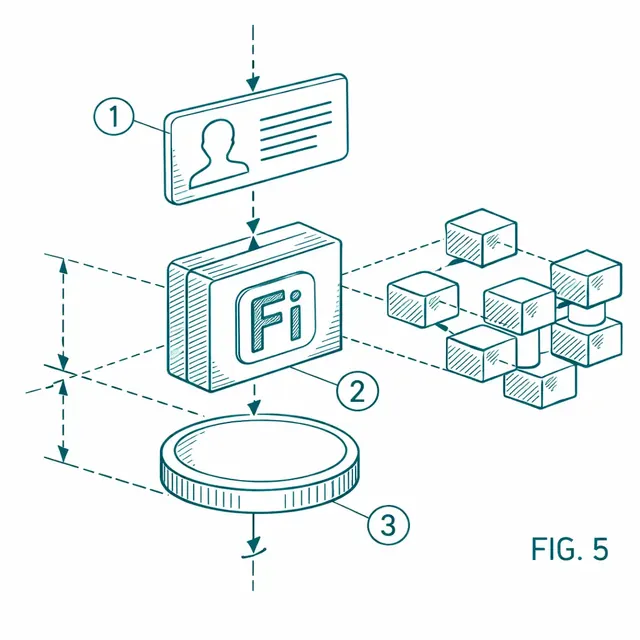
Digital identity is where blockchain integration in cities looks least forced. W3C’s DID standard became a Recommendation on July 19, 2022, and W3C’s Verifiable Credentials 2.0 family became Recommendations on May 15, 2025. The standards are explicitly built around cryptographic verification, portability, and privacy-respecting data sharing rather than around speculative token flows.
The EU is pushing this logic into production-scale public infrastructure. The European Digital Identity framework was published in the Official Journal on April 30, 2024 and entered into force on May 20, 2024. The European Commission says Member States must make wallets available to citizens, residents, and businesses by the end of 2026.
EBSI shows what a public-sector blockchain looks like when the design goal is cross-border verification rather than token issuance. EBSI is a partnership of all EU Member States, Norway, Liechtenstein, and the European Commission. Its use-case families include verifiable credentials and track-and-trace, and its first verifiable-credentials pilot involved 21 projects from 18 European countries in early 2021.
Seoul is a useful city-level example because it moved beyond abstract pilots. Seoul Wallet opened in July 2021, and the Seoul Metropolitan Government says citizens can store and submit more than 100 government-issued electronic certifications and use digital ID functions through the service.
The important analytical point is that these systems use blockchain as a trust infrastructure for attestations, issuer registries, and verification. They do not treat a city token as the foundation of urban administration. For smart-city deployments, that is the right ordering. Identity, credential portability and verification come first. Monetary layers come later, if at all.
Blockchain helps most when the city needs shared proofs, not shared raw data
Urban infrastructure generates large volumes of operational data, but that does not imply that operational data should live on-chain. The cleaner design is usually to keep sensor data, images, and detailed records off-chain while anchoring hashes, credential status, approvals, or audit events on-chain. EBSI’s revocation framework is explicit on this point for natural-person credentials: status management must respect GDPR, the issuer is responsible for status information, and personal information is not stored on EBSI.
Seoul’s construction-safety program illustrates the same architecture in a different domain. The city said blockchain would keep safety records transparent, initially applying the platform to 120 old private buildings over 30 years old or rated low on safety, with expansion to 900 dilapidated buildings planned from 2022. Seoul also said incident messages could be sent within 30 seconds, versus the prior 5 to 10 minutes.
That is the real pattern for urban blockchain integration. The ledger is most defensible when it secures record integrity, audit trails, credential status, or multi-party approvals. It is much less defensible when it tries to become the canonical storage layer for every urban data stream.
| Urban use case | Best role for blockchain | What should stay off-chain | Main operator-discretion risk |
|---|---|---|---|
| Digital identity and permits | Issuer registry, credential verification, revocation status | Personal data, wallet contents, document payloads | Issuer can suspend or revoke credentials, and governance can change trust lists |
| Construction and safety records | Tamper-evident inspection history and approvals | Video, sensor telemetry, detailed reports | Admins can alter workflows, access rights, or emergency controls |
| Energy flexibility and DER settlement | Shared settlement rules and auditable multiparty transactions | Real-time control loops and high-frequency grid telemetry | Protocol upgrades or privileged actors can rewrite incentives or halt settlement |
| Cross-border document verification | Verification standards and trust framework | Underlying institutional databases | Accreditation and revocation remain centrally governed |
Energy, mobility, and IoT are plausible, but only under narrow conditions
Energy is the urban domain where blockchain’s coordination logic is easiest to defend, because distributed energy resources create many small actors and many auditable transactions. A 2019 PNNL report said blockchain value propositions for transactive energy systems include identity management, security, resiliency, decentralization, smart-contract trustworthiness, integrity, and access control. An Oak Ridge report on Grid Guard used a private permissioned blockchain and Hyperledger Fabric to improve device and data trustworthiness for power-grid infrastructure.
Even here, the blockchain case is conditional. The IEA’s 2025 demand-flexibility analysis argues that digitalization is central to balancing electricity systems, that demand flexibility can raise system efficiency by up to 30%, and that households can typically save 5% to 15% using dynamic tariffs. None of that requires tokenization by default. In many cities, the binding constraint is tariff design, meter integration, utility regulation, and device orchestration rather than the absence of a distributed ledger.
Inference: blockchain in local energy networks makes the most sense when settlement spans multiple parties that do not fully trust a single operator, such as utilities, aggregators, building owners, charging operators, and prosumers. If one regulated utility or one municipal platform already has legitimate authority to reconcile the system, a signed centralized ledger is usually cheaper, faster, and easier to govern. That inference follows from the contrast between the IEA’s emphasis on digital flexibility and DOE lab reports that position blockchain as a specific coordination layer rather than a universal control layer.
The hard problem is not decentralization. It is who still has discretionary control.
Most municipal blockchain deployments are not meaningfully trustless. They are permissioned, upgradeable, and administered. That is not automatically bad. It does mean the real risk surface shifts from consensus theory to operator discretion.
OpenZeppelin’s own documentation is unusually clear about the issue. Its upgrades tooling exists to deploy upgradeable contracts, upgrade deployed contracts, and manage proxy admin rights. Transparent proxies have an admin address with upgrade rights, and the proxy-admin contract has an owner address with operational authority over upgrades.
The permissions story is similar. OpenZeppelin notes that DEFAULT_ADMIN_ROLE can manage any other role and that this role carries significant risk because it is also its own admin by default. In its access-management docs, OpenZeppelin also recommends placing the single admin address under a multisig or governance layer because admins can modify all permissions and even close a target contract during incident response.
For smart cities, that means the critical disclosure is not “we use blockchain.” The critical disclosure is who can upgrade contracts, who can rotate keys, who can pause the system, who can revoke credentials, who can edit trust registries, and what independent constraints exist on those powers. If those answers are vague, the system may still be useful, but it is functionally a controlled municipal platform with cryptographic audit features. It is not a neutral public utility.
The trade-off is straightforward. More discretionary control improves incident response, bug fixing, and policy iteration speed. It weakens structural accountability unless those powers are bounded by multisig thresholds, timelocks, public change logs, auditability, and legally defined operator responsibilities. Public infrastructure should optimize for legitimacy before flexibility.
Privacy, compliance, and revocation are where many “decentralized” city narratives break
Public-sector blockchain systems cannot treat immutability as an uncomplicated virtue. The EDPB’s 2025 blockchain guidelines state that storing personal data on a blockchain should generally be avoided where it conflicts with data-protection principles, and they highlight tensions around storage limitation, rectification, erasure, governance, and international transfers.
EBSI’s revocation design is instructive because it accepts that discretion cannot be designed away. Credential status can be valid, suspended, or revoked. The issuer is responsible for keeping status information up to date. For natural persons, the framework is designed so that no personal information is stored on EBSI, and revocation methods are chosen to reduce traceability and preserve GDPR compliance.
That is the right institutional honesty. A city credential system always has an issuer, a verifier, and a governance process for exceptions. The relevant question is not whether discretion exists. The relevant question is whether discretion is legible, constrained, appealable, and proportionate to public-law obligations.
What this means for token economy design in smart cities
Most smart-city blockchain integrations should begin with a necessity test, not a token launch plan. If the goal is cross-agency verification, multi-party auditability, or interoperable credentials, the best design may involve no tradable token at all. The current public-sector evidence base points toward wallets, verifiable credentials, trusted registries, and permissioned governance, with experimentation still active through efforts such as the European Regulatory Sandbox for Blockchain, which runs from 2023 to 2026 and supports 20 projects per year.
When a city does consider tokens for mobility rewards, recycling incentives, distributed energy participation, or local commerce, the tokenomics problem is mostly governance design disguised as incentive design. Mint authority, burn authority, blacklist power, redemption rules, treasury control, oracle control, contract upgrade rights, and emergency shutdown authority all matter more than headline reward rates. A city token with vague operator powers is not an innovation premium. It is an accountability discount. These are core token economy design components.
From FinDaS Tokenomics’ perspective, smart-city token economy design should be treated as civic infrastructure design. That means starting with institutional boundaries, administrative powers, liability, privacy exposure, and revocation logic before modeling emissions schedules or reward curves. In practice, the relevant work for a tokenomics expert or tokenomics advisor is often less about maximizing on-chain activity and more about deciding which powers must never sit behind a single admin key.