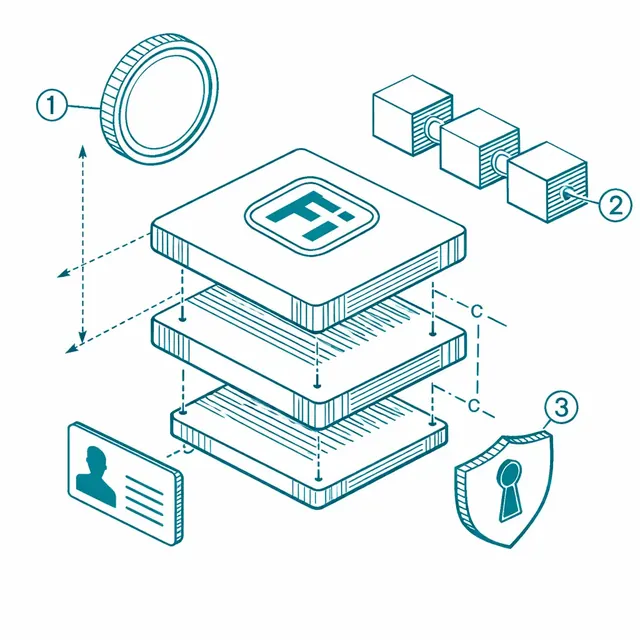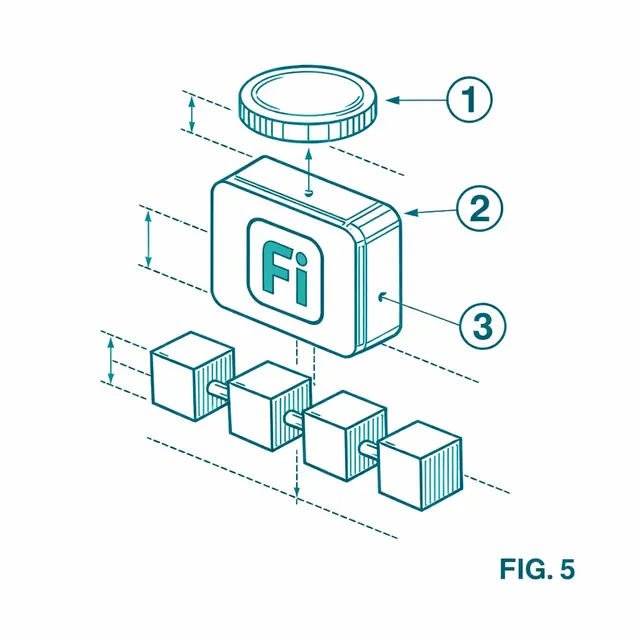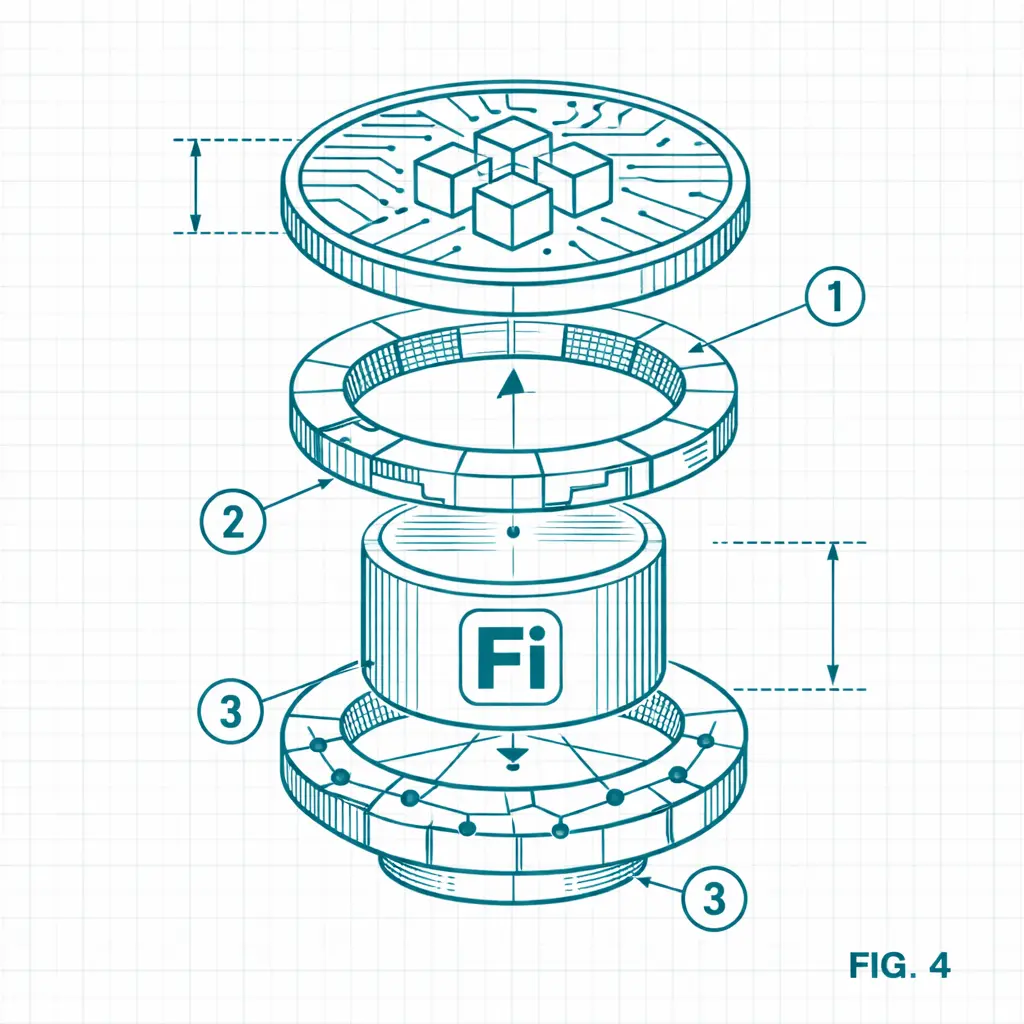
The bottleneck in mental health is service capacity, not ledger scarcity
Blockchain is not the missing layer in mental health care. The immediate constraint is access to timely, trusted care. In the United States, 59.3 million adults had any mental illness in 2022, only 30.0 million received treatment, and 7.6 million untreated adults reported an unmet need for care. Globally, WHO says 1.1 billion people were living with a mental disorder in 2021 and that most people still lacked effective care.
WHO’s guidance published on March 25, 2025 is explicit about where systems fail. It points to underfunding, service organization, workforce development, person-centred interventions, and social and structural determinants as the priority reform areas. WHO also says that in some countries up to 90% of people with severe mental health conditions receive no care at all. That is the right benchmark for judging blockchain pitches. If a design does not improve capacity, coordination, or trust at the point of care, it is peripheral.
Basic interoperability is also no longer a blank sheet. HL7 FHIR already provides a modern web API model for exchanging healthcare data, and CMS’s Interoperability and Prior Authorization Final Rule, released on January 17, 2024, extends standardized API-based exchange further into payer workflows, with major API requirements landing by January 1, 2027. Mental health builders should assume this standards stack exists before they introduce a ledger.
Where blockchain can genuinely help mental health services
Blockchain has a defensible role in mental health only when multiple parties need a shared, tamper-evident permission layer and no single administrator is fully trusted. NIST frames blockchain as useful for access control and auditability, and research on consent self-management in health information exchange keeps returning to the same operational problem: consent changes must be recorded, revocable, and auditable across distributed systems. ASTP also stresses that consent should be meaningful and that data segmentation is central when only sensitive portions of a record should be restricted.
| Use case | Why a ledger can help | Design rule | Main constraint |
|---|---|---|---|
| Cross-provider consent for behavioral health records | A shared permission log can help providers, HIEs, and patients agree on who had access to what, and when. | Keep clinical records off-chain and record only permissions, timestamps, and proofs. | Consent in mental health is rarely blanket consent. Sensitive subsets still need segmentation and revocation logic. |
| Audit trail of access requests | Shared logs are useful when multiple organizations need evidence that access rules were followed. | Use a private permissioned network, not a public chain. | Public transparency, replication, and immutable storage are a poor fit for psychotherapy and SUD data. |
| Portable credentials for clinicians or patients | Standards-based credentials can express verifiable claims without re-copying the full record. | Use credentials or attestations for identity and eligibility. | Identity portability does not require a tradable token or a public token market. |
| Research consent and data provenance | A ledger can help prove which consent state existed when a dataset was accessed or shared. | Separate raw data from proofs and minimize metadata exposure. | Pseudonymization still carries reidentification risk in healthcare contexts. |
The common pattern is narrow scope. The ledger is not the therapy product. It is a coordination layer. That distinction matters because most failures in digital mental health happen at the edges of consent and privacy, reimbursement, and provider workflow, not because a record lacked a hash.
Why therapy records are a hostile environment for naive on-chain design
Mental health records are a hostile environment for naive on-chain design because the law deliberately treats some notes as more sensitive than ordinary health data. HHS states that psychotherapy notes receive special protections, must be kept separate from the rest of the patient’s medical record, and generally require patient authorization for disclosure.
The information-blocking framework does not erase that distinction. ASTP says electronic health information excludes psychotherapy notes, and ASTP’s FAQ says the exclusion applies whenever a note meets the HIPAA definition of psychotherapy notes. A blockchain system that assumes all “patient-owned data” can flow through one uniform permission model is already mismatched to the rule set.
Substance use disorder data adds another layer. HHS announced the Part 2 final rule on February 8, 2024, and the compliance date was February 16, 2026. The rule allows a single consent for future treatment, payment, and health care operations disclosures, but it also creates separate protection for SUD counseling notes analogous to psychotherapy notes and requires separate consent for those notes.
Immutability is the second problem. NIST says blockchain can become a privacy problem because private information stored on-chain cannot be deleted, and it notes that deletion rights and related privacy rules limit what can be stored in a blockchain. A healthcare review also warns that even pseudonymized data can create reidentification risk when metadata can be linked back to patients. In mental health, that risk is not abstract. The design rule is simple: if data is clinically sensitive enough to harm a patient if exposed, it does not belong on a public chain, and often does not belong on any immutable chain at all.
Consumer mental health apps have a distribution problem, not just a storage problem
Consumer mental health apps expose a different failure mode. The issue is not just database security. It is the commercial path that data takes after collection. The FTC says many health apps that are not covered by HIPAA are still subject to the Health Breach Notification Rule if they maintain personal health records that can draw data from multiple sources, and that unauthorized sharing can count as a reportable breach.
The BetterHelp case is the clearest warning. In July 2023, the FTC finalized an order alleging that BetterHelp shared email addresses, IP addresses, and sensitive health questionnaire information with major ad platforms despite promises to limit disclosure. That is why “put it on blockchain” is not a privacy strategy by itself. If the operator still routes data into adtech, analytics, or growth tooling, the leak is in business logic and distribution, not just in storage.
For mental health services, privacy architecture should minimize data replication, limit third-party processors, and make consent revocation operational. A ledger may help prove what consent state existed at a given time. It does not substitute for a restrained data-sharing model.
The evidence base is still prototype-heavy
The public evidence base is still far thinner than many Web3 narratives suggest. A 2020 systematic review of 143 blockchain-in-healthcare papers found that 57% were only models or concepts, 38% discussed prototypes, and only about 5% covered real-life implementation, pilot testing, or evaluation. The same review concluded that poor scalability, weak performance, and high cost remained serious barriers.
The literature has not fully escaped that pattern. A 2025 scoping review on blockchain in EHR architectures identified ten major barrier categories and emphasized that practical adoption still requires coordinated work by healthcare professionals and policymakers. The production takeaway is straightforward: mental-health-specific blockchain systems remain largely an implementation problem, not a solved deployment category.
Where blockchain is used, private permissioned systems are the default. A health-informatics review argues that private permissioned blockchains are the appropriate option for sensitive patient data, while NIST emphasizes that many cryptocurrency-native properties, including public access, rigid immutability, and consensus-heavy sequencing, conflict with ordinary access-control and privacy requirements. That is why serious healthcare designs keep records off-chain, narrow node participation, and use the ledger mainly for proofs, policies, and logs.
Why transferable tokens are usually the wrong financial primitive
Transferable tokens are usually the wrong financial primitive for mental health services. They are not required for interoperability. FHIR already handles API-level data exchange, and W3C verifiable credentials provide a standards-based way to express portable claims without turning care coordination into a secondary market. NIST’s 2025 Web3 security report also notes that tokens and related Web3 components introduce novel security challenges rather than removing them.
From a market-structure perspective, once a reward is liquid and transferable, emissions become supply flow. That is an inference, not a clinical finding. But it is the right inference for token design. In a thin market, recurring user rewards, grant distributions, or treasury sales create predictable sell-side pressure, and price discovery starts to track liquidity events instead of care outcomes. Mental health products need narrative stability and long-duration trust. Liquid tokens inject the opposite dynamic: short-horizon volatility, speculative attention, and governance noise.
The safer pattern is much narrower.
- Use verifiable credentials, attestations, or service-bound credits for identity and eligibility, not a tradable token.
- Keep treatment access independent from market price. No patient should need asset exposure to receive therapy or manage records.
- Do not incentivize disclosure of raw mental health data with liquid rewards. The privacy downside is asymmetric and the clinical upside is hard to prove.
- If a ledger is justified, keep it permissioned, off-chain-data-first, and centered on auditable consent, access logs, and provenance.
From FinDaS Tokenomics’ perspective, the first question in token economy design for a mental health product is whether a token should exist at all. In most cases, the answer is no. The stronger architecture is usually boring: interoperable APIs, off-chain clinical storage, revocable permissions, standards-based credentials, and funding flows that do not force care delivery to absorb market microstructure risk.