Healthcare’s bottleneck is governance, not ledgers
Healthcare does not need another growth hack. Healthcare needs a permissioning and interoperability layer that still works after incentives stop, during audits, and under breach conditions.
The real bottleneck in Web3 x Healthcare is not the absence of shared ledgers. It is the combination of fragmented data models, uneven API support, information blocking, and cross-institution governance. In the U.S., the center of gravity has already moved toward HL7 FHIR as the exchange standard, the Cures Act Final Rule as the access mandate, and TEFCA as the national network-of-networks for exchange.
That stack is already producing scale. On February 11, 2026, HHS said TEFCA had reached nearly 500 million health records, up from roughly 10 million in January 2025. The current TEFCA Recognized Coordinating Entity list also shows 11 designated QHINs, which is a meaningful national footprint for governed exchange.
ASTP has also described USCDI as the de facto minimum standardized dataset of the U.S. healthcare system, and it has framed the expansion of FHIR APIs as the shift from static document exchange toward real-time workflows. That matters because Web3 entrants are not stepping into an empty market. They are entering a sector where standards and regulatory pathways are already being laid down in detail.
The implication for token design is blunt. If interoperability is being pushed by standards, enforcement, and contractual participation, then a native token must do more than “bootstrap adoption.” It has to solve a coordination problem that FHIR, TEFCA, and regulated APIs do not already solve. In most healthcare settings, that is a high bar. ASTP has been explicit that behavior is the bigger impediment to interoperability than missing technology. A token does not fix refusal to share, poor mapping, weak governance, or unclear liability.
Patient-controlled records work only when the chain is a thin permission layer
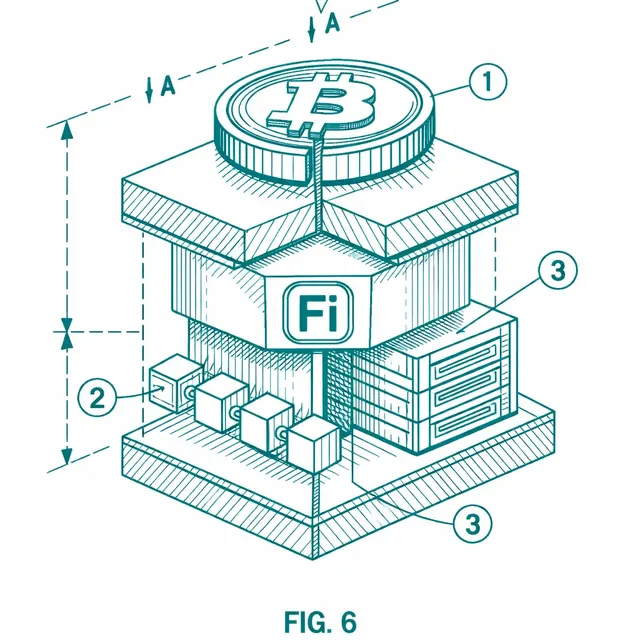
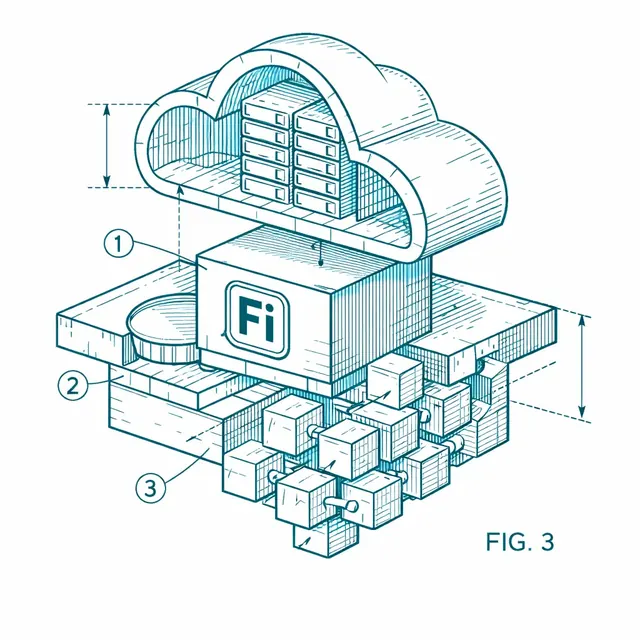
Patient-controlled records are plausible, but only if the blockchain remains a thin coordination layer rather than the storage layer for clinical data. MIT’s MedRec is still the clearest reference point. MedRec put permissions and hashes on Ethereum while leaving raw record content in providers’ existing databases, and it used smart contracts to authorize access rather than storing medical files on-chain.
That architecture choice was not cosmetic. It was necessary. The European Data Protection Board’s Guidelines 02/2025 say that storing personal data on a blockchain should generally be avoided when it conflicts with data-protection principles. The guidelines also stress the tension between blockchain immutability and rights such as rectification and erasure, and they recommend data-protection-by-design, careful governance, and strong off-chain handling.
The right healthcare architecture therefore looks narrower than many Web3 decks imply. A ledger can credibly anchor consent receipts, provenance hashes, audit events, access logs, and revocable pointers. It should not become the canonical repository for protected health information. Once a team proposes “medical records on-chain,” it is usually proposing the wrong lifecycle model for privacy, correction, deletion semantics, and operational change control.
MedRec is also instructive on incentives. The design explored a private Ethereum network where medical researchers would provide mining in exchange for privacy-preserving metadata rewards. Even in that early and sophisticated concept, the network stayed private, the raw records stayed off-chain, and the team explicitly said the prototype was still under development and was not recommended for out-of-the-box use. That is a useful reality check. Healthcare incentive design runs into ethical, operational, and compliance edges very quickly.
The remaining hard problems are mostly off-chain. Key recovery, emergency access, guardian delegation, identity proofing, record correction, and break-glass workflows are what determine whether patient-controlled records survive contact with actual care delivery. Web3 can improve auditability and user-controlled permissioning. It does not remove the need for governed clinical operations.
Provider data sharing already has a non-token path to scale
Provider-to-provider and payer-to-patient exchange already have a non-token path to scale. The Cures Act Final Rule requires secure access, exchange, and use of electronic health information, calls for standardized APIs, and requires that patients can electronically access all of their electronic health information at no cost. CMS separately requires impacted payers to make claims, encounter, and clinical data available through the Patient Access API, and the January 2024 CMS-0057-F final rule pushed major API requirements out to primarily January 1, 2027.
That matters because the sector’s adoption logic is becoming clearer. Hospitals, payers, and health IT vendors are not waiting for a token to discover interoperability. They are being pushed by compliance, competition, procurement pressure, and workflow economics. If a regulated API and a trusted exchange network already exist, a tradable token adds another budget line, another volatility surface, and another governance layer before it adds clinical value.
TEFCA reinforces the same point. ASTP reported that TEFCA’s directory included 15,000 clinical entities, more than 700 hospitals, more than 10,000 physician offices, and almost 200,000 clinicians, while also noting that FHIR APIs were already available in TEFCA for patient access. That is not a speculative growth loop. It is governed network expansion built on standards, contracts, and institutional trust.
Centralization risk is still very real, but blockchain is not a synonym for resilience. UnitedHealth said the February 21, 2024 Change Healthcare cyberattack led to more than $9 billion in interest-free loans to providers through December 31, 2024 and affected approximately 190 million individuals. That episode showed how concentrated intermediaries can create systemic fragility. It did not show that putting more state on a ledger would solve identity, access control, service continuity, or incident response. Those layers remain decisive in healthcare.
Pharmaceutical supply chains are the strongest Web3-compatible lane
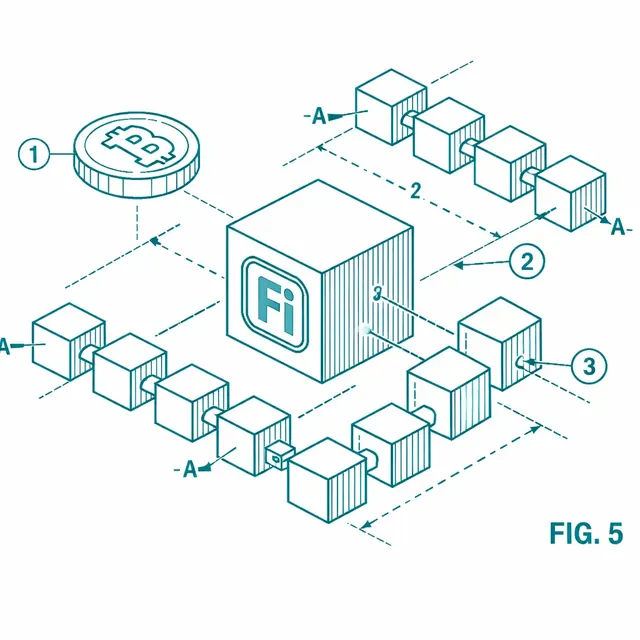
Pharmaceutical supply chains are the strongest Web3-compatible healthcare lane because the data model is narrower, the events are more structured, and the counterparties are known. FDA’s September 2023 DSCSA standards guidance is specifically about secure, interoperable, electronic data exchange for tracing prescription drugs across the distribution chain. This is much closer to a provenance ledger problem than longitudinal clinical record sharing.
The compliance timeline makes the distinction even clearer. FDA says enhanced drug distribution security requirements were due by November 27, 2024. FDA then issued targeted exemptions into 2025 and 2026 for certain connected trading partners and small dispensers in order to keep implementation moving without disrupting patient access to medicines. That is a compliance-driven rollout for interoperable tracing at package level.
This is where Web3-style infrastructure can actually fit. Serialized packages, custody events, verification requests, and audit trails are all clean candidates for shared-state coordination. The business case is also concrete. Better traceability reduces counterfeit risk, supports faster investigations, and improves recall visibility. That logic is closer to supply-chain coordination than to tokenized patient data. None of those gains require speculative demand. FDA’s own public-private partnership work around DSCSA is centered on interoperable tracing and verification, not on native token incentives.
That is why pharmaceutical traceability looks durable in a way many tokenized health data concepts do not. The value persists after incentives end because the network is tied to compliance obligations and operational savings. The ledger can help. The token is still mostly unnecessary.
The post-incentive test is what matters
The decisive question in healthcare tokenomics is what remains after incentives end. If the answer is “users stay because the token might appreciate,” the design is not durable enough for clinical workflows, payer exchange, or regulated supply chains.
Healthcare networks persist when participation is anchored to obligations or measurable savings. Those anchors include compliance with access rules, lower prior-authorization cost, lower reconciliation cost, better provenance, and reduced fraud exposure. HHS has explicitly tied recent interoperability rulemaking to projected administrative savings, which is the kind of cash-flow logic a healthcare network actually needs.
| Use case | Where Web3 can help | Main bottleneck | Does a native token improve the base case? |
|---|---|---|---|
| Patient-controlled medical records | Consent receipts, provenance, shared audit trail, portable permissioning | Identity proofing, key recovery, emergency access, privacy law, off-chain storage | Usually no |
| Provider and payer data sharing | Cross-organization attestations and tamper-evident audit logs | FHIR mapping, workflow integration, enforcement, network governance | Rarely |
| Research consent and data provenance | Immutable consent history, verifiable access trails | Revocation semantics, de-identification, legal governance, ethics review | Usually no |
| Pharmaceutical supply chains | Serialized traceability, custody tracking, verification events | Partner connectivity, process compliance, standards adoption | Not necessary in most cases |
The pattern is consistent. The closer a use case is to known counterparties and auditable provenance, the more credible the ledger becomes and the less necessary the token becomes. The closer a use case is to longitudinal patient data, the more the real work shifts to privacy architecture, identity, consent semantics, and off-chain system integration. In Web3 x Healthcare, utility tends to accrue to the governance and integration layer first, not to a speculative asset.
How FinDaS Tokenomics would underwrite the sector
FinDaS Tokenomics would treat healthcare as a sector where tokenomics design has to clear a much harder threshold than in consumer crypto. A healthcare token has to survive procurement cycles, compliance review, breach response, and multi-year integrations. That usually means the monetized layer is software, verification, orchestration, or transaction services, while the shared-state layer stays permissioned or minimally financialized.
For teams looking at token economy design, token economy consulting, or a tokenomics advisor in healthcare-adjacent systems, the useful diligence questions are simple. Does the network still function if emissions go to zero. Are fees predictable enough for hospitals, payers, and distributors to budget. Are the underlying data models already aligned to FHIR, USCDI, TEFCA, or DSCSA requirements. Does the token remove a real coordination cost, or does it merely subsidize early participation. In healthcare, the wrong answer is often visible before launch.
- Keep protected health information off-chain. Put hashes, pointers, proofs, and audit signals on-chain instead.
- Adopt existing healthcare standards before inventing new rails.
- Bind participation to contracts, compliance, and service value rather than token appreciation.
- Price critical services in predictable terms. If a token exists, it should not be the only budget unit for care delivery infrastructure.
- Design for recovery, revocation, emergency access, and operator accountability from day one.
The sustainable version of Web3 x Healthcare is therefore narrower than the bullish narrative, but much more credible. It is not a universal replacement for EHRs, not a shortcut around regulation, and not a subsidy machine for early adoption. It is a set of selective coordination tools that work best when they sit on top of standards, inside governance, and far away from growth models that collapse once the rewards stop.