What staking rewards are actually paying for
What am I being paid for when I stake? Staking rewards are compensation for providing security, liveness, and validator participation, not a passive coupon for holding a token. On Ethereum, the base reward is tied to a validator’s effective balance and falls as total active stake rises, because the base reward formula scales inversely with the square root of total active balance.
Why does gross yield move over time? Gross yield moves because reward formulas, active stake, and validator performance all move. Ethereum states this directly in its proof-of-stake reward mechanics, where more validators mean lower base reward per validator. On top of that, many networks route rewards through validators who charge commission, so delegator yield is always a net number, not a protocol headline. Polkadot’s treatment of validator commission shows how rewards are shared with nominators.
Should I optimize for the highest advertised APY? No. High headline APY without context is weak diligence. The number that matters is net realized yield after commission, missed performance, slashing exposure, and exit frictions. A validator with lower commission but poor uptime can still underperform. A liquid staking token with better apparent liquidity can still trade below par during stress. The reward line is only credible when the risk line is modeled beside it.
Which lockups matter most before you stake
Is staking always a hard lockup? Economically, yes. Operationally, the lockup mechanism differs by chain and by staking wrapper. Native staking usually means an unbonding or exit process. Liquid staking often replaces some of that waiting time with market liquidity, but that is not the same as guaranteed redemption at par.
| Model | What unlocks look like | Why it matters |
|---|---|---|
| Ethereum solo validator | Full exit requires broadcasting a voluntary exit and then waiting for consensus-layer processing and withdrawals. | Exit is not instant, even if rewards are accruing normally. |
| Lido stETH / wstETH | Native withdrawal fulfillment is normally 1-5 days, while secondary-market swaps can be faster but depend on market liquidity. | Fast exit can mean selling into slippage rather than redeeming 1:1 on demand. |
| Cosmos Hub | There is a three-week unbonding period. | Capital is illiquid for a long window. |
| Polkadot | Unbonding is usually 28 days on Polkadot. | Long unbonding can dominate your actual portfolio liquidity profile. |
| Solana | Activation and deactivation complete only at epoch boundaries, and an epoch is about 2 days. Tokens in a stake account with a lockup cannot be withdrawn until lockup expiry. | “A few days” is still a real liquidity delay during volatility. |
Can I switch validators without fully unstaking? Sometimes. Cosmos Hub allows redelegation with no waiting period, although the account then cannot make another redelegation for the next three weeks. That is materially better than a full exit when the problem is validator quality rather than token conviction.
Which risks can actually destroy principal
Can staking reduce principal, not just rewards? Yes. Ethereum slashing is the cleanest example. Ethereum documents that a slashed 32 ETH validator immediately loses 0.0078125 ETH, enters a 36-day removal period, and can face a much larger midpoint penalty if many validators are slashed around the same time. In extreme correlated events, the maximum slash can reach the validator’s full effective balance.
Is downtime only an opportunity cost? Not universally. On Ethereum, going offline incurs penalties even without a formal slashing event, and prolonged network-finality failures trigger an inactivity leak. On Cosmos Hub, official validator documentation says stake can be slashed if a validator becomes unavailable or signs blocks at the same height.
Does unbonding remove slash risk immediately? Not always. Cosmos SDK documentation states that unbonding delegations remain slashable for offenses committed while the tokens were bonded. That makes validator due diligence a front-end decision, not something you can fix retroactively after a fault appears.
What validator metrics matter more than marketing? Slash history, uptime, commission policy, operator transparency, client diversity, and custody design matter more than an eye-catching APY screenshot. Advisory work that ignores those mechanics is not serious staking analysis. The operational layer is part of the yield model.
What liquid staking changes, and what it does not
Does liquid staking remove lockups? Liquid staking changes the form of liquidity. It does not remove liquidity risk. Ethereum’s pooled staking docs are clear that pooled staking is not native to the protocol and that third parties built these systems. Many issue a token representing staked ETH, which can be traded even while the underlying ETH remains staked.
What new risks appear with liquid staking? Smart contract risk, token basis risk, oracle dependencies, and market-liquidity risk all appear on top of native validator risk. Lido’s technical paper says that under extreme conditions stETH market liquidity may dry up, causing slippage or inability to swap into ETH, and that internal withdrawals can be delayed by validator exit bottlenecks, oracle issues, or demand spikes.
Is a liquid staking token equivalent to the underlying token? Economically, no. It is a claim with path-dependent exit behavior. If you exit through the protocol, you face queue mechanics. If you exit through the market, you face basis and liquidity. Those are different risks, and sophisticated holders should price them separately. Lido’s own guidance notes that protocol withdrawals normally take 1-5 days, while faster exit can come from swapping through aggregators.
Does restaking safely add yield? Restaking can add yield, but it also adds additional slashing domains and cross-service correlation. EigenLayer’s whitepaper explicitly highlights two risk classes: collusion across multiple actively validated services and unintended slashing vulnerabilities that can hit honest nodes. That means “extra yield” is often a payment for added complexity and stacked failure modes, not free money.
How the service model changes rewards, trust, and failure modes
Is solo staking the cleanest model? Usually yes, if the holder has the size and operating discipline for it. Ethereum’s solo staking docs say home staking means running your own node and depositing 32 ETH to activate a validator, with rewards paid directly from the protocol and without intermediaries taking a cut. The trade-off is that you own the hardware, key management, uptime burden, and slash risk.
What does staking-as-a-service actually outsource? It outsources validator operations, not economic risk. Ethereum’s staking-as-a-service docs describe a model where you deposit your own 32 ETH but delegate node operation to a third party. In many cases you can keep withdrawal control, but you still add trust assumptions around the operator, who can become malicious or a target of attack or regulation.
Why do centralized exchanges deserve extra scrutiny? Convenience is real, but so is concentration risk. Ethereum’s general staking guidance describes centralized exchanges as the option with the highest trust assumptions and warns that they consolidate large pools of ETH into large validator sets, creating a centralized target and point of failure. For a serious allocator, that should be read as a balance-sheet and network-risk issue, not just a UX choice.
What matters most for token holders and token designers
What is the shortest serious staking checklist?
- Separate gross protocol reward from net realized reward.
- Map the exit path: native withdrawal, queue, unbonding, or secondary-market sale.
- Check whether principal can be slashed, and for which faults.
- Check whether unbonding remains slashable.
- Measure validator quality, not just brand recognition.
- Treat liquid staking and restaking as additional protocol layers, not simple wrappers.
- Price in centralization and regulatory concentration if using third-party operators.
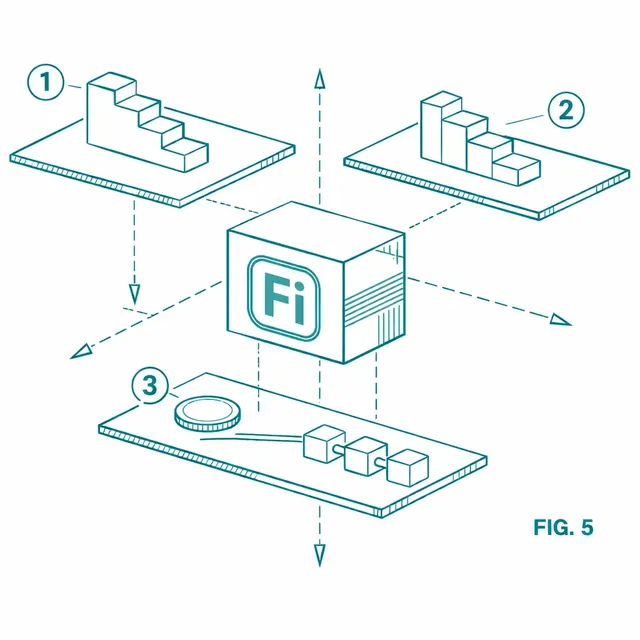
What does this mean for token economy design? The best staking systems do not optimize one metric. They balance issuance cost, security budget, validator quality, liquidity delay, and user comprehension at the same time. In practice, that means reward emissions, lockups, slashing rules, and liquid wrappers should be modeled as one system. A staking design that looks attractive only because the lockup is hidden or the real exit path is outsourced is not strong token economy design.
Where does FinDaS Tokenomics take a harder line? In tokenomics consulting, we treat staking as a market microstructure problem as much as a reward problem. If a design cannot explain who funds rewards, how exit pressure is absorbed, what faults destroy capital, and how validator incentives hold up under stress, then the staking layer is not finished. Marketing can hide those gaps for a while. Execution quality does not.