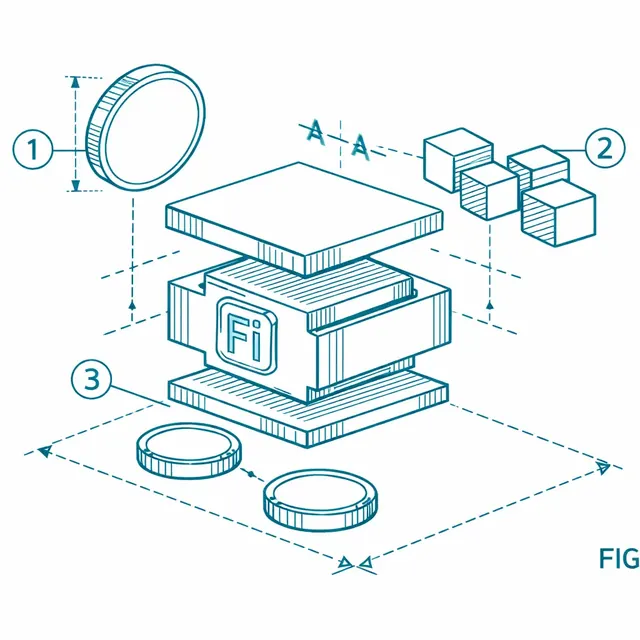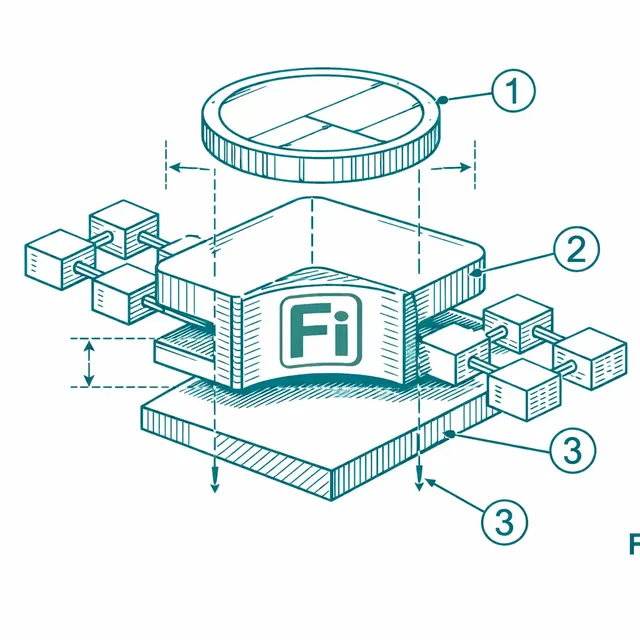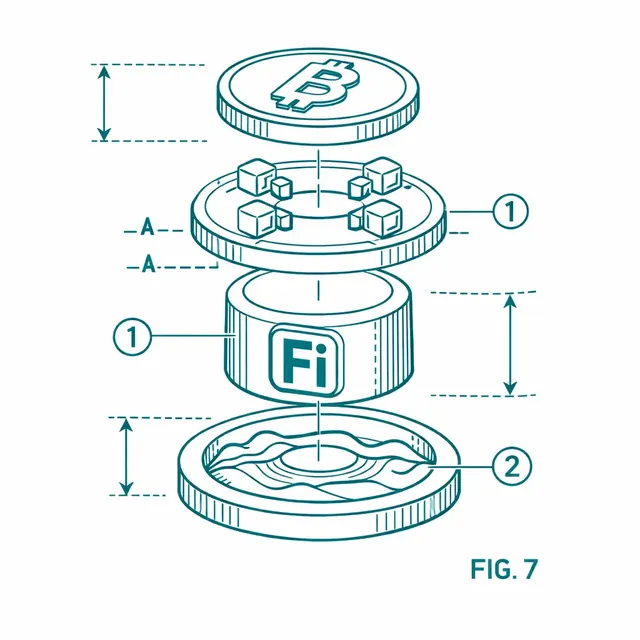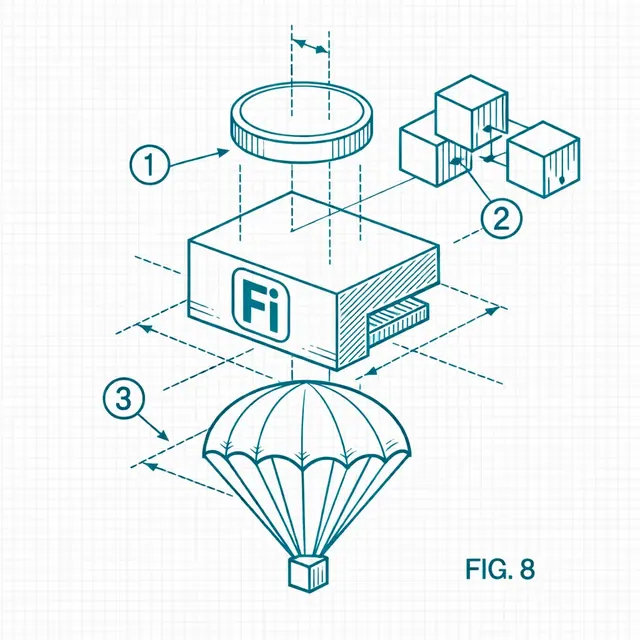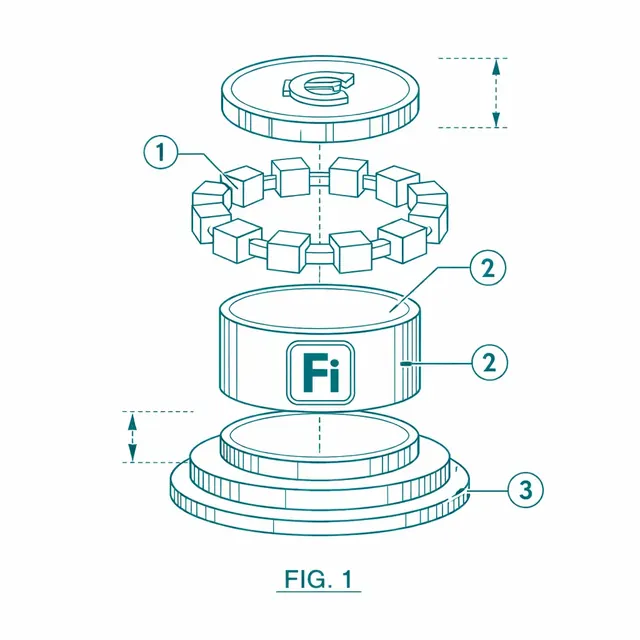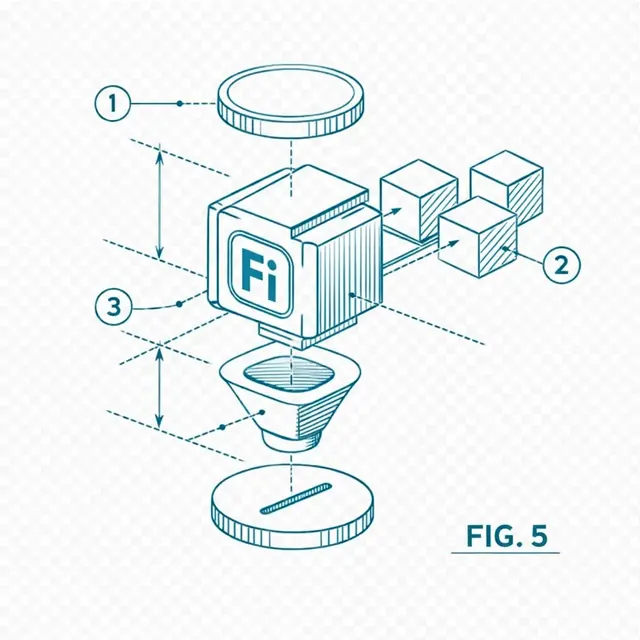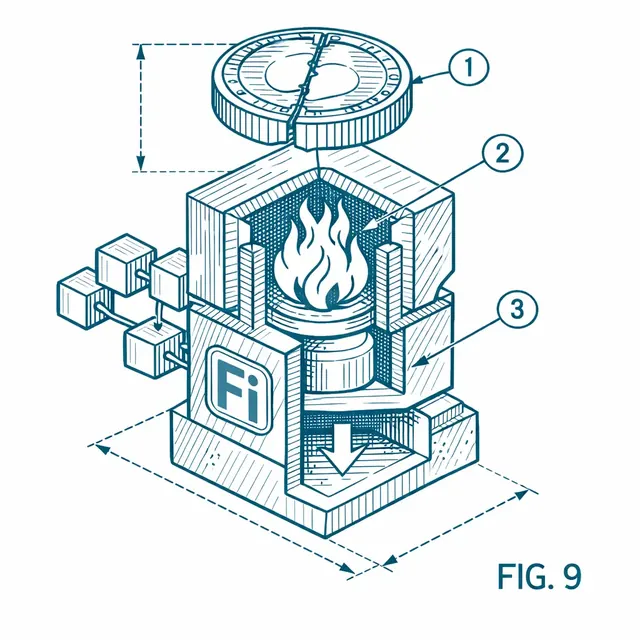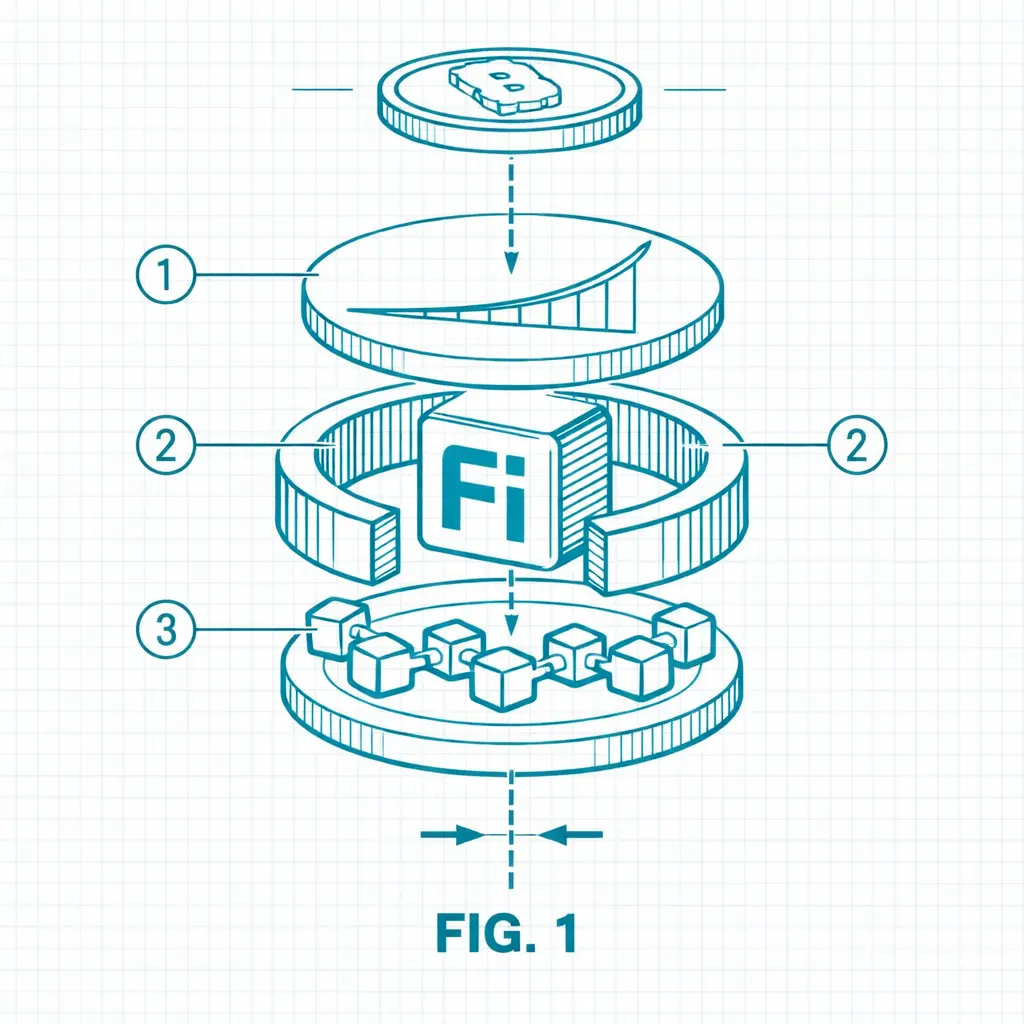
Bonding curves are not just launch math. A continuous token sale is a standing monetary policy contract that decides how new tokens enter circulation, what reserve backs exits, where cash flows accumulate, and who can rewrite those terms later. Bancor’s original model made the core mechanism explicit: the contract mints on buy, burns on sell, and keeps a constant reserve ratio between reserve balance and token market cap, with the effective trade price calculated over the full trade size rather than at a single spot tick.
Continuous sales work only when the issuance constitution is clear
A bonding curve is useful because it can create a primary market without depending on external order books or an initial LP bootstrapping event. Bancor described this as “continuous liquidity,” and Inverter’s more recent Primary Issuance Market framework makes the same point in modern language: the project can issue and redeem tokens dynamically as demand appears, instead of pre-minting all supply and hoping the secondary market absorbs it cleanly.
The first hard decision is whether the curve is supposed to be a funding rail, a membership rail, or a tradable market. Those are not the same thing. If the goal is continuous treasury formation, then fees, tributes, and reserve routing matter more than headline decentralization. If the goal is pure public price discovery, every discretionary admin lever becomes politically expensive because tokenholders are taking market risk while someone else retains monetary-policy control.
The slope is only part of the mechanism. The more important question is which actor controls reserve ratios, fee rates, virtual balances, and open or closed access to buying and selling. In contemporary implementations, those are explicit admin functions, not abstract governance ideals. Inverter’s bonding-curve workflow exposes setters for buy fee, sell fee, buy-side reserve ratio, sell-side reserve ratio, and switches to open or close buying and selling, all through an admin role.
Pick the curve architecture before you pick the slope
| Architecture | What it does | Main benefit | Governance reality |
|---|---|---|---|
| Basic Bancor-style CRR curve | Mints and burns against a reserve while maintaining a constant reserve ratio. | Clean, legible pricing logic and built-in redemption path. | If parameters remain mutable, the creator or admin effectively controls monetary policy. |
| Virtual-supply curve | Uses virtual issuance supply and virtual collateral supply in the pricing calculation instead of only real balances. | Lets a project smooth launch conditions, earmark reserves, or exclude some minted governance balances from price calculations. | This is a powerful abstraction layer. If admins can change virtual balances after launch, they can alter market depth without moving real assets. |
| Augmented Bonding Curve | Routes part of the flow to a spendable commons treasury and part to the reserve, typically through entry and exit tributes plus an initial treasury split. | Continuous funding becomes an explicit design output rather than a side effect. | The treasury split is a power decision. More funds to the commons pool means fewer funds backing exits in the reserve pool. |
The practical choice is straightforward. Use a basic CRR curve when you want the market logic to stay legible. Use virtual supply only when you have a specific balance-sheet reason for doing so. Use an augmented curve when the sale itself is supposed to finance an organization or protocol treasury on an ongoing basis. Teams often mix these objectives and end up with a curve that is too discretionary to be trusted and too constrained to be operationally useful.
Set the parameters that actually drive outcomes
Reserve ratio is the core volatility lever. Bancor defines spot price as reserve balance divided by supply times reserve ratio, and both Bancor and Inverter describe the same directional effect: a higher reserve ratio means slower price growth and lower sensitivity, while a lower reserve ratio makes price move faster as supply changes.
Opening price and initial reserve split jointly define the initial power balance. In the TEC design notes, the opening price and commons tribute determine the reserve ratio because the reserve pool is only the bonded portion of raised capital, while the commons pool is immediately spendable treasury. That means a team can promise strong treasury capacity up front, but it is buying that flexibility by reducing redemption backing.
Entry and exit spreads are political, not just financial. Inverter supports separate reserve ratios for buying and selling, plus separate buy and sell fees. Commons Stack-style ABCs push this further with entry and exit tributes that route value to a common pool. These spreads can suppress short-term speculation and fund operations, but wide spreads also make the token feel taxed on both sides of participation.
Virtual supply should be treated as an expert-only control surface. TEC’s own parameter notes are unusually candid here: virtual supply and virtual balance “should only be touched by Bonding Curve Professionals,” because they can be used to earmark reserves, compensate for streamed-out funds, or exclude newly minted governance balances from the curve calculation. That is useful, but it also means the apparent depth of the market can diverge from raw onchain balances.
Reserve asset choice changes the token’s risk surface. A stablecoin-backed reserve gives cleaner accounting for treasury and exit capacity. A volatile reserve asset turns the token into a second-order bet on that asset. TEC’s July 11, 2025 infrastructure report makes the trade-off explicit after moving reserve backing to rETH: the reserve appreciates with ETH staking, but the token then inherits ETH price volatility and reserve-asset security risk.
Governance is the real attack surface
A mutable bonding curve is a governed market, not an autonomous one. That is not automatically bad. It is often necessary. But the distribution of control has to be stated plainly because these functions decide who can change issuance conditions after users have already taken exposure.
- Whoever can change reserve ratios controls the future steepness of the price path for both entrants and exits.
- Whoever can change buy and sell fees controls the tax wedge between the token economy and the treasury.
- Whoever can change virtual collateral or issuance supply can reshape market depth without depositing or withdrawing the same amount of real assets.
- Whoever can close buys or sells controls access. If the admin can shut exits, tokenholders do not hold an unconditional redemption right.
- Some implementations even support restricted interaction roles, which turns the curve from a public market into an allowlisted issuance venue.
The strongest design pattern is not “decentralize everything immediately.” The stronger pattern is to separate powers and bound them. A treasury-spending body should not also have unconstrained authority over curve parameters. A curve admin should operate behind a delay. Parameter ranges should be capped onchain where possible. If emergency guardians exist, their role should be narrow and published in advance.
The TEC governance architecture is a useful concrete example of transparent exception handling. Its Optimism DAO specification describes one-day execution delays, guardian veto powers over malicious proposals, public buy and sell permissions for any account, and a separate permission set governing reserve, common pool, and curve-related functions. That is still concentrated governance, but it is concentrated governance that is at least named, scoped, and legible.
Secondary markets change the job of the curve
A bonding curve stops being the only meaningful market as soon as external liquidity appears. At that point the curve is no longer just a pricing machine. It becomes one venue among several, and its purpose has to narrow to treasury formation, guaranteed exit liquidity, membership routing, or arbitrage anchoring.
TEC’s July 11, 2025 report is blunt about the conflict. The ABC remained the treasury-aligned primary market, but the secondary market on Velodrome was easier to access, drew most trading volume, and therefore diverted volume away from tribute generation for the commons. The same report also notes that a 12% exit tribute felt steep to users, creating a bad choice between high tribute on the curve and weak liquidity or slippage on the DEX.
This is the central operational trade-off. A public dual-market design gives better discovery and accessibility, but it reduces the curve’s ability to capture value for the treasury. A curve-only design preserves tribute capture, but it makes access and routing worse for normal users. A DAO-controlled arbitrage design can coordinate the two, but then market maintenance becomes an administrative function with real power over supply, treasury inflows, and execution quality.
For continuous token sales, the cleanest rule is this: decide in advance whether the curve is your main market or your fiscal instrument. If it is the main market, keep spreads modest and governance narrow. If it is the fiscal instrument, admit that openly and design the secondary-market handoff, arbitrage policy, and treasury routing before launch rather than after users discover the mismatch.
Where bonding curves fit, and where they do not
Bonding curves fit continuous sales best when the token is tied to an organization that wants ongoing treasury formation, gradual participation, and predictable issuance logic. They are especially coherent for public-goods funding, community membership systems, and protocols that want a standing primary market rather than a one-off auction followed by unmanaged drift.
Bonding curves fit poorly when teams want to market a token as credibly decentralized while keeping broad admin discretion over fees, reserve ratios, virtual balances, and access controls. In that setup, the curve can still function mechanically, but the political contract is weak. Buyers are funding a market whose monetary rules remain subject to post-sale edits by a smaller power center.
Bonding curves also fit poorly when token utility is thin and the spread is wide. TEC’s own 2025 reporting shows the pattern clearly: when utility is still developing, a high exit tribute can turn the curve into more of an exit tollbooth than an attractive entry rail. That does not mean tributes are wrong. It means the curve needs a credible reason for users to enter and stay beyond speculative reflexes. In practice, that often means token sink mechanisms that actually work.
For teams working through this design space, the hard tokenomics problem is rarely the formula itself. The hard part is matching the sale mechanism to treasury design, governance powers, reserve accounting, and secondary-market structure before capital arrives. That is the part FinDaS Tokenomics would treat as the real token economy design question, because the curve only does what the power structure around it allows it to do.