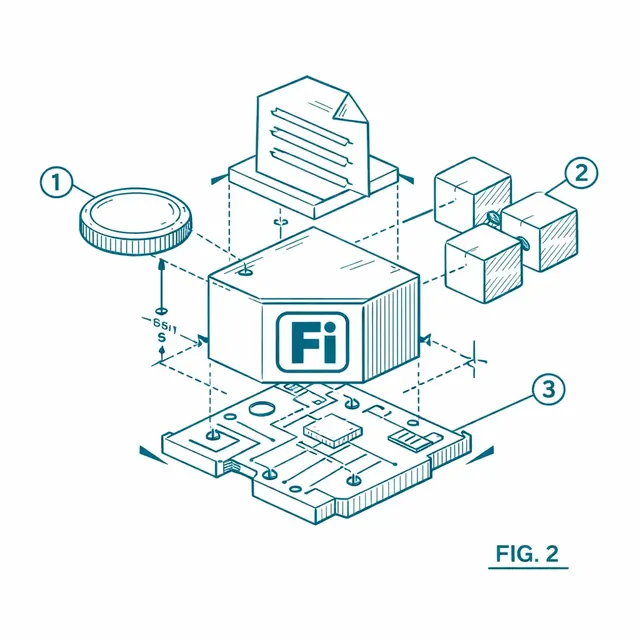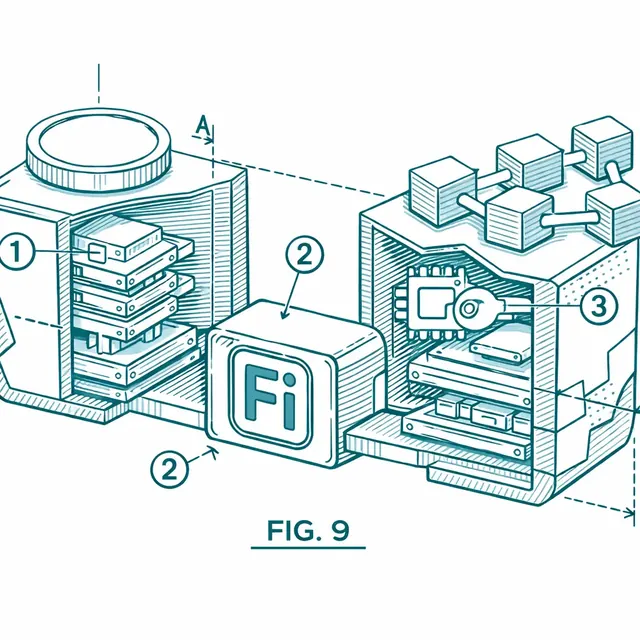
The financing instrument should follow the operating model
Most businesses do not have a token problem. They have a business-model problem. The right question is not whether a token is more “Web3-native” than equity or more exciting than revenue share. The right question is which instrument matches where value is created, who must be incentivized, and how the system will keep paying for its own operation when markets are no longer forgiving.
Equity is the natural fit when value accrues inside a company and investors are underwriting management’s ability to build assets, margins, and optionality over time. A share of stock is an ownership interest in a corporation, with a claim on its assets and profits, and most stocks also provide voting rights. Venture financings then layer on governance and control terms through stock purchase, investor rights, voting, and co-sale agreements.
Tokens are different. A token only earns its keep when the product needs a native economic unit to coordinate users and independent operators, meter access, or fund security. That distinction matters legally as well as economically. On March 17, 2026, the SEC said a crypto asset may itself be a “non-security crypto asset” while still being sold subject to an investment contract, depending on whether buyers reasonably expect profits from the issuer’s essential managerial efforts.
That is why model selection has to be driven by tokenomics analysis, not marketing ambition. A token can be the right answer. A token used to imitate equity, or to paper over the absence of a real security budget and real utility, is usually the expensive answer.
A compact comparison table
| Model | Best fit | What holders actually get | Main advantage | Main failure mode |
|---|---|---|---|---|
| Equity | Company-building businesses where value compounds inside one legal entity | Ownership claim on assets and profits, usually with voting and formal investor rights in venture financings | Clear governance, familiar fundraising path, strong fit for retained-earnings growth | Bad fit for open networks that rely on unaffiliated operators rather than employees and contractors |
| Revenue share | Defined, auditable cash-flow streams with limited counterparties | Contractual claim on specified revenue or distributions; in the U.S. these arrangements often sit inside securities law rather than outside it | Direct alignment to cash generation | Can starve reinvestment, create distribution complexity, and import securities-law burden anyway |
| Points / loyalty | Consumer retention inside a closed product or brand ecosystem | Revocable program benefits with limited transferability and no meaningful property claim in typical programs | Simple user incentives without investor-like upside expectations | Weak tool for fundraising, third-party coordination, or infrastructure security |
| Token | Networks that need native incentives for validators, nodes, creators, liquidity, or usage rights | Usage, staking, governance, or access rights, sometimes plus market value, but legal treatment depends on facts and marketing | Can coordinate open participation and fund security at protocol level | Fails fast when utility is thin, emissions are mispriced, or buyers are really underwriting a management team like equity investors |
Equity fits companies, and revenue share fits narrower cash-flow cases
Equity is still the default for ordinary startups because it matches the basic economic reality of a company. The company hires the team, owns the IP, keeps the balance sheet, and decides how much cash to reinvest versus distribute. Investors buy exposure to the residual value of that enterprise. That is why the venture market has standardized around equity documents and governance rights rather than around claims on individual revenue lines.
The SAFE belongs inside that equity-first logic, not outside it. Y Combinator introduced the SAFE in 2013 and says the 2018 post-money version was built to let founders and investors calculate immediately and precisely how much ownership has been sold. That makes the SAFE a fundraising instrument for future equity. It does not make a company less of a company.
Revenue share is a real option, but it is usually best when the business has a narrow, auditable revenue base and does not need aggressive reinvestment to stay competitive. Media catalogs, creator revenues, and certain asset-light cash-flow streams can fit that mold. The legal perimeter matters, though. The U.S. securities definition expressly includes a profit-sharing agreement, and a 2025 Regulation CF filing on GigaStar treated Revenue Sharing Units as the securities while related blockchain tokens were only digital representations.
That structure reveals the practical trade-off. Revenue share can align capital providers to a stream of receipts, but it can also pull cash out of the business precisely when the business needs to build distribution, harden infrastructure, or survive a downturn. For businesses with large fixed costs or long product cycles, that is not founder-friendly and it is not security-budget-friendly.
Points fit retention, not capital formation
Points and loyalty systems are useful because they are intentionally limited. Starbucks says Stars are promotional, have no cash value, cannot be redeemed for cash, and may not be sold or transferred. American Airlines says AAdvantage rewards and benefits are not property, generally are not transferable, and the program can be changed even if that affects already accumulated value.
That is why points are usually excellent for retention and poor for financing. They are issuer-controlled claims inside a closed commercial system. They can encourage repeat purchases, referrals, and tiered engagement. They usually do not create a meaningful claim on enterprise value, and they usually are not designed to be portable collateral for independent operators.
The current regulatory language around digital assets points in the same direction. In its March 17, 2026 interpretive release, the SEC described “digital tools” as assets whose value comes from practical functionality and that do not convey rights to future income, profits, or assets of a business enterprise. The Council of the EU similarly describes utility tokens as crypto-assets used to access goods or services.
For many consumer apps, that is enough. If the real goal is retention, status, and repeat usage, points are often a cleaner design than a tradeable token. They avoid forcing a consumer-rewards program into a pseudo-capital-market instrument.
Tokens fit networks that need independent operators and a real security budget
A token becomes economically defensible when the product is not just a company selling software, but a system that depends on external participants who must be paid, monitored, and in some cases penalized. Ethereum staking documentation says users can help secure the network and earn rewards, and Solana documentation says staking SOL helps secure the network while aligning delegators and validators in a shared-risk, shared-reward model.
That is the hard line between a token and a glorified loyalty point. A real token model can meter scarce network resources, pay validators or other supply-side participants, require stake or bond, and support penalties for bad behavior. In security-sensitive systems, that native incentive surface is not decorative. It is the operating budget for keeping the network live, honest, and resilient.
When a network needs a token, the critical design question is whether fees, issuance, and lockups can sustain the security budget across a full market cycle. If operator economics only work during speculative spikes, the network is undercapitalized at the exact moment adversaries become relatively stronger. Lower short-term costs can look attractive. Over time they usually mean weaker liveness, more centralization, or dependence on off-chain subsidies.
The SEC’s latest guidance also makes the misuse case clearer. The Commission says that a non-security crypto asset can still be sold subject to an investment contract when marketing creates a reasonable expectation that holders will profit from the issuer’s essential managerial efforts. The old SEC staff framework from April 3, 2019 is now explicitly marked withdrawn and superseded. Teams that still treat “utility token” as a slogan rather than a fact pattern are using outdated framing.
The practical test is simple. If the same product could run almost as well with a normal database, normal pricing, and no independent operator class, the token is probably not the core economic instrument. If the system fails without native incentives for validation, liquidity, moderation, storage, compute, or resource allocation, then the token may be the right primitive. In that case, tokenomics design stops being cosmetic and becomes infrastructure design.
Jurisdiction changes the feasible set
The same business can have different optimal instruments in different jurisdictions. In the United States, crypto analysis remains heavily facts-and-circumstances driven. The SEC’s March 17, 2026 release introduced a clearer taxonomy for digital commodities, digital collectibles, digital tools, stablecoins, and digital securities, but it also reaffirmed that promises or representations creating a reasonable expectation of profit from managerial efforts can place an offering inside securities law.
The European Union is more framework-driven. MiCA brings crypto-assets, issuers, and service providers under a harmonized regime; the Council of the EU summarizes the categories as asset-referenced tokens, e-money tokens, and other crypto-assets such as utility tokens. The European Commission says MiCA introduces organizational, operational, and prudential requirements, plus IT security procedures to reduce cyber and operational risk.
Specific dates matter. ESMA states that since June 30, 2024, any issuer of an asset-referenced token or e-money token offered to the public or admitted to trading in the Union must be authorized in the EU under MiCA, subject to transitional provisions.
For founders, the implication is straightforward. A token strategy that is barely coherent in one jurisdiction and clearly regulated in another is not one strategy. It is two different products, two different compliance surfaces, and often two different holder expectations. That alone can swing the answer back toward equity or points for many businesses.
A practical selection framework
The cleanest decision sequence is operational, not ideological.
Identify what is being financed. If investors are funding a company and management team, equity is usually the honest wrapper. If capital providers are funding a defined revenue stream, revenue share can work. If the system needs a standing budget to pay validators, nodes, or other operators, a token may be justified.
Identify who must be incentivized. Shareholders, customers, and protocol operators are different constituencies. One instrument rarely serves all three well at once.
Check whether the asset is necessary for operation. Points can drive retention. Tokens should do more. They should meter access, coordinate supply, absorb penalties, or secure the network.
Model the downside state. The right design still works when volumes fall, token prices compress, or revenue misses plan. This matters most for token economies because security assumptions break when operator economics break.
Map the buyer to the legal wrapper. Retail community, accredited investors, strategic operators, and consumer users should not all be sold the same story. The wrapper should match the actual economic rights and expectations being created.
The thesis is not that tokens are worse than equity or revenue share. The thesis is that tokens are less forgiving when the fit is wrong. Equity can tolerate a wide range of company models. Points can tolerate a wide range of consumer products. A token has to justify its existence continuously through utility, incentive compatibility, and operational sustainability.
That is where professional token economy expertise matters. At FinDaS Tokenomics, the useful work is not inventing a token story after the fundraising deck is written. The useful work is deciding whether a token should exist at all, then stress-testing emissions, fee flows, distribution, vesting, operator incentives, and governance against the business model that actually exists. If the answer is equity, say equity. If the answer is revenue share or points, say that early. If the answer is a token, the quality of the tokenomics design will decide whether the system funds growth and security or merely subsidizes speculation.
The right model is the one whose incentive system still makes sense after the hype disappears.