Tokenomics design is the structured process of deciding how a token is created, distributed, and used. It covers five decisions: utility, supply schedule, distribution, demand drivers, and governance. Good tokenomics design is deliberate, testable, and tied to the specific problem the project is trying to solve, and most failures at launch trace back to one of these five decisions being skipped or made without data.
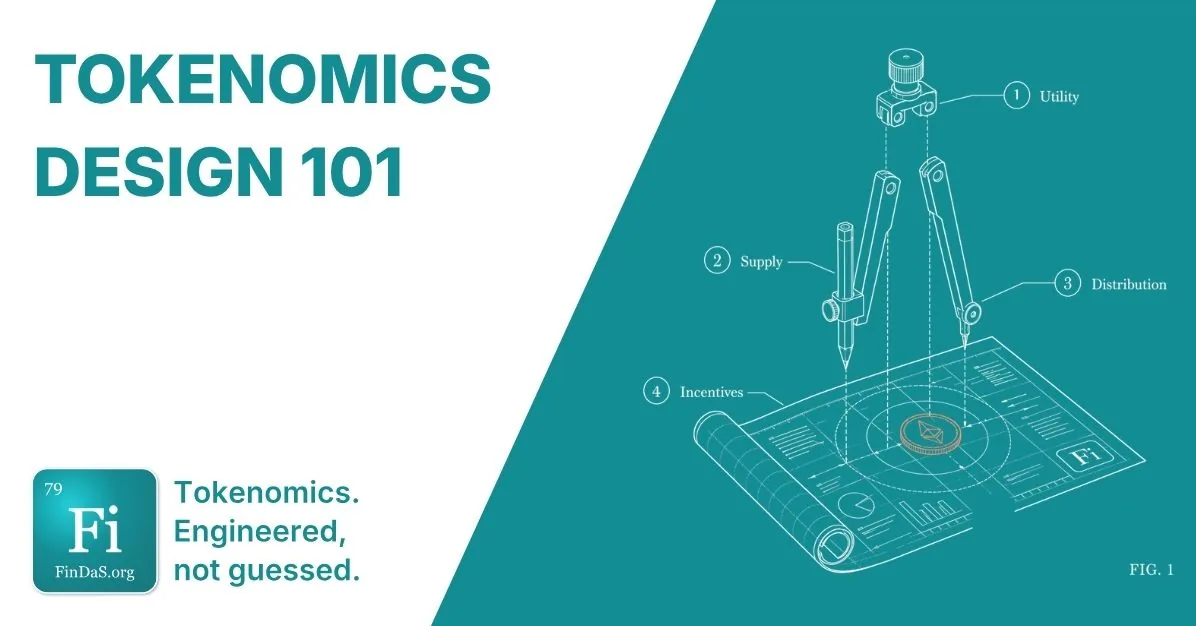
What tokenomics design actually is
Most "what is tokenomics" articles open with a taxonomy, utility tokens, governance tokens, payment tokens, stablecoins, and treat the taxonomy as the frame. That is a description of outputs. Tokenomics design is a set of decisions, and the taxonomy is downstream of the decisions, not the other way around.
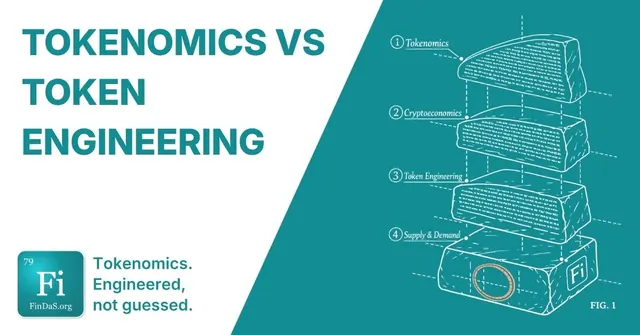
Tokenomics design is the process of deciding how a token is created, distributed, and used: what it does, who holds it, when and how it circulates, and what happens when the design contacts real users under real market conditions. It sits next to token engineering, which is the modeling and stress-testing of those decisions, and next to the broader field of crypto economics, which covers the academic theory of incentives in open systems. The distinction between the three terms is worth getting straight if you are hiring or scoping work, because "tokenomics" in loose usage often covers all three.
This article walks through the question that comes first (whether the project needs a token at all), the five decisions every tokenomics design actually has to make, and the failure patterns I see across the 300+ projects that have come through FinDaS. No taxonomy, no "future trends" section, no content that could be swapped for any other topic and still read the same. Just the decisions and what goes wrong when they are not made deliberately.
Does your project need a token?
The first question in any tokenomics design is the one most teams skip: does this project need a token at all? I find the answer is no more often than people expect, and the cost of launching a token you do not need is mostly irreversible once the contract is deployed and investors are on the cap table. Every failure pattern in the next section presupposes that the project crossed this threshold correctly, which is a strong assumption.
Three patterns where the honest answer is no:
- The project has no multi-sided coordination problem the token is solving. If the token is effectively a speculation wrapper around a SaaS product, adoption depends on price, price depends on adoption, and the loop collapses once the initial liquidity rotates out.
- The product works fine without on-chain payments or native incentives. Adding a token in this case adds compliance surface, operational cost, and legal exposure without earning anything the product could not earn with a normal checkout flow.
- The team is not ready to operate what is now, under MiCA in the EU and under the March 2026 SEC framework in the US, a regulated financial instrument. The ongoing cost of compliance is not trivial and it does not get cheaper with scale.
CoinGecko data from 2025 put the number of dead tokens at roughly 3.7 million out of 7 million listed since 2021. Not all of those are tokenomics failures, but the pattern points at the same thing: most tokens did not need to exist. When the answer to the first question is uncertain, the honest default is no, revisit in six months, and launch only when the coordination problem actually requires a token to solve.
The five decisions every token design has to make
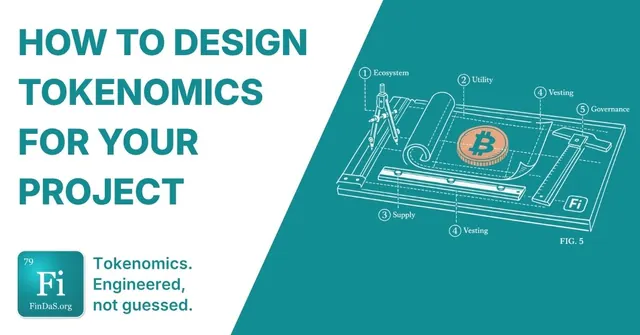
Good tokenomics design comes down to five decisions. None of them can be made in isolation, and skipping any one produces a predictable failure mode. They map roughly to a decision tree with utility at the root and governance at the leaves, and the order matters: downstream decisions inherit constraints from upstream ones.
- Utility. What the token does inside the system. The failure mode when this is weak: the token is a speculation wrapper around the product, adoption and price chase each other, and the loop collapses once initial liquidity rotates out.
- Supply schedule. Total supply, issuance curve, and vesting. The failure mode: mint rate outpaces real demand or token sinks, and the market absorbs the excess by dropping the price.
- Distribution. Who holds what fraction at launch, and when each fraction unlocks. The failure mode: overweight team and investor allocations with short cliffs, producing structural sell pressure at unlocks that retail cannot absorb.
- Demand drivers. Why anyone holds or uses the token beyond speculation. The failure mode: demand drivers that are purely narrative, which means the token has no bid at all once the narrative rotates.
- Governance. What token-holders decide, and how. The failure mode: governance exists to signal decentralization rather than to coordinate anything real, which produces low turnout and a token that captures none of the value from its governance rights.
A deeper breakdown of these components lives in a separate article, and the demand side specifically is covered in what drives the value of a token. The rest of this piece focuses on the failure patterns that show up when any of the five decisions is made without data. The decisions themselves are the scaffolding; the failure patterns are what bends the scaffolding in practice.
The failure patterns we see
After 300+ projects, a handful of failure patterns cover most of what I see. All of them trace back to one of the five decisions being made without data, or not revisited after the surrounding design changed. The four below are the ones I flag most often in audits.
Supply outruns sinks. Mint rate exceeds burn or lock rate, and the token dilutes faster than anything absorbs it. Axie Infinity's SLP is the textbook case: players earned tokens through gameplay much faster than they could spend them on breeding, which meant the effective supply curve was controlled by playtime and the price curve was controlled by nothing. This is almost always caught by a 24-month supply simulation; it is almost never caught by a spreadsheet.
Cliffs that break the market. Team and investor allocations unlocking faster than organic buy-side demand can absorb them. The 2024 to 2025 launches made this pattern visible at scale: SUI, STRK, and PENGU all saw sharp 30-day drawdowns despite strong launch narratives, driven by low-float high-FDV structures that put most of the supply on future unlock schedules. The pattern is fixable pre-launch; it is brutal to fix post-launch.
Utility bolted on after supply is locked. The team designs supply first to satisfy investors, then tries to justify the supply with a utility narrative. The sequencing is wrong. Supply decisions should follow utility decisions, because utility determines what supply the system can actually absorb without dilution.
Governance theater. Governance tokens attached to protocols where nothing meaningful is being decided. If turnout is under 5% and every proposal is team-initiated, the token is not a governance instrument in any operational sense, and the market prices it accordingly. A tokenomics audit catches most of these before launch; the expensive version is catching them after.
Where regulation changes the answer
Regulation was a footnote in tokenomics design two years ago. It is not now. The EU and the US both moved in 2024 to 2026, and the resulting rules now shape design decisions directly rather than attaching as a post-hoc compliance wrapper.
MiCA has been fully applicable to crypto-asset service providers since December 30, 2024, and the final transitional deadline for existing providers in EU member states is July 1, 2026. The substance: most tokens offered to the EU public require a compliant whitepaper published under Article 6, with penalties for non-compliance up to 12.5% of annual turnover. Utility tokens that provide access to a currently operational product may qualify for the public-offering exemption, which is narrower than most teams realize and does not exempt the issuer from the underlying classification analysis. The MiCA-ready whitepaper process is what most of FinDaS's EU-facing work has shifted into over the last 18 months.
In the US, on March 17, 2026, the SEC and CFTC issued a joint interpretation that reclassified 18 major cryptocurrencies as digital commodities and replaced the 2019 Howey framework with a five-category taxonomy. Protocol mining, protocol staking, wrapping, and retroactive airdrops are now generally outside the investment-contract analysis. The part that still matters for design: issuer representations about profit expectations can move a non-security token into investment-contract territory after the fact, which means marketing copy and whitepaper language sit inside the tokenomics design envelope now, not next to it.
How to actually start
If you do nothing else in your first pass at tokenomics design, do these three things in order. They cost almost nothing to run, they catch most of the failures described above, and they produce a document the rest of the design can hang off. Anything else is optional at this stage.
First, write the problem the token solves in one paragraph without using the words "token" or "decentralized." If you cannot, the project either does not need a token or does not yet know why it wants one. This is the cheapest filter you will ever apply.
Second, model the supply schedule and the demand drivers under three scenarios: conservative, base, and stressed. Most of the failures I see would have been visible in the stressed scenario six months before launch, and the cost of running the simulation is roughly zero compared to the cost of unwinding the design afterward. The stressed scenario is the one people most often skip.
Third, simulate the first 24 months of token flow in detail, including every cliff, every emission curve, and every sink. The full launch process covers the execution side; the simulation is the bit most teams skip and the bit that catches the most expensive problems. If the simulation does not produce a chart that makes someone on your team uncomfortable, it has not been stressed enough.
Hopefully this is enough of a frame to start from. The five decisions, the question that precedes them, the failure patterns, and the regulatory surface are the load-bearing pieces. The specifics for any given project get resolved by doing the work: writing the one-paragraph problem statement, running the simulation, and stress-testing the design against the scenarios that are actually likely to break it.
Frequently Asked Questions
01How long does a tokenomics design project take?
+
02How is tokenomics design different from token engineering?
+
03Can I change tokenomics after the token has launched?
+
04Do I need a tokenomics consultant, or can I DIY?
+